

Thu Trang, 36, borrowed VND2 billion (US$76,100) from a bank to buy a three-bedroom apartment in Gia Lam last year, hoping to lease it for around VND15 million a month. The house cost VND4.8 billion.
She thought she could use a third of the rent to pay off the mortgage and keep the rest as profit, but it did not pan out that way.
She was unable to find a tenant for a month, and when she did she could only rent it for VND11.5 million a month.
“Each month I still have to pay the bank VND5–6 million,” she says. She is considering selling the apartment when the market rebounds.
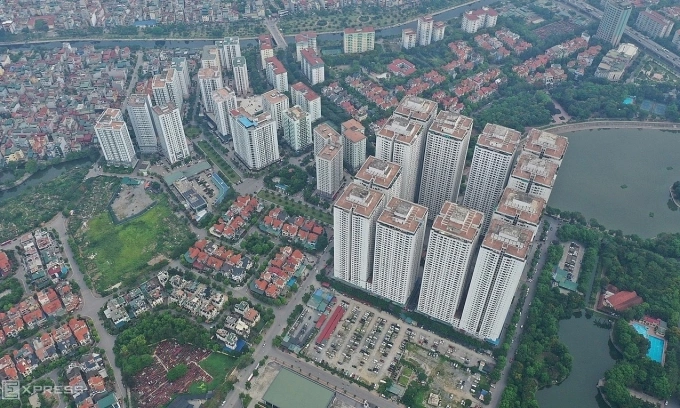
Apartment buildings in south Hanoi. Photo by VnExpress/Ngoc Thanh |
Tuan has a 67-square-meter apartment and says rents for his type of unit have stagnated over the past year at VND7–8 million even as their prices rose by 20–30%.
“That puts the profit at around 2.8–3%” he says.
These are among the many landlords who have become disillusioned in recent times. Most relied on financial leverage, borrowing from banks to buy apartments when their prices soared hoping rents would keep pace.
Real estate services firm CBRE says the average yield on apartments in the capital is 3–3.4%, down from more than 5.1% in 2023.
Online property listing platform Batdongsan offers similar numbers. Nguyen Quoc Anh, deputy chief executive of Batdongsan, says yields are falling though apartments prices are climbing.
Prices are currently VND80–90 million per square meter, up about 30–40% from a year ago. But rents have risen by only 8–10%, and even plateaued at many places.
Anh forecasts yields to keep falling since new supply is abundant but concentrated in the high-end segment and secondary market prices remain elevated.
Nguyen Van Dinh, chairman of the Vietnam Association of Realtors, says apartment rental yields are around 3% in major cities and sometimes below 2%.
“Putting in VND5–6 billion while actual rental returns keep falling has left many inexperienced investors disillusioned.”
But apartments are appealing to experienced, well-capitalized investors seeking long-term asset accumulation, he says. They target appreciation more, treating rents mainly as additional income, he adds.
In 2026–2028 new apartments ready for handover could number in the tens of thousands, adding pressure on the rental market, especially in suburban areas.
CBRE expects more than 33,000 new apartments to enter the market annually in the period.
“In the context of abundant supply with prices remaining high, new investors need to carefully consider investment efficiency, cash flows and liquidity risks.”
Instead of quick buy-and-sell strategies, they should shift to medium- and long-term approaches and select projects more carefully, it adds.

Comments are closed.