
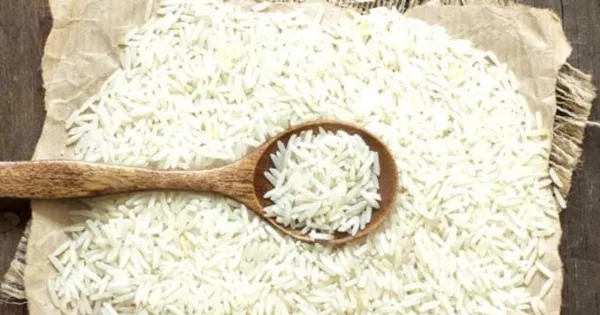
Loss to India due to unrest in Iran: Crisis on Basmati export, know what will be its impact on the market

Delhi. The ongoing civil unrest in Iran has started impacting India’s Basmati rice exports, leading to a sharp decline in domestic prices. Delay in payment to exporters and increasing uncertainties are the main reasons for this. The industry organization gave this information on Tuesday. The Indian Rice Exporters Federation (IREF) urged exporters to re-evaluate the risks on Iranian contracts and adopt safer methods of payment. Also asked not to take risks by keeping more reserves than required for the Iranian market.
According to trade data, India exported basmati rice worth US$468.10 to Iran during April-November of FY 2025-26, totaling 5.99 lakh tonnes. Iran is the largest basmati rice exporter to India but due to current instability there is increasing pressure on order flow, payment cycle and exports in the current financial year. Its effect is now clearly visible in the domestic markets.
In the last one week alone, prices of major Basmati varieties have fallen sharply, reflecting buyer hesitation, delays in contracts and increased risk appetite among exporters. The domestic price of Basmati rice variety 1121 has declined to Rs 80 per kg from Rs 85 per kg last week. Whereas the price of 1509 and 1718 varieties has decreased from Rs 70 per kg to Rs 65 per kg.
“Iran has historically been a major market for Indian Basmati,” IREF National President Prem Garg said in the statement. However, the ongoing internal unrest has disrupted trade channels, delayed payments and affected buyers’ confidence.” He said exporters should exercise utmost caution especially with regard to credit risk and export timelines.
The industry body said importers have expressed their inability to meet existing commitments and make payments to India, which has created uncertainty for exporters. IREF has issued an advisory and appealed to stakeholders to turn to alternative markets in West Asia, Africa and Europe to offset any long-term slowdown in shipments to Iran.
Garg said, “We are not giving any warning but urging caution. In times of geopolitical and internal instability, business is often the first to be affected. A balanced approach is necessary to protect both exporters and farmers.” IREF said US tariffs also remain a concern. The industry body also expressed concern over US President Donald Trump’s recent comments in which he indicated that countries that continue trading with Iran could face tariffs of up to 25 percent.
IREF clarified that duty on Indian rice exports to the US has already been increased from 10 percent to 50 percent. Despite this, Indian rice exports to the US have remained stable. India exported 2,40,518 tonnes of Basmati and non-Basmati rice to the US during April-November 2025-26 while the figure was 2,35,554 tonnes in the entire financial year 2024-25.
The US is the 10th largest market globally for Indian rice and the 4th largest market for Basmati rice. The industry body said, “It is not clear whether the proposed 25 per cent duty will be imposed in addition to the existing 50 per cent duty or not.” IREF said that given the unique position of Indian Basmati in global markets, even if the duty is increased further, there will be no significant decline in exports.
However, developments in Iran are worrying, where disruptions in local markets have affected trade agreements. Importers have expressed their inability to make payments to India and meet their commitments, adding to the uncertainty. The industry body said similar crises have occurred in the past, but the future of the current situation is uncertain. This is expected to cause further volatility in prices, cash flows and the business environment in the coming weeks.

Comments are closed.