
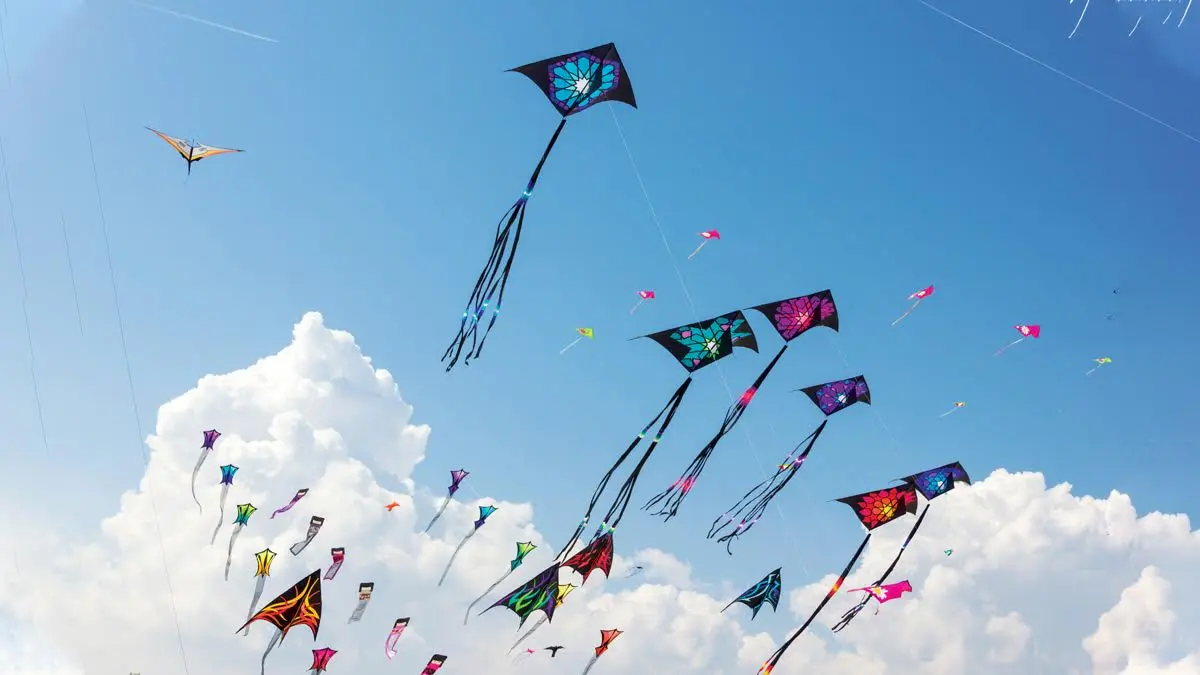

Significance of Makar Sankranti: Although for all of us, festivals mean laughter, joy and enthusiasm, but in the true sense, the importance of festivals is much more and more mysterious than that.
‘Makar Sankranti’ has its own identity among many festivals and festivals of India. This is the only festival in the year, which is celebrated on the basis of ‘Solar Calendar’. Makar Sankranti occurs when the Sun enters Capricorn from Sagittarius in the middle of its revolution. Along with the transition of two zodiac signs, this day is also considered to be the confluence of two seasons (winter and spring). The festival of Makar Sankranti, celebrated as the victory of sunshine over cold, usually falls in the month of Paush (Poos), whereas due to Poos being considered as Kharmas, no other festival or festival falls in this month. From today itself, the Uttarayan period of the Sun begins, due to which the results of the day increase and the night starts decreasing. Now, since this zodiac change by the Sun occurs only on 14th January, hence Makar Sankranti is celebrated every year on 14th January.
While the people of North India call this festival of mutual reconciliation as Khichdi, in South India it is known as Pongal. Sugarcane and rice are distributed in this festival.
Tuladan has special significance on this day.
Why are sesame seeds used on Sankranti?
Due to sesame having greater ability to absorb and project sattva waves, the sattva quality increases in the body. Bathing in sesame water leads to external purification and consumption of sesame leads to internal purification.
Why do we give gifts (donations) on Sankranti?
‘To give a gift’ means to surrender oneself to the divinity present in another living being by sacrificing one’s body, mind and wealth. Donation made during the Sankranti period brings blessings of the Gods and the living being gets the desired results.
The prayer of the Vedic sages to move from darkness to light ‘Tamso Ma Jyotirgamaya’ is realized through the tradition of determined efforts on this day. On this day, the Karmayogi Sun sets aside its momentary carelessness and resolves to attack the darkness. From this day onwards the darkness gradually decreases. Auspicious days for doing good work begin. Religious people wish that they die only after Makar Sankranti. A person who dies in Dakshinayan is more likely to go to the Dakshin (Yama) world than a person who dies in Uttarayan.
Is more. Ichchamarani Bhishma Pitamah, who stopped Yamraj from death till the beginning of Uttarayan, is a vivid example of this.
Makar Sankranti means victory of light over darkness. Human life is also surrounded by light and darkness, the cloth of his life is made of black and white fibers. On the day of Makar Sankranti, humans have to make an auspicious resolution to transition. Ignorance, doubt, superstition prevalent in human life,
The darkness of inertia, bad values etc. has to be removed, blind faith with right faith, inertia with consciousness and bad values with sanskaar surgeon. This will be called the true Sankranti of his life.
favorable time for meditation
The period from Cancer Sankranti to Makar Sankranti is called Dakshinayan. The commencement of Dakshinayan of the Sun is called the functioning of the Suryanadi of a Brahmin. Due to the functioning of the Suryanadi of the Brahmin, the amount of Raja-Tama waves present in the Brahmin is more in the Dakshinayan of the Sun. Sun’s Uttarayan begins on the day of Makar Sankranti. The beginning of Sun’s Uttarayan is said to be the functioning of Chandranadi of Brahmin. Due to the activation of Chandranadi of the Brahmin, the amount of Rajasattva waves present in the Brahmin increases during the Uttarayan of the Sun. For this reason, this period is beneficial for those who practice sadhna.
Is nutritious for. Due to the functioning of the Brahmin’s Chandra Nadi, the atmosphere during this period is cooler than usual.
Eating sesame seeds is more beneficial during this period. Tilka oil has greater ability to absorb sattva waves. Apart from this, eating sesame seeds helps in functioning of Chandra Nadi of the body. With this, the living being can immediately coordinate with the environment, because at this time the Chandra Nadi of the Brahmin is also functioning.
it occurs. Since the environment of the living being’s body and the environment of the Brahmin become one, the living being does not face any kind of obstacle while doing sadhana.
Pilgrimage, bathing and other rituals during Makar Sankranti
The virtuous period is from sunrise to sunset. Pilgrimage bath has special significance during the period of Makar Sankranti. Taking bath in the areas situated on the banks of rivers Ganga, Yamuna, Godavari, Krishna and Kaveri gives the benefit of great virtue. At the time of Makar Sankranti, there is a crowd of lakhs of people in the pilgrimage areas. Whoever accepts Sankranti Devi, his sins are destroyed. On this day, applying sesame oil and paste on the body, bathing with water mixed with sesame, drinking water mixed with sesame, Tilhom, donating Tilka, all the sins of those who use sesame are destroyed by these six methods. During the festival period of Sankranti, activities like brushing teeth, speaking harshly, cutting trees and grass and consuming sensual things should be prohibited. Donate new utensils, clothes, food, sesame seeds, oil pan, jaggery, cow, horse, gold and utensils as per your capacity. Married women donate on this day. The brides take some things from the virgins and then give them sesame seeds and jaggery.
Why do we wear black clothes on this day?
In Sanatan Dharma, black color is considered inauspicious, because it has the highest capacity to absorb Tama particles from the environment, but on the day of Makar Sankranti, wearing black colored clothes does not cause any harm, because on this day there is a predominance of Raja-Sattva particles in the environment. Therefore on the day of Makar Sankranti
Sanatan Dharma has given permission to use black colored clothes. From this it will be known that everything about Sanatan Dharma is according to spiritual scriptures.
Uttarayan starts on Makar Sankranti
On Makar Sankranti the Chandranadi of the universe is activated. Therefore, at the time of Uttarayan (of the Sun), the amount of Rajasattva waves in the universe is more and this period is beneficial for those who do Sadhana.
Is nutritious for.
Surya’s festivals and eras
There are two festivals for Surya Puja – Karka Sankranti and Makar Sankranti. Here the Sun is the midpoint of the Surya Mala. Consider this as towards the midpoint of the Sun i.e. below and away from the Sun i.e. outside or above. The Sun also revolves around a star. Kaliyuga is the lowest era, that is, at that time the Sun comes closest to that star. The speed of the Earth is greater in the winter season, thus in Kaliyuga the speed of rotation of the Sun around that star is greater. At present our Earth is moving closer to that star. At the end of Kaliyuga, the Earth will be very close to the said star. Thereafter, when Kritayuga begins, the Earth will start moving away from the star. At the end of Kritayuga, the Sun will move away from that star and the speed of the Sun will decrease. From this it is understood what is the reason for the duration of the Yugas being more or less.
1.Festival of mercy of Sun- From Karka Sankranti to Makar Sankranti the Sun moves towards the south. This is called ‘Dakshinayan’. In Dakshinayan the Earth moves closer to or below the Sun. South direction is the direction of the lower worlds or negative energies. If death occurs during the night, Krishna Paksha and Dakshinayan, then that creature comes down quickly, that is, it takes birth after roaming around (without much enjoyment), hence Karka Sankranti.
It is a festival of mercy.
2.Festival in the form of justice of Sun – Makar From Sankranti the Sun moves towards the north. This is called ‘Uttarayan’. In Uttarayan, the Earth moves away from the Sun i.e. outwards or upwards. North direction means the direction of the good, upper (higher) worlds. In case of death in day, Shuklapaksha and Uttarayan, one does not get rebirth soon, hence Makar Sankranti (takes one out of the earth or from the orbit of birth and death)
It is a festival of justice.

Comments are closed.