
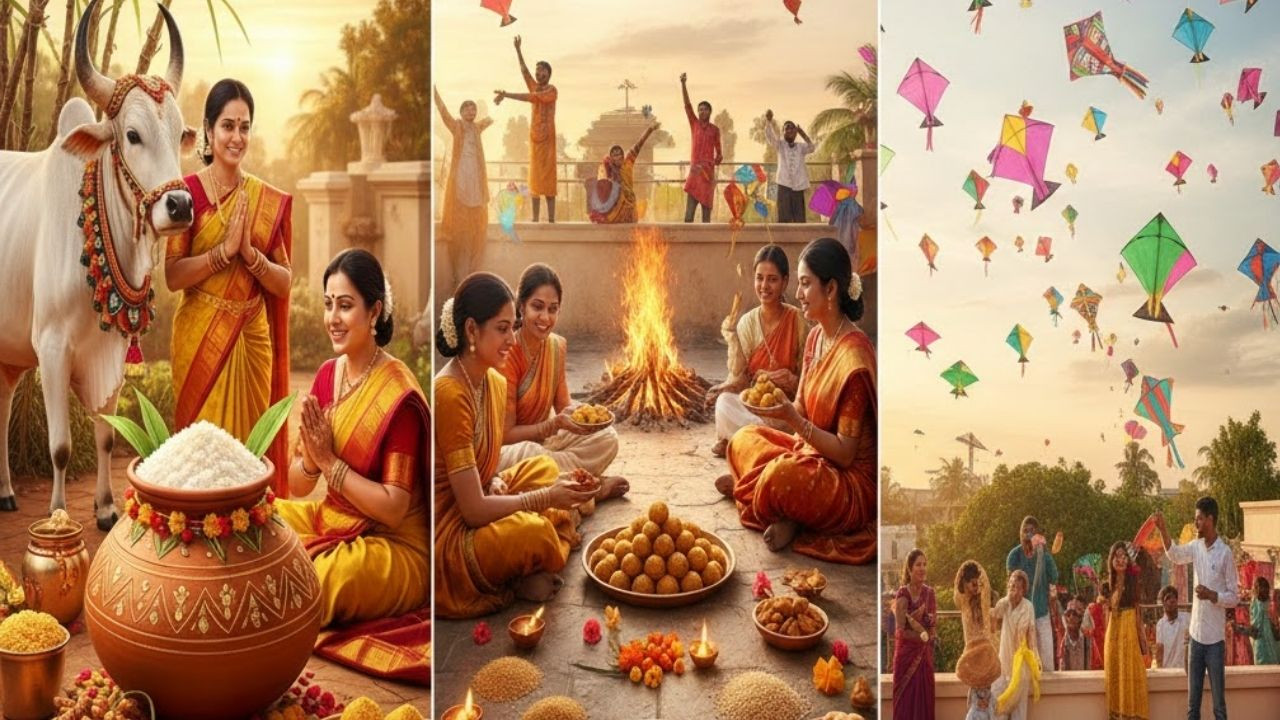
Makar Sankranti 2026: From Khichdi to Pongal, know how Makar Sankranti connects the whole of India in one thread.

India is called a country of festivals, because every festival here is not just a date, but is a symbol of culture, tradition, faith and collective happiness. Makar Sankranti is one such important festival, which is celebrated in almost every part of the country. Although the name, way of celebrating and traditions of this festival differ in different regions, its basic meaning remains the same everywhere. This festival associated with the entry of Sun into Capricorn is considered a symbol of agriculture, change of weather and social unity.
According to the Hindu calendar, Makar Sankranti occurs on the day when the Sun leaves Sagittarius and enters Capricorn. This festival is usually celebrated on 14 or 15 January. This day is considered to be the beginning of Uttarayan, that is, days start getting longer and nights become shorter. For a society based on agriculture, this time is an opportunity for the arrival of new crops and to express thanks to nature.
On this occasion, crowds of devotees gather at pilgrimage sites across the country. Lakhs of people perform Kalpavas during Magh Mela in Prayagraj, in which the bath of Makar Sankranti is a major event. This year, Magh Utsav has started in Prayagraj from 3rd January, in which Makar Sankranti will be celebrated on 14th January, Mauni Amavasya on 18th January, Vasant Panchami on 23rd January, Maghi Purnima on 1st February and Mahashivratri on 15th February.
Various forms of Makar Sankranti in North India
In Uttar Pradesh and Bihar, Makar Sankranti is called ‘Khichdi’. On this day, Khichdi made of rice and pulses is offered and donated to the needy. Bathing in Ganga, Saryu and other holy rivers is considered auspicious. A large number of devotees reach cities like Prayagraj, Varanasi and Haridwar. In Uttarakhand it is known as ‘Uttarayani’ and ‘Ghughutiya’, whereas in Himachal Pradesh this festival is called ‘Magh Saaji’. The tradition of khichdi and bath-donation is prevalent in many other states including Madhya Pradesh, Chhattisgarh, Rajasthan, Delhi and Jammu.
Lohri celebration in Punjab and Haryana
Lohri is celebrated a day before Makar Sankranti in Punjab, Haryana and Chandigarh. This is a festival related to fire and harvest. People light a bonfire and offer sesame, peanuts and rewari in it. Bhangra and Gidda are performed on the beat of dhol. Lohri holds special significance for newly married couples and newborn babies.
Colorful traditions of West India
In Gujarat, Makar Sankranti is called ‘Uttarayan’ and is famous for kite festival. People fly colorful kites on the rooftops and the entire sky is immersed in celebration. Dishes made from sesame, jaggery and peanuts are prepared in every home. In Maharashtra, this festival is called Makar Sankranti, where there is a tradition of adding sweetness to mutual relationships by distributing sesame seeds and jaggery.
Pongal and Sankranti in South India
In Tamil Nadu, Makar Sankranti is celebrated as ‘Pongal’ festival which lasts for four days. Bhogi Pongal, Surya Pongal, Mattu Pongal and Kanum Pongal – every day has its own significance. In Karnataka, Elu Bella is distributed, while in Andhra Pradesh and Telangana this festival is celebrated for four days with rangoli, decoration of bulls and folk dances. In Kerala it is called ‘Makaravilakku’ and special events are held in the Sabarimala temple.
Traditions of Eastern and North-Eastern India
In West Bengal, Makar Sankranti is called Paush Sankranti, where sweets like Pithe-Puli are made. In Odisha, Makar Chaula Bhog is offered to Lord Jagannath. In Assam, Meghalaya and Mizoram, this festival is celebrated as Magh Bihu or Bhogali Bihu, in which bonfires, mass feasts and games are organised.
One feeling, many forms
Makar Sankranti is not just a religious festival, but a symbol of farmer life, collective unity and respect for nature. Somewhere it is Khichdi, somewhere Lohri, somewhere Uttarayan, Pongal, Magh Bihu or Tusu, but the feeling is the same everywhere – gratitude towards the sun, harvest and life. This unity in diversity strengthens the cultural identity of India and makes Makar Sankranti a festival which has been connecting people for generations and will continue to connect people in future also.

Comments are closed.