
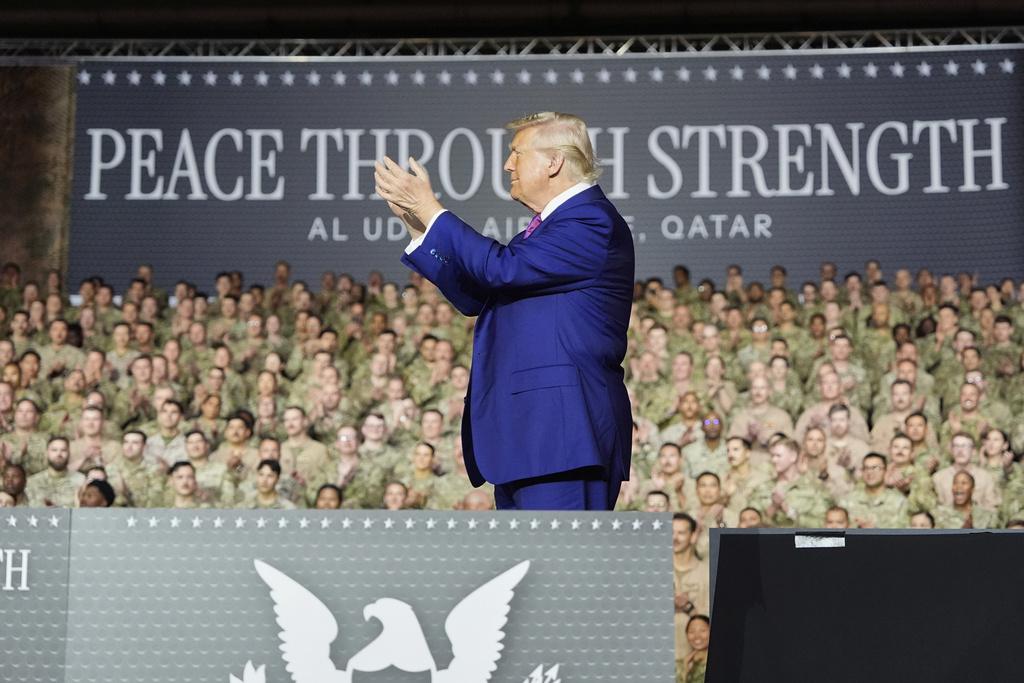

US Personnel in Al-Udeid Air Base in Qatar Advised to Evacuate/ TezzBuzz/ WASHINGTON/ J. Mansour/ Morning Edition/ U.S. military personnel at Al-Udeid Air Base in Qatar have been advised to evacuate amid renewed Iranian threats referencing a past missile strike. The move follows heightened regional tensions and President Trump’s warnings of military action if Iran continues its protest crackdown. Qatar confirmed precautionary security measures as diplomatic dialogue continues.
US Military Evacuation in Qatar Quick Looks
- Some U.S. personnel at Al-Udeid Air Base advised to evacuate
- Move follows renewed Iranian threats referencing prior missile strike
- Official says evacuation is precautionary, no details on numbers provided
- Qatar confirms stepped-up security in response to regional instability
- Iranian official Shamkhani referenced June strike on Al-Udeid
- U.S. base had been targeted in June amid escalating tensions
- Trump signals possible military response if Iran targets protesters
- Qatar’s PM and Iran’s national security chief held urgent phone call
- Qatar emphasizes commitment to de-escalation and regional security
- US Central Command previously confirmed no casualties from June strike
Deep Look: US Personnel in Al-Udeid Air Base in Qatar Advised to Evacuate
WASHINGTON — Personnel stationed at a major U.S. military installation in Qatar have been advised to evacuate amid rising tensions in the Gulf region and fresh threats from Iran referencing a prior missile strike on the same base, according to a senior U.S. official.
The Al-Udeid Air Basewhich hosts thousands of U.S. troops and serves as a key strategic hub for American operations in the Middle East, has once again become a focal point of conflict, as anti-government protests continue to roil Iran and Washington escalates its rhetoric against Tehran.
A U.S. official familiar with the situation, speaking anonymously due to the sensitive nature of the planning, said the evacuation order was issued as a precautionary measure. The official declined to elaborate on whether the measure was mandatory or voluntary, or how many personnel were affected, citing the need to maintain operational security.
Meanwhile, the Qatari government confirmed the move, stating it was part of broader efforts to protect national infrastructure and uphold regional stability amid growing volatility.
“These measures are being undertaken in response to the current regional tensions,” Qatar’s International Media Office said in a statement posted on the platform X. “The State of Qatar continues to implement all necessary measures to safeguard the security and safety of its citizens and residents as a top priority, including actions related to the protection of critical infrastructure and military facilities.”
The warning came hours after Ali Shamkhania top adviser to Iran’s Supreme Leader Ayatollah Ali Khameneireferred publicly to Iran’s June 2025 missile attack on Al-Udeid, which was carried out in retaliation for U.S. strikes on Iranian nuclear infrastructure.
Writing on X, Shamkhani said, “The U.S. President, who repeatedly talks about the futile aggression against Iran’s nuclear facilities, would do well to also mention the destruction of the U.S. base in Al-Udeid by Iranian missiles. It would certainly help create a real understanding of Iran’s will and ability to respond to any aggression.”
Shamkhani’s remarks were widely interpreted as a veiled warning, indicating that any future military action by the United States could provoke another Iranian response — potentially one with more serious consequences.
President Donald Trumpin recent days, has signaled his willingness to take direct military action if Iranian authorities continue to crack down violently on ongoing anti-government demonstrations. Human rights monitors say the death toll from the Iranian government’s suppression efforts has surpassed 2,000.
The geopolitical pressure was underscored by a call on Tuesday between Ali at LauchIran’s National Security Council secretary, and Sheikh Mohammed bin Abdulrahman Al ThaniQatar’s Prime Minister. In a readout posted on X, Al Thani emphasized Qatar’s “backing of all de-escalation efforts” and support for “peaceful solutions to enhance security and stability in the region.”
The Iranian missile strike in June marked one of the most direct attacks on U.S. infrastructure in the Gulf in years. Nineteen missiles were launched at the base, according to U.S. Central Command, with most being intercepted. However, one missile hit the facilitythough no U.S. or Qatari personnel were injured, officials said at the time.
A Qatari military official later confirmed that Doha was not informed in advance of the Iranian retaliation, creating diplomatic tension between the two neighbors, both of which play significant roles in regional stability despite their contrasting alliances.
President Trump downplayed the damage in a social media post following the attack, saying “hardly any damage was done”, although satellite imagery later showed the impacted zone within the base perimeter.
The recent warnings and the potential drawdown at Al-Udeid represent the latest flashpoint in a region already grappling with overlapping conflicts, shifting alliances, and global power rivalries involving the U.S., Iran, China, and Russia.
While Pentagon and State Department officials have not issued public statements beyond confirming ongoing coordination with regional allies, the sudden nature of the evacuation advisory — particularly when tied to a renewed Iranian threat — has led to renewed scrutiny of U.S. posture in the Gulf.
U.S. intelligence agencies continue to monitor developments in Iran closely, with particular focus on the regime’s response to domestic unrest and any movements of missile units or other advanced weaponry.
The Biden and first Trump administrations both used Al-Udeid extensively as a command-and-control hub for operations in Iraq, Syria, and Afghanistan. Its location and infrastructure make it crucial for rapid deployment and surveillance missionsparticularly in the wake of rising tensions between the U.S. and Iran.
Whether this moment marks a prelude to a broader conflict or a contained diplomatic standoff remains uncertain, but both sides appear to be digging in for a potentially dangerous escalation.
More on US News

Comments are closed.