
Delhi Pollution Update: City’s Air Quality Remains ‘Very Poor’ Amid 3.2°C Cold Wave | India News

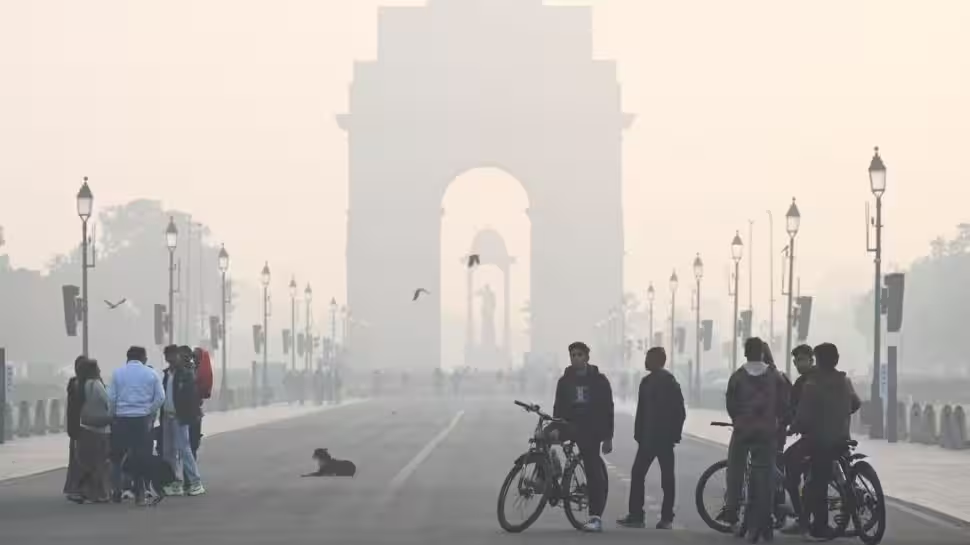
Delhi’s overall air quality remained in the ‘very poor’ category on Thursday, with the Air Quality Index (AQI) recorded at 356 at 6.05 am, according to data from the Central Pollution Control Board’s (CPCB) SAMEER app.
A day earlier, the national capital had recorded an overall AQI of 358 at 6.05 am on Wednesday, also falling in the ‘very poor’ category, as per CPCB data.
As per Central Pollution Control Board data, the national capital’s air quality largely remained in the ‘very poor’ category at 6.05 am on Thursday, with most monitoring stations reporting AQI levels between 301 and 400.
Add Zee News as a Preferred Source
Delhi AQI Update: Area-wise Air Quality Status
Chandni Chowk recorded the highest AQI at 404, placing it in the ‘severe’ category, making it the most polluted area in the city.
Area In ‘Very Poor’ Range
Anand Vihar (358), Dwarka Sector-8 (388), Mundka (388) and Punjabi Bagh (392) recorded ‘very poor’ air quality index.
Lodhi Road (324), IIT Delhi (319), RK Puram (382) and Sirifort (382) also recorded AQI in the ‘very poor’ category.
Areas such as Nehru Nagar (402), Pusa (401), Jahangirpuri (397), Vivek Vihar (397), and Rohini (393) reported AQI levels hovering close to the ‘severe’ mark.
Poor Category AQI
CRRI Mathura Road recorded the lowest AQI at 259, in the ‘poor’ category.
CPCB AQI Classification
As per CPCB standards, an AQI between 0 and 50 is considered good, 51 to 100 satisfactory, 101 to 200 moderate, 201 to 300 poor, 301 to 400 very poor, and 401 to 500 severe.
Delhi Shivers at 3.2 degrees Celsius as Cold Wave Grips Capital; Yellow Alert Issued
The national capital remained in the grip of a severe cold wave on Thursday, with the minimum temperature plunging to 3.2 degrees Celsius at 5:30 am, according to data from the India Meteorological Department (IMD).
Cold wave conditions accompanied by dense fog in several areas of the city disrupted normal life, affecting visibility and posing challenges for commuters.
The IMD has issued a yellow alert for cold wave conditions and dense fog, warning of persistent low temperatures in the coming days.
Relief is expected soon, however, as minimum temperatures are forecast to rise by 3-5 degrees Celsius over the next five days.
A cold wave occurs when minimum temperatures fall significantly below normal, making nights and early mornings intensely cold.

Comments are closed.