
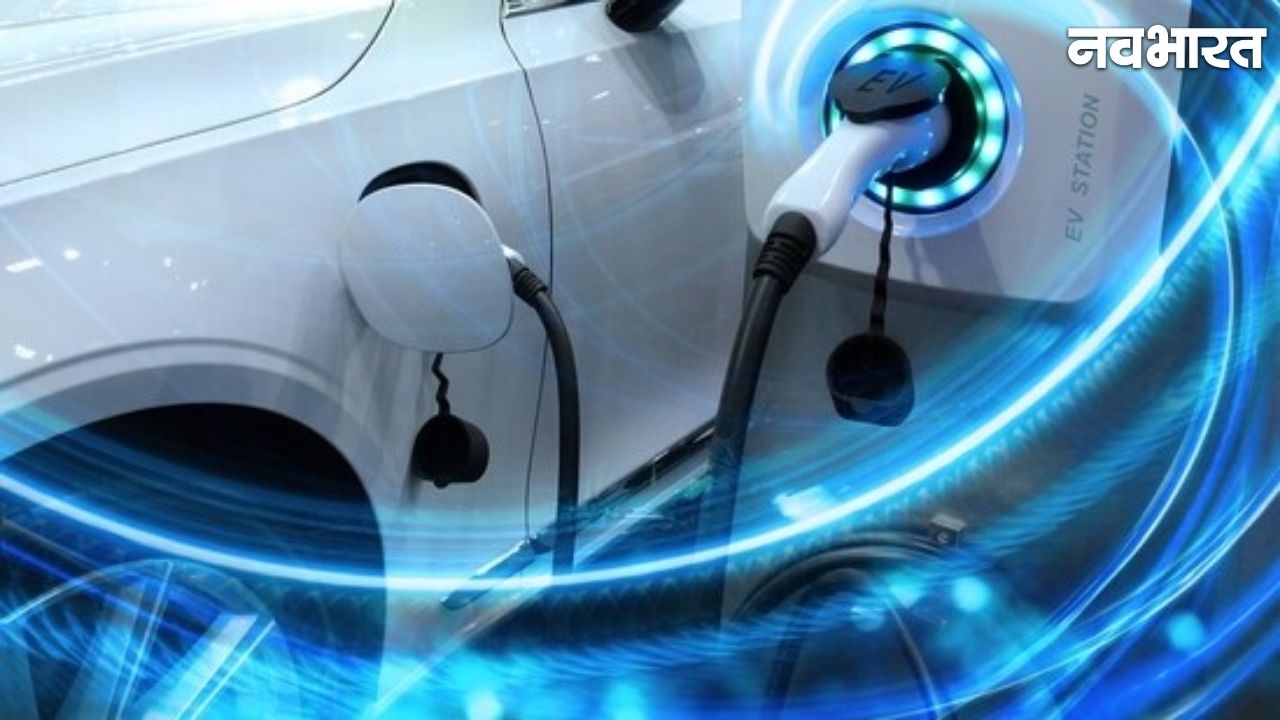
Budget 2026: Will batteries for electric vehicles be cheap? All eyes fixed on tax cuts and subsidies

GST Reduction on EV batteries 2026 India: The electric vehicle (EV) industry has big expectations from the Finance Minister in the upcoming Union Budget 2026, especially with demands for tax cuts to bring down battery prices. Currently, batteries account for around 40% of the total cost of EVs, without reducing which it is challenging to bring electric vehicles within the reach of the common man.
The industry has suggested reducing import duty on lithium-ion cells and raw materials as well as reducing GST on battery charging and swapping services from 18% to 5%. The Indian government is targeting 30% electric vehicle sales by 2030, for which strengthening the battery ecosystem in the budget may prove to be an essential step.
tax burden on battery
Currently the purchase of an EV attracts only 5% GST, but on batteries and related components the rate could go up to 18%, offsetting the input tax credit. In Budget 2026, experts expect the government to reduce the tax on batteries to bring uniformity in these rates. This will not only reduce the manufacturing cost of the vehicles, but consumers will also see a significant reduction in the final showroom price.
PLI and subsidy scheme
The government has already launched ‘PM e-Drive’ Rs 4,000 crore has been allocated for the scheme, which has been implemented after the FAME-2 scheme. In Budget 2026, there is a demand to increase the scope of the Production Linked Incentive (PLI) Scheme for Advanced Chemistry Cell (ACC) so that domestic production can be accelerated. If the government encourages cell manufacturing domestically, there will be less dependence on imports and battery prices will be stable.
customs duty on raw materials
There is a possibility of further reduction in customs duty on import of important minerals like lithium, cobalt and nickel required for electric vehicle batteries. In the last budget too, concessions were given on some minerals, but the industry is expecting complete exemptions this time to avoid uncertainties in the global supply chain. Lower raw material costs will enable Indian battery manufacturers to become more competitive in the global market.
Charging and Swapping Infrastructure
Reducing the 18% GST on battery swapping to 5% has become a major demand to promote Battery-as-a-Service (BaaS) model. Big players like IndiGo and Tata Motors are investing in this sector, but high tax rates are hindering their expansion. If there is a provision of additional Rs 2,000 crore in the budget for charging infrastructure, it will reduce range concerns.
Also read: Stock Market Holiday: Dalal Street slowed down due to BMC elections, big decision of BSE
future prospects
The government can also focus on recycling and circular economy to make India a global hub of electric vehicles by 2026. New incentive schemes may be announced for safe disposal and re-use of old batteries, which will reduce costs in the long run. This budget will decide what will be the pace of electric revolution in India and whether the dream of clean mobility for the middle class will come true.

Comments are closed.