
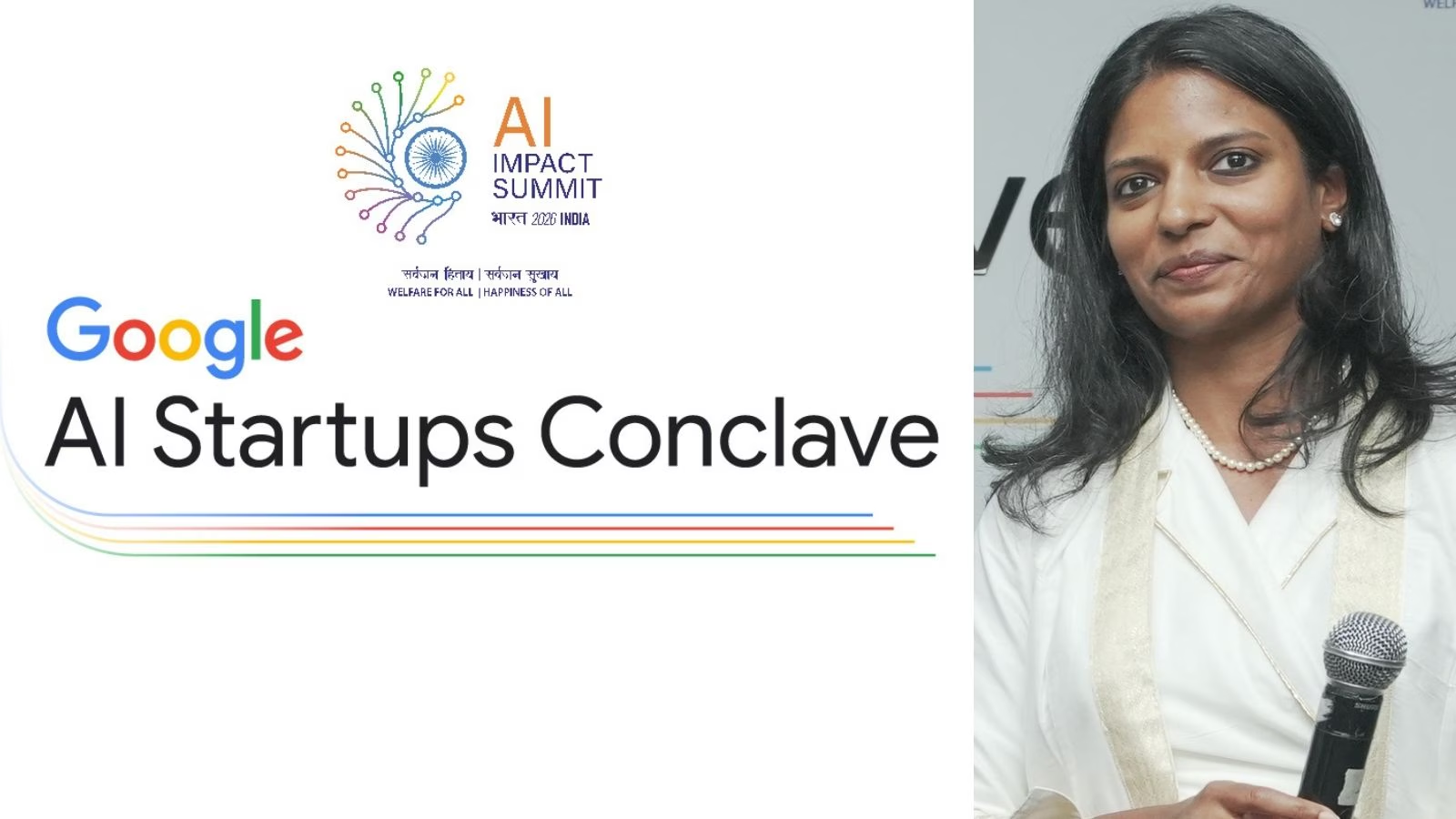
‘Half of India’s next wave of unicorns will be AI companies’: Google exec Seema Rao at AI Startups Conclave

“We have 120 to 150 tech startup unicorns in India today. Easily, in the next three to five years, over half of new unicorns will be AI unicorns coming out of India. That’s the opportunity we see,” said Seema Rao, Managing Director, Top Partners India & Corporate Development at Google.
Rao was speaking at the AI Startups Conclave on Thursday, January 15. The conclave in Delhi, which saw participation of startup executives from across the country, has been dubbed as the pre-summit event for the forthcoming global AI Impact Summit in partnership with Startup India and India AI mission.
India is at a critical juncture in its AI roadmap, with many companies transitioning from building technology to scaling it for real-world impact. Even as the nation prepares to host the ambitious global AI Impact Summit, the burgeoning startup ecosystem is showing enthused vigour and momentum. On the sidelines of the conclave, indianexpress.com sat down with Rao to discuss what makes this AI wave fundamentally different from previous tech cycles.
Edited excerpts from the full conversation follow:
Q: India is being described as “AI first” with unusual confidence right now. From your position at Google, what is genuinely different about this moment compared to previous startup waves like the SaaS era?
Seema Rao: What’s different is that with generative AI technologies, you can suddenly leapfrog the product build phase. You can get to quick prototyping, testing, and iteration with products in the market much faster. That last mile of access – getting to the right customers and converting pilots into commercial deployments – remains a challenge we’re hoping to support with the ecosystem.
With generative AI, coding is no longer a barrier, ideation is no longer a barrier. The whole product development phase has been compressed. Problems that were inherently challenging and required significant man hours or compute have now collapsed. That innovation tax has disappeared because generative AI models can do things much faster, cheaper, and quicker than before.
We’ve always had the challenge of India’s linguistic diversity. How do you translate and communicate messages in multiple languages? The minute generative AI technologies came, the first wave of startups we saw were solving for this with lip sync technologies, using one marketing campaign and instantly converting it into 20 local language campaigns with perfect sync and dialects. These are things that weren’t happening before. You’re seeing a whole new breed of offerings that Indian startups can now build, leveraging our multilingual environment that generative AI has made possible.
What’s similar is that the Indian startup ecosystem is amazingly resilient. I remember companies that struggled with their Series A pitches because investors believed they wouldn’t survive. Now they’re multi-billion dollar companies on public exchanges. Sectors that people questioned are now huge categories. What stays similar is just the resilience we have. What’s different is the amount of innovation enabled by these technologies.
Story continues below this ad
Q: This year, the conversation has shifted from building models to scaling outcomes. What would be the single hardest barrier for Indian AI startups moving from proof-of-concept to real market adoption?
Seema Rao: There are two things. First, when you’re building in a new category, trust is the hardest currency to earn. How do you build trust by design from day zero? Your models and applications need to work in a way where data governance, data sovereignty, security, and privacy are all taken care of. That’s a key aspect for many startups. With technologies that companies like ourselves are offering, trust by design is there from day one because our foundational platforms are built with that lens.
The real challenge then becomes access. You’ve got access to best-in-class technologies and world-class talent. You’re able to get to products very quickly. But how do you take it to global markets? How do you get a seat at the table with global enterprises? How do you get to tens of millions of dollars in revenue quickly? That continues to remain the biggest challenge. As we thought about various startup programs, we identified this gap and announced our market access program to solve for that last mile.
Q: How optimistic are you about Indian startups riding this AI wave?
Seema Rao: I’m super optimistic. Having been in the startup ecosystem for over 10 years and seen it from very close quarters, every time someone has tried to write off a certain segment or hype cycle, we’ve always come back and bounced with more vigour and impact. Any company or cycle goes through its own challenges, but if you look at it from a long-term standpoint, we’re going to have multiple high-impact AI companies coming out of India.
Q: India’s regulatory posture is still evolving. From a corporate development perspective, how important is regulatory clarity versus regulatory flexibility for startup growth?
Seema Rao: We’re seeing a very supportive regulatory environment for startups. As soon as these technologies became available, India AI Mission went on a mission themselves to make capacity and infrastructure available to Indian startups. The policy is very supportive. From various government interactions at the highest levels, everybody wants to see India’s AI ecosystem flourish, thrive, and reach global scale.
Story continues below this ad
What we’re seeing is very enabling and supportive of the startup ecosystem. We’re working with India AI Mission and Startup India in all these programs to complement what the government brings to the table. For startups, it’s all about creating that ecosystem. Over the years, we’ve created a robust ecosystem between policy, industry, corporates, academia, and startup founders. We’re in a good place now to leverage the opportunities that the AI era brings.
Q: Any final thoughts on the upcoming Global AI Impact Summit?
Seema Rao: It’s a great opportunity for India to be hosting the AI Impact Summit. The journey with AI has moved from the “wow” moment to “how”. How does it actually translate? That’s why it’s about impact, outcomes, and deliverables. Google is very keen and excited to partner with the government on the AI Impact Summit. It’s an opportunity for us to show the world what India can do with AI technologies, how our startups are innovating, and how we’re coming together as an ecosystem to drive this next wave of adoption.
Artificial Intelligence: deeply tracking developments in AI, providing nuanced perspectives on its ethical,industrial, and societal implications.

Comments are closed.