

Highlights
- ChatGPT Translate offers automatic language detection and instant translation across 50+ languages.
- Users can refine translations by tone, fluency, or audience using generative AI features.
- The tool emphasizes meaning over literal word-by-word conversion.
- Key limitations include a lack of document and real-time translation support compared to Google Translate.
OpenAI has introduced ChatGPT Translatea new translation tool that uses generative AI for language translation. This feature challenges Google’s long-standing dominance by not only providing direct translations but also offering context-aware improvements and flexible style options. With support for over 50 languages at launch and a user-friendly interface familiar to anyone who has used online translation services, ChatGPT Translate marks a significant step forward in improving multilingual communication worldwide.
A Familiar Interface With Smarter Features
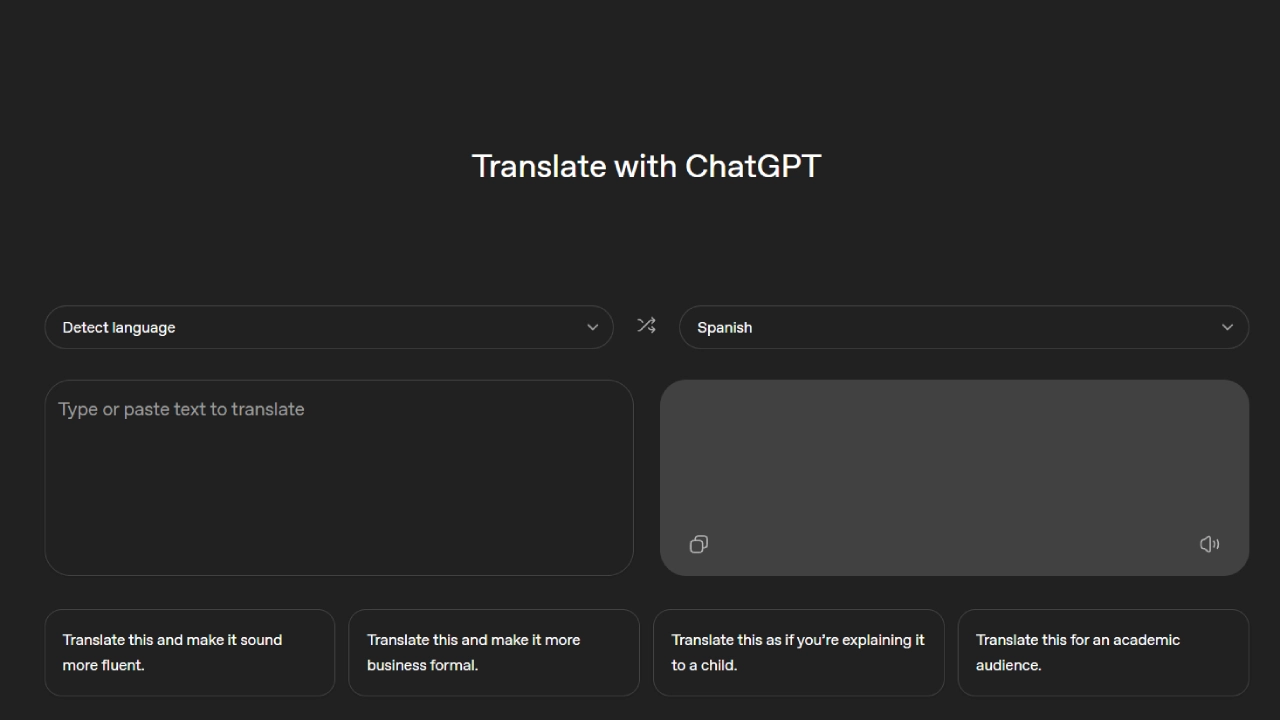
At a glance, ChatGPT Translate resembles well-known translation services like Google Translate and DeepL. Users see two side-by-side text boxes: one for input and the other for the translated output. The system automatically recognizes the source language, so users do not need to select it manually. They can choose the target language from a drop-down menu.
However, the similarities mainly end with the layout. Unlike traditional translation tools, ChatGPT Translate uses generative AI not just to change text from one language to another but to help users refine translations based on context, tone, or audience. After receiving a translation, users can tap prompts below the output to make the language more fluent, formal for business, simpler for kids, or suitable for an academic presentation. These prompts lead users back to the main ChatGPT interface, where they can edit the translation more with the platform’s conversational AI features.
How ChatGPT Translate Works
Using ChatGPT Translate is simple. Users type or paste text into the left box, and the translation shows up almost instantly on the right. The automatic language detection means users typically don’t need to identify the source language manually, which speeds up quick translation tasks.
Once the initial translation appears, the true strength of ChatGPT Translate becomes clear. Users can ask follow-up questions or request rephrasings without starting from scratch, all within the same session. For instance, someone translating a business memo can prompt the tool to “Make this sound more professional,” while another user translating a children’s book might opt for simpler language. This mix of translation and rewriting makes the tool more flexible and aware of context than most existing automated translators.
In addition to text, OpenAI has indicated that the tool also supports voice and image translation. However, these features may still be developing or less functional compared to more established tools.
Where It Excels and Where It Lags Behind
One of the most appealing parts of ChatGPT Translate is its AI-driven flexibility. Users can go beyond literal translations and refine the output based on tone, audience, or style. This contextual intelligence is particularly helpful in real-world communication, where nuance and intent are important.
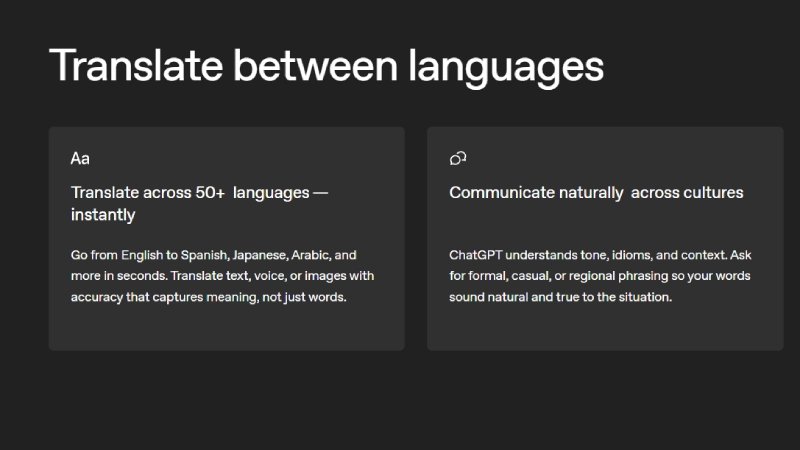
However, there are some limitations. Right now, the tool cannot translate documents, live conversations, websites, or handwriting, features that Google Translate handles well after years of development. While ChatGPT Translate covers over 50 languages, Google’s service manages a broader range and offers strong support for image uploads and real-time speech translation in many situations.
Currently, ChatGPT Translate mainly focuses on text translation and improvement, with aspects like voice and visual input mentioned but not fully developed in the public interface. This suggests that OpenAI is prioritizing quality and flexibility in text translation first, with additional features potentially coming later as the product evolves.
A Strategic Move in the Translation Market
The launch of ChatGPT Translate shows OpenAI’s aim to compete directly in a market led by Google Translate. Google’s tool has become a standard, widely adopted due to its integration with Android, Chrome, and other platforms, along with features like multilingual website translation and offline support.
OpenAI seems to focus on quality, context, and user control. They want to use the strengths of large language models to interpret meaning and tone instead of just converting words. This approach to flexible, generative translation may attract users who find traditional tools too rigid or limited. For translators, content creators, educators, and professionals, the ability to refine translation to suit specific contexts—whether formal, academic, or conversational—offers a powerful tool that goes beyond mere word substitution.
The tool’s release also highlights how AI platforms are moving beyond chat and writing help into more everyday functions. By creating a mainstream translation tool with conversational AI elements, OpenAI may be setting the stage for future advances that merge translation, communication support, and content creation.
Potential Future Enhancements
Like many AI services in their early stages, ChatGPT Translate is likely to change quickly. Future updates may include wider language support, document uploads, real-time voice translation, and better integration with mobile apps or operating systems. If OpenAI incorporates the translation feature into other products or APIs, developers and businesses may use it to create custom language tools for specific needs.
In the long run, this growth opens up exciting possibilities—from real-time, context-aware translation in video calls to integrated writing and localization tools for global teams. As users try ChatGPT Translate and share feedback, OpenAI will probably enhance the tool’s capabilities to compete against or even surpass existing translation services.
What It Means for Users
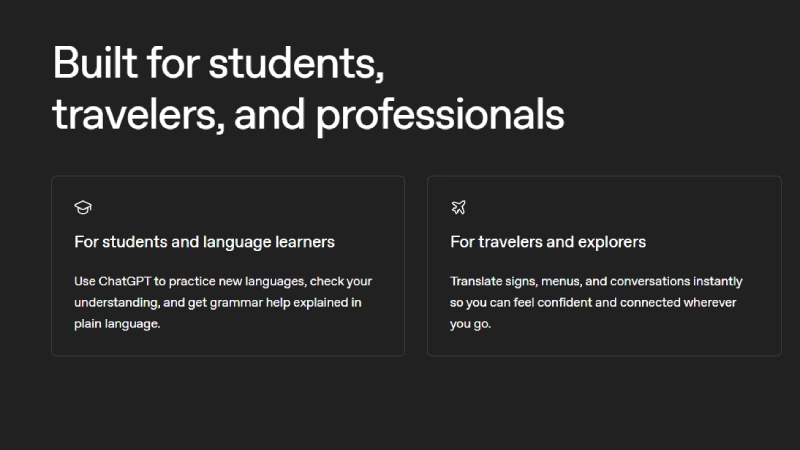
For regular users, ChatGPT Translate offers a strong new choice for handling multilingual text, especially when tone and context matter. Rather than settling for basic translations, users can interact with the tool to create more natural, audience-appropriate results. This capability is useful for international communication, professional writing, and language learning.
While it may not replace Google Translate for all scenarios—especially those involving images, documents, or live speech—ChatGPT Translate represents a meaningful advancement in how translation tools can be designed and used. With ongoing development and broader feature support, it could become a strong competitor in the global translation market—one that doesn’t just translate languages but adjusts meaning for real-world communication.

Comments are closed.