
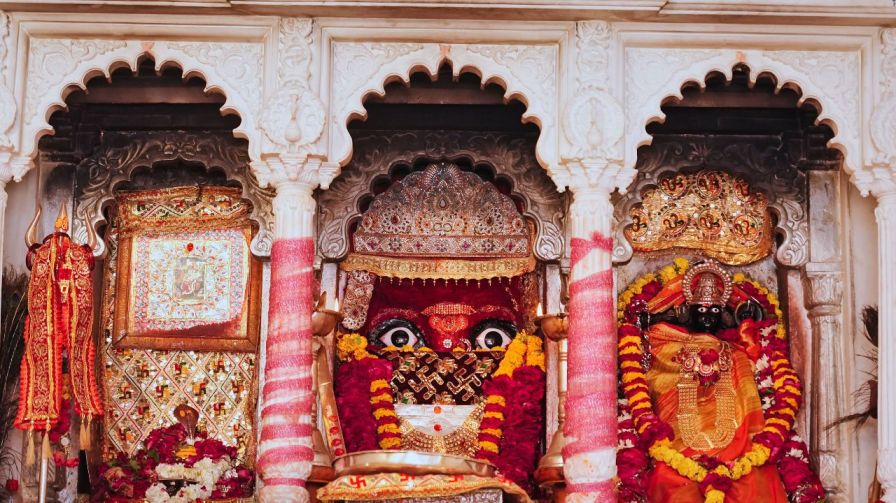

Devi Mahakalika temple situated on the Pavagadh hills of Panchmahal district of Gujarat is famous across the country. According to belief, this is the same temple where sage Vishwamitra himself had installed the idol of Goddess Kali. This temple is also associated with the Shaktipeeths of Goddess Durga. To have darshan in the temple one has to climb hard. This temple is famous all over the world for its historical, religious and cultural importance.
This holy place of Goddess Mahakalika is also a part of the UNESCO World Heritage Site ‘Champaner-Pavagadh Archaeological Park’. It is said that this temple was built between 10th to 11th century. It is a popular belief that Goddess Kalika resides here in self-contained form and never returns empty prayers offered with a true heart. This temple is one of the most ancient and popular religious places of Gujarat.
Also read: Gaurishankar Temple: What is the history of this temple with Shivalinga made of mercury?
Temple Features
Altitude and Location: This temple is located on the peak of Pavagadh, at an altitude of about 750–830 meters above sea level. Being built on the peak of a high rocky mountain, both the views and the atmosphere here are impressive.
Goddess form and worship: Here the goddess is worshiped as Mahakalika/Kalika, the goddess is seen in the form of Durga/Chandi. An ancient Kali Yantra is also revered in the temple.
UNESCO Jagseva Area: Pavagadh is part of the Champaner UNESCO World-Heritage Site. Therefore this place is important from both religious-cultural and archaeological point of view.
Beliefs related to Pavagadh temple
Status of Shakti-Peetha:Mahakalika of Pavagadh is considered one of the 51 Shakti-Peethas in many folk beliefs. Here the emotional-mythological reason for the fall of any part of the mother (or their presence) is explained.
Local Recognition: The local tribal community has also been worshiping the goddess present in the temple for centuries. Many devotees believe that the Goddess resides here in her own form and the vows made with devotion here are fulfilled.
Also read:Chandni Chowk’s Digambar Jain temple, where the glass broke due to the explosion, what is its history?
Mythological story related to the temple
According to the popular legend, the presence of Mahashakti Kalika here is very ancient. In some beliefs, it is said that sage Vishwamitra performed penance here and installed the goddess, after which this mountain became sacred. In other streams it is linked to Sati/Shakti-Katha, that is, Pavagadh is said to be linked to the tradition of Sati-places (Shakti-Peethas).
History related to the temple
Antiquity: The earliest sources of the temple are believed to be from the 10th–11th century.
Jain relations: Historians say that Pavagadh was once a Jain pilgrimage site along with agriculture. In the 12th century, the presence of Snatambar Achargachha and the prestige of Mahakalika have been found linked here. That is, the traditions of this place have gone through both Jain and Hindu religious influences.
Medieval Changes: Changes were also made to the shikhara/structures of the temple by the rulers of the region in the 15th and 16th centuries.
Road to reach Pavagadh
Easiest and effective way – Rope-way
Ropeway facility: Ropeway is running here since 1986. From the lower station, a ropeway leads up to the top. The journey by ropeway is only 5-6 minutes and then there is very little walking required.
Hike/Trek
Stairs and walkway: If you want to go on foot, you have to climb about 1,800–2,400 stairs or about 4–5 km (different climbing instructions are also given). One has to climb about 250–300 steps from the ropeway station to the peak.
Nearby cities and vehicles
Nearest city: Pavagadh-Champaner is in Panchmahal district of Gujarat. This place is about 46 kilometers from Vadodara. It is easily accessible by road from Vadodara and Ahmedabad.
Local Access: Nearby bus/taxi services are also available.
Best season to visit
During winter season (October–February) and Navratri, the crowd is highest and the weather is also good. Even during monsoon, the lush green valleys look beautiful but the climb can be slippery.

Comments are closed.