
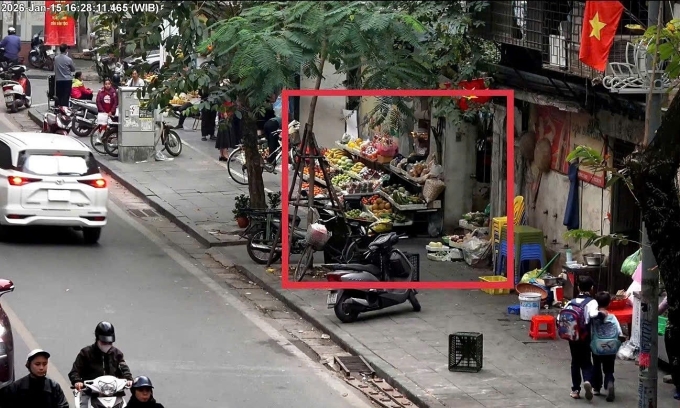

The initiative, which rolled out last Wednesday by the Hanoi Police Department, aims to strengthen urban management, deter repeat offenses, and enhance the overall aesthetics of the capital by monitoring public spaces around the clock.
The AI camera system is designed to automatically detect and record a wide range of infractions. These include sidewalk and roadway encroachment, the illegal display of goods, unauthorized advertising signs or canopies, and illegal vehicle parking, according to the department.
Additionally, the system targets environmental hygiene issues such as littering and the improper discharge of wastewater. Images of these violations are transmitted directly from the Hanoi Police Command Information Center to local ward and commune police units for immediate verification and processing.
Under Hanoi’s new enforcement initiative, urban order violations include encroaching on roadways and sidewalks, unauthorized vending, the illegal installation of awnings or advertising signs, and prohibited vehicle stopping or parking.
Environmental hygiene violations encompass improper waste disposal, littering, public urination, discharging wastewater in unauthorized areas, and dumping rubbish into drainage systems.
The AI camera system specifically monitors high-priority infractions such as: roadway and sidewalk encroachment, illegal vehicle stopping and parking, unauthorized waste dumping and littering, public hygiene violations in public spaces.
Within this initial batch, the AI cameras directly identified five specific urban order violations within the first two days of implementation, primarily sidewalk encroachment, which accounted for VND12.5 million of the total fines. Authorities noted that this automated process significantly reduces handling times and ensures enforcement even when officers are not physically present on-site.
This rollout follows the initial activation of the AI camera network on Dec. 13, 2025. The current infrastructure consists of 1,837 cameras positioned along 25 major streets and at 195 high-traffic intersections. Since its debut, the system has identified more than 6,000 traffic law infringements.

Comments are closed.