
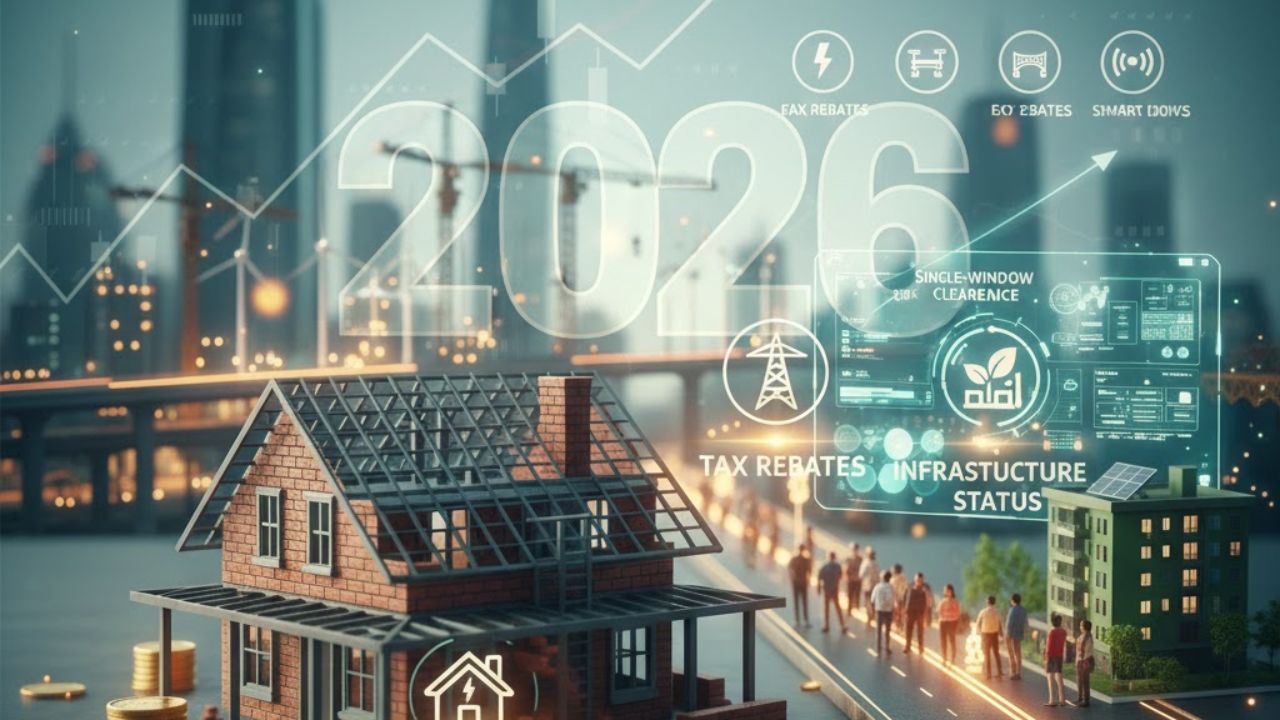
Budget 2026: Big expectations from real estate sector budget! Home loan tax exemption and possibility of getting ‘infra’ status?

As expectations mount ahead of the Union Budget 2026, real estate leaders in Maharashtra are calling for focused policy measures to keep housing affordable, sustain end-users’ confidence and accelerate urban as well as infrastructure-based development. Industry stakeholders have expressed the belief that increasing tax rebates for home buyers, giving infrastructure status to housing, rationalization of GST on construction materials, expediting the approval process and continuous investment in connectivity, redevelopment and sustainable development can achieve balanced, inclusive and long-term growth in the residential, commercial and luxury segments.
Mr. Prashant Sharma, Chairman, Naredco Maharashtra
“The real estate sector has consistently been an important pillar for economic growth, employment generation and allied industries. In the upcoming Union Budget, measures are expected to strengthen end-user demand, promote affordable housing and speed up project implementation. In particular, giving infrastructure status to affordable and middle income group housing will facilitate access to institutional finance and reduce the cost of borrowing for developers.”
He added, “We strongly demand that home loan interest and principal repayment tax deductions (Sections 24(b) and 80C) for home buyers should be reconsidered as they have not changed for many years. Rationalization of GST on construction materials and clarity on input tax credit will reduce cost burden. Also, policy support for speedy approvals, redevelopment and urban housing and incentives for sustainable and green growth in the sector are long-term and inclusive. will contribute to growth.”
Stock Market Today: Investors fear increased! Negative initial signals in the stock market, read in detail
Mr. Kaushal Aggarwal, President, The Guardians Real Estate Advisory
“With the Union Budget 2026 approaching, the real estate sector is eyeing policy continuity and measures to boost affordable housing. The market has shown remarkable resilience over the past year, supported by steady sales in major cities and rising participation of genuine home buyers. Against this background, increasing tax concessions on interest and principal repayments on home loans, as well as stamp duty and registration fees, especially for the middle-income and affordable groups. Rethinking, this could significantly reduce the cost of ownership and encourage first-time home buyers.”
“Equally important is the government’s continued focus on urban infrastructure, metro connectivity and redevelopment-based growth, which will open up new demand areas and improve the quality of life in the city. Clarity and consistency in the taxation system, particularly a rational approach to taxes on under-construction properties, will strengthen buyer confidence and developer confidence. All these measures will together underline the real estate sector’s long-term role in India’s economic and urban development, promoting balanced and inclusive growth.”
Mr. Shilpin Tatar, Managing Director, Superb Realty
“The real estate sector has been a major driver of economic growth, employment generation and urban transformation. The coming budget is expected to provide policy measures that will increase the viability of projects and sustain end-user demand in the residential as well as commercial segments. Grading of housing infrastructure, opening the way for long-term and affordable financing and promoting ease of doing business will greatly support developers, especially for urban, redevelopment-based and mixed-use markets.”
“As construction costs continue to rise, rationalization of GST on key construction materials and clarity on input tax credit is essential. Faster approvals, policy support for redevelopment and focused incentives for green and sustainable projects will increase supply efficiency. In the commercial real estate sector, budgetary emphasis on future-oriented office and commercial spaces based on design, sustainability, employee welfare and technology will be critical. Incentives for green certified and energy-efficient buildings, technology-enabled smart workspaces And consistent investment in urban infrastructure will enable developers to create high-quality properties, consistent with global standards.”
Farm to Fork Model in India: The European model ‘Farm to Fork’ is fast taking root in India; A new engine for economic growth?
Mr. Kamlesh Thakur, Co-Founder and Managing Director, Srishti Group
“Increasing tax rebates for home buyers and expanding interest subsidy schemes will provide a major boost to genuine demand, especially from the affordable and middle income groups. As cities develop, real accessibility rather than mere connectivity will matter. Speeding up key infrastructure projects like the Goregaon-Mulund Link Road, metro corridors and major transport routes will open up new micro-markets and reduce travel time significantly. For developers, faster regulatory approvals, single-window Clearance, easy access to long-term capital, rationalization of GST on construction materials and incentives for sustainable development are essential elements. All these measures will together promote inclusive and long-term urban development while providing high-quality housing.”
Ms. Shraddha Kedia-Agarwal, Director, Transcon Developers
“The upcoming Union Budget is expected to include policy measures that will keep housing affordable, increase ease of doing business and help in timely completion of projects. Increasing tax incentives for homebuyers and providing easy access to long-term, low-cost funds will sustain end-user confidence in all housing segments, including luxury housing and mixed-use projects. Luxury homes, quality commercial properties and India’s strong image among NRI investors have been key demand drivers. Taxation, Clarity on repatriation rules and investment-friendly policies will further strengthen the sector. Also, rationalization of GST on construction materials and incentives for sustainable and green projects are essential, creating long-term value for home buyers, investors and the city.”
Mr. Gaurav Verma, Director, Ora Group
“The real estate sector is a critical vehicle for urban growth and economic momentum. Strengthening tax incentives for homebuyers and providing long-term, low-cost financing will continue to support end-user demand across all segments. Along with apartments, there is also growing interest in plotted developments and second homes, driven by improved infrastructure, work-from-anywhere trends and lifestyle-based ownership aspirations. Luxury housing and redevelopment-based projects have responded well in the urban market. Increasing accessibility due to changing lifestyles and infrastructure are key factors behind this. Speeding up key infrastructure projects, metro lines and major road networks will open up new micro-markets and improve living standards. Rationalization of GST on construction materials and incentives for sustainable development will enable developers to create high-quality residential properties in the long term.”
Mr. Dhrumaan Shah, Promoter, Ariha Group
“The upcoming Union Budget is expected to introduce policy measures that will increase the viability of projects, simplify the approval process and make housing more affordable for end-users. Luxury real estate has been a fast-growing segment, fueled by savvy buyers looking for larger homes, better amenities and homes in strategic locations. Redevelopment projects have also played an important role in modernizing old urban infrastructure to provide a quality urban lifestyle. Faster approvals, single-window clearance, construction Rationalization of GST on materials and incentives for sustainable and green projects will greatly reduce implementation bottlenecks. Sustained emphasis on infrastructure and end-to-end connectivity will drive redevelopment-based growth and deliver world-class residential properties.”

Comments are closed.