
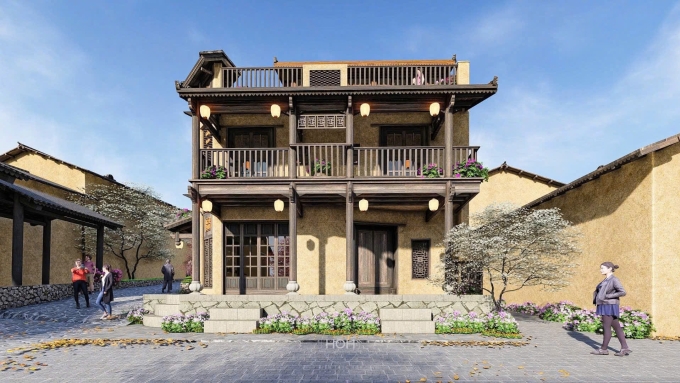

A design of a two-storey concrete house in Lo Lo Chai, Tuyen Quang Province, northern Vietnam. Photo provided by the homeowner
Ongoing construction of a two-story concrete house with plastered brick walls in “the world’s best tourism village” in northern Vietnam’s Tuyen Quang Province is sparking controversy.
Lo Lo Chai, which received the “Best Tourism Village in the World” title in 2025 from the United Nations World Tourism Organization, is known for its traditional earthen-walled houses.
Since Jan. 17 images of the concrete house in Lung Cu Commune have been splashed on social media, with many tourists complaining it affected the cultural identity of Lo Lo Chai.
The use of concrete detracts from the village’s pristine and historic character, they said.
Some also raised concern about the fact it is much taller than surrounding structures.
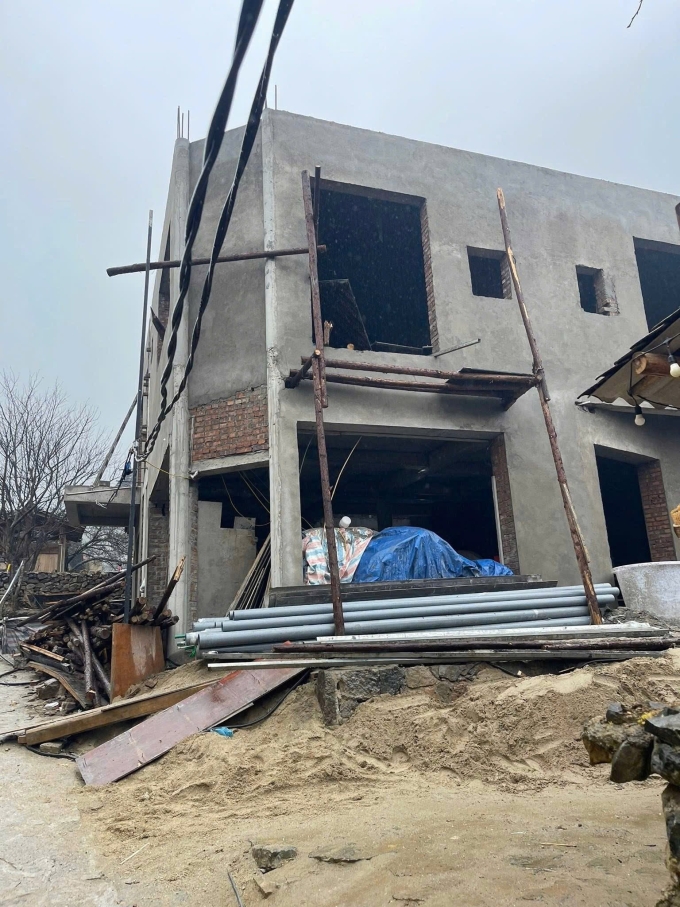 |
A two-storey concrete house under construction in Lo Lo Chai Village, Tuyen Quang Province. Photo provided by the homeowner |
The authorities said it is a private residence owned by a local, who got a construction permit in November.
They have clarified that, while a concrete frame is necessary given the area’s harsh climate, once construction is completed, the homeowner is required to paint the exterior walls in the village’s traditional earthen yellow color, install tiled roofing and incorporate exterior details that harmonize with the village’s overall architectural style.
They added they are monitoring the construction, particularly the roofing and exteriors, warning non-compliance with architectural regulations or license provisions would result in suspension of the construction.
UN Tourism recognized the village for its rich cultural and natural resources, and commitment to sustainable tourism development.
Its award underlines tourism’s role in preserving rural landscapes, traditions, biodiversity, and local livelihoods such as farming, forestry and fishing.
Villages selected for the award must demonstrate strong natural and cultural assets, apply innovative practices and show a commitment to tourism development aligned with the United Nations Sustainable Development Goals.

Comments are closed.