
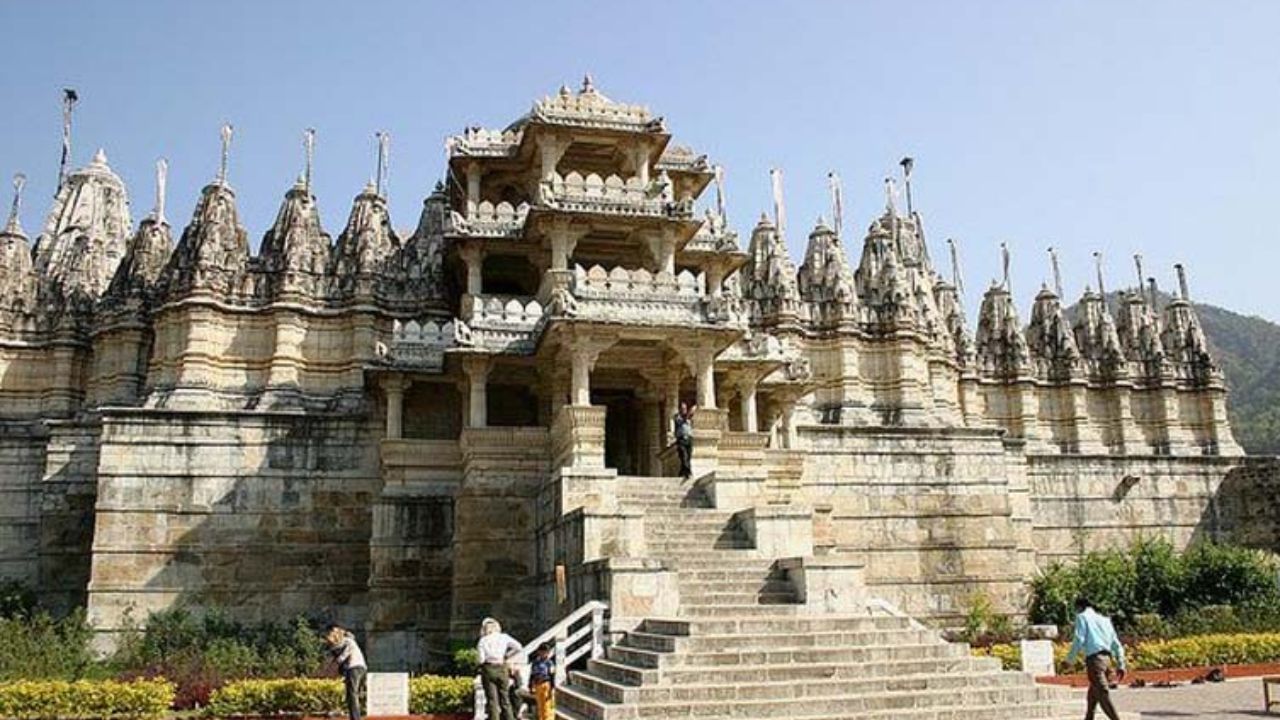

Dilwara Jain Temple, located in Mount Abu in Sirohi district of Rajasthan, is not just a religious place, but a wonderful confluence of Indian architecture and faith. The carving of this temple made of white marble is so fine that vibrant emotions are reflected in the stone. For the followers of Jainism, this temple is considered a symbol of salvation and spiritual peace. According to the belief of Jainism, visiting and worshiping here destroys a person’s sins and purifies the soul.
It is believed that a person who prays at Dilwara temple with a true heart gets spiritual peace in life and direction towards the path of salvation. There are five main Jain temples in the Dilwara temple complex, including Vimal Vasahi, Lun Vasahi, Peethalahar, Khartar Vasahi and Mahavir Swami Temple. Each temple is dedicated to a different Jain Tirthankara and the carvings on the walls, ceilings and pillars of each temple provide unique examples of Indian art.
Recognition of Jainism related to Dilwara temple
- According to Jainism, Dilwara Temple is the place where the soul is shown the path to purification and salvation through worship and worship of the Tirthankaras.
- It is believed that by worshiping here, a person gets freedom from sins and the soul attains peace.
- Jain followers believe that visiting this temple reduces a person’s karmic bondages and inspires him to move towards the path of salvation.
- This place is considered very sacred for the Shwetambar Jain sect.
Also read:Ghrishneshwar Temple: What is the story and belief of this temple associated with 12 Jyotirlingas?
Temple Features
Dilwara Temple is known for its marble carvings and architecture. There are total five main temples here,
- Vimal Vasahi Temple – Dedicated to Lord Adinath (first Tirthankara).
- Lun Vasahi Temple – Dedicated to Lord Neminath (22nd Tirthankara).
- Peethalhar Temple – Dedicated to Lord Rishabhdev.
- In fact Vasahi Temple – Dedicated to Lord Parshvanath (23rd Tirthankara).
- Mahavir Swami Temple – Dedicated to Lord Mahavira (24th Tirthankara).

Historical and cultural importance associated with the temple
- According to belief, the Dilwara temple was built between the 11th and 13th centuries.
- Vimal Vasahi Temple was built in 1031 AD by Veer Vimal Shah, who was then the minister of Bhimdev, the Solanki ruler of Gujarat.
- Lun Vasahi Temple was built in 1230 AD by two brothers named Tejpal and Vasthupal, who were the prime ministers of King Virdhawal of Gujarat.
Features of the temple structure
- The walls, ceilings and pillars of the temple are so beautifully carved that it seems as if the marble comes alive.
- Every temple in the complex has intricately carved marble windows, flowers and deities.
- It is said that hundreds of artisans worked for decades to create these carvings.
- The environment here is very peaceful and spiritual, where mobile phones and photography are not allowed, so that there is no hindrance in meditation.

Way to reach Dilwara Temple
This temple is in Mount Abu, Sirohi district, Rajasthan.
Nearest Railway Station:
Abu Road Railway Station – about 28 kilometers from the temple.
Nearest Airport:
Udaipur Airport – About 165 kilometers from here.
Road route:
Bus and taxi services are available from many cities of Rajasthan and Gujarat to Mount Abu.
There is a distance of 2 kilometers from Mount Abu to Dilwara Temple, which can be covered by taxi, auto or even on foot.

Comments are closed.