
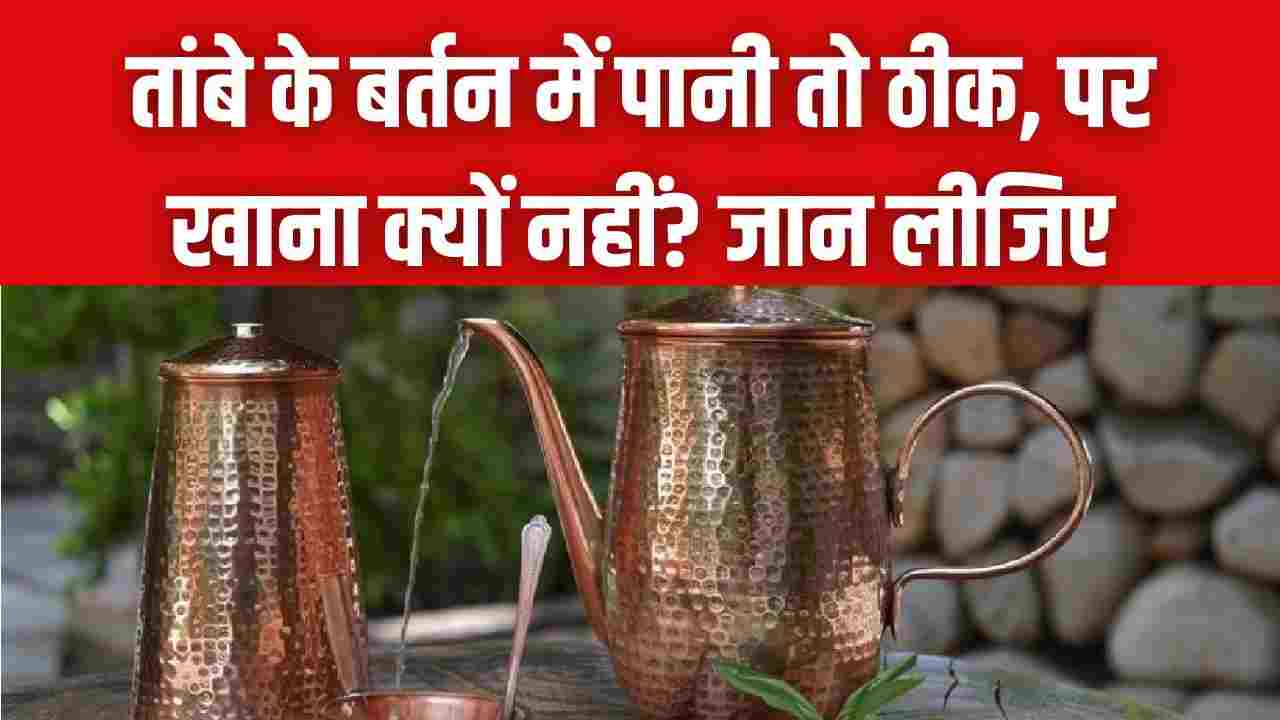
Ayurveda’s nectar, science’s ‘slow poison’! Do not eat these 5 things in a copper vessel even by mistake, instead of benefit it will cause fatal harm.

Cooking in copper vessels: Copper utensils, which have been the pride of Indian kitchen for centuries, have once again become a health trend today. From Ayurveda to modern science, everyone recommends drinking water kept in a copper vessel in the morning on an empty stomach. But do you know that copper, which is considered ‘nectar’ for water, can also act as ‘slow poison’ for cooking or storing food? If you are also making this mistake in the pursuit of staying healthy, then be careful. Why water is nectar and food is ‘slow poison’? The answer to this puzzle is hidden in science. Copper is a very reactive metal. When water is stored in it for 8-10 hours, it purifies the water by eliminating the harmful bacteria present in it. Water is neutral, so the reaction of copper with it is very slow and beneficial. But as soon as any acidic or salty food is cooked or kept in a copper vessel, copper starts reacting rapidly with the food. In this process, excessive copper dissolves in the food, which is called ‘Copper Toxicity’. This excess copper enters the body and gradually acts as poison. Keep a strict distance from these things. According to experts, bringing certain types of food items in contact with copper is a direct invitation to diseases: Sour things: Lemon, vinegar, tamarind, pickle, tomato chutney or any sour vegetable. Their acidic nature combines with copper to form toxic compounds. Dairy Products: Do not keep milk, curd, cheese or buttermilk in copper utensils. It can react immediately and cause food poisoning. Salt and spicy food: Salt accelerates the process of corrosion of copper, due to which the metal starts dissolving in the food and its taste also deteriorates. These can have serious effects on health. Eating food cooked or kept in copper utensils for a long time can increase the amount of copper in the body to dangerous levels, which can cause these problems: Digestive system. Problems: Vomiting, diarrhea, severe stomach pain and nausea. Damage to organs: It has the worst effect on the liver and kidneys and increases the risk of their failure. Effect on mental health: Excess copper in the body can also cause mental confusion and fatigue. How to use copper utensils properly? This does not mean that you should throw away copper utensils. All you need to know is to use them properly: Only for water: Use a copper jug or pot only to store plain water. ‘Kalai’ is a protective coating: If you must cook in a traditional copper vessel, make sure that the ‘Kalai’ (tin coating) inside it is properly coated. This layer acts as a safe wall between the food and the copper. Regular cleaning: Always keep the green layer (copper oxide) deposited on the vessel clean by rubbing it with lemon, tamarind or salt. In short, copper is a boon for water, but for food it can become a hidden curse. It is wise to drink water in a copper vessel and cook food in a steel or earthen vessel.

Comments are closed.