
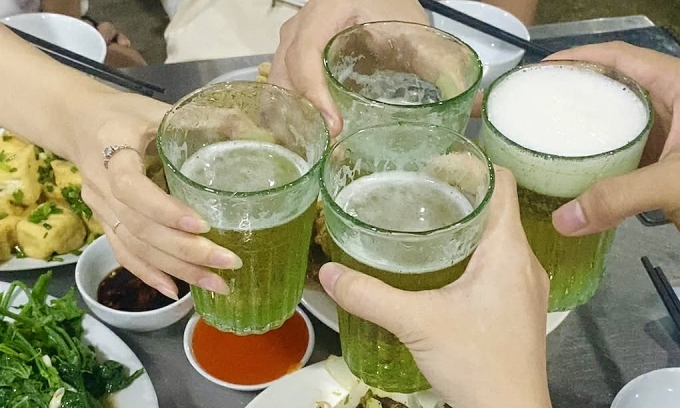

The 29-year-old communications officer at a major company in Hanoi is required to attend client dinners and social gatherings late into the night throughout the week.
She laments: “If I don’t go, I risk losing my job. If I do go, I am forced to drink.”
At first, she drank a few courtesy drinks. Over time, this turned into forced drinking and then drinking on behalf of her boss and colleagues.
Her daily routine slowly shifted to skipping breakfast, eating hurried lunches, and spending evenings at drinking tables.
She says refusing alcohol at these gatherings is seen as being “insensitive” or “lacking manners.” She also believes the drinking culture helps maintain relationships and keeps work lubricated and running smoothly.
But recently she developed persistent stomach pain, acid reflux, nausea, and fatigue.
At one party she vomited a yellow fluid mixed with dark blood and was taken to hospital where doctors diagnosed her with gastric ulcers, bacterial infection and a risk of internal bleeding, and ordered rest and complete abstinence from alcohol.
Medication prescribed to Thuy Linh, an office worker in Hanoi, for recurring stomach pain caused by forced drinking at work. Photo courtesy of Linh |
Thao, 28, an accountant nicknamed “alcohol god” and “the tireless one,” has also not declined any drinking parties since joining her company out of fear that she would be labeled “unsociable.”
Despite health checks returning results of elevated liver enzymes and declining kidney function for three consecutive years, she brushed them off and continued drinking, prioritizing validation in the workplace over her health.
At many companies, drinking is treated as make-or-break, with people who can drink heavily and remain sober often seen as sociable and productive.
It has shifted from a voluntary activity to a social obligation, especially during year-end events, holidays and birthdays. The drinking table has become a display of power where refusal is nearly impossible, despite known health risks.
The World Health Organization says alcohol directly causes more than 30 non-communicable diseases and contributes to over 200 others.
Vietnam ranks second in Southeast Asia and third in Asia for per capita alcohol consumption. Some 44% of adult men in the country drink to hazardous levels.
Vietnamese people spend nearly US$3.4 billion on alcohol every year, according to the Ministry of Health. During holidays and Tet, alcohol poisoning is common.
Assoc Prof Dr. Nguyen Quang Dung, deputy head of the department of nutrition and food safety at THE Hanoi Medical University, says long-term alcohol abuse increases the risk of chronic diseases such as hypertension, cardiovascular disease, and cancers of the throat, esophagus, liver, and colon.
The forced drinking culture increases the risk of acute alcohol poisoning, particularly methanol poisoning from industrial alcohol.
Early symptoms of methanol poisoning often resemble ordinary intoxication, causing patients to underestimate the danger. By the time they experience blurred vision, seizures and severe metabolic disorders and are admitted to hospital, damage to the brain and circulatory system is often irreversible.
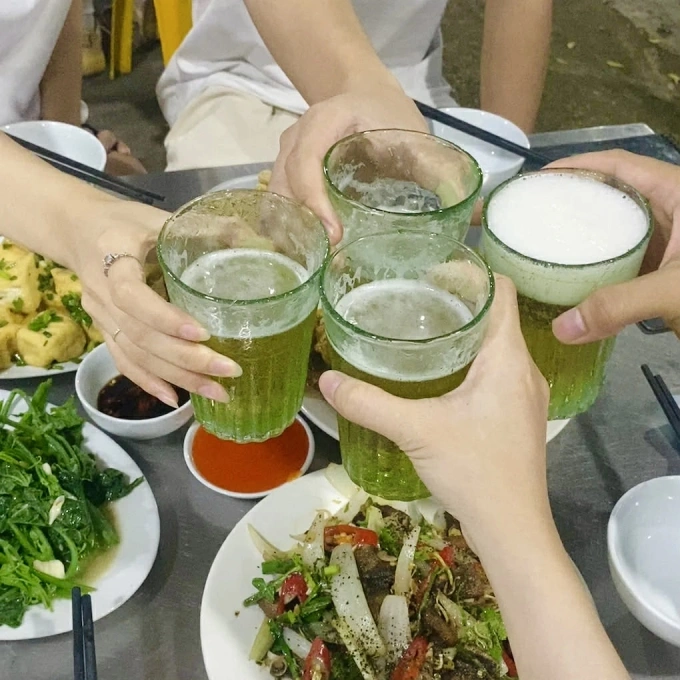 |
Thao, an office worker in Hanoi, drinks beer and liquor with colleagues almost every week to avoid being labeled “unsociable.” Photo courtesy of Thao |
Medical experts say men should not consume more than 720 ml of beer or 60 ml of spirits per day, and women no more than 360 ml of beer or 30 ml of spirits. Mixing alcohol with soft drinks or stimulants should be avoided as they speed alcohol absorption into the bloodstream and increases the risk of acute poisoning.
People should seek medical care immediately if they experience severe headache, blurred vision or hypothermia after drinking.
Dr. Dung says while the forced drinking culture is unlikely to change in the near future, recognizing personal limits and refusing alcohol when those limits are reached is the most effective way to protect one’s health at the workplace.

Comments are closed.