
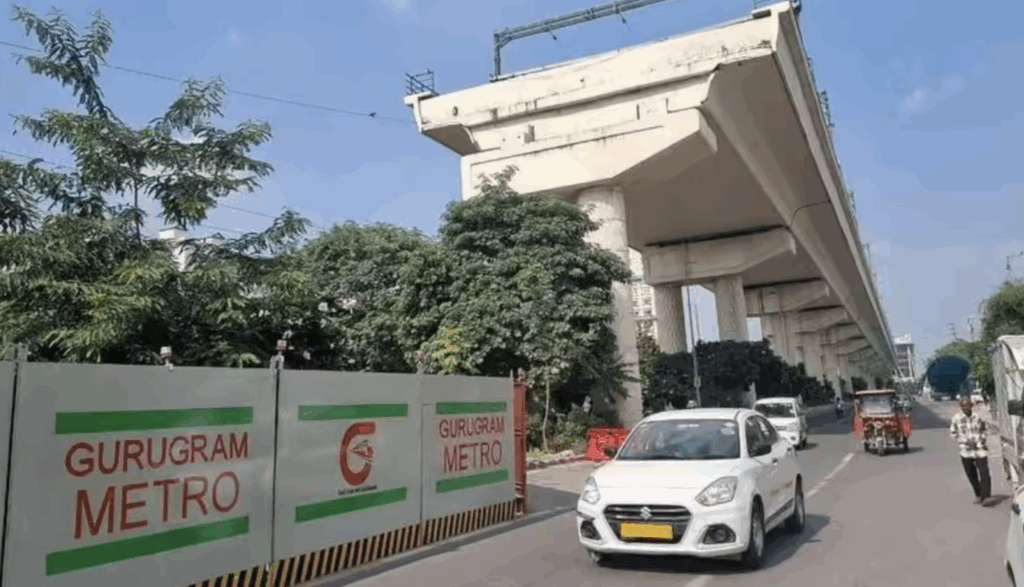

The Haryana government has unveiled a hard-line approach to prevent land acquisition bottlenecks from slowing down the Gurgaon Metro projectespecially on the 29.05 km Millennium City Centre–Cyber City corridor. Officials have made clear that while they prefer negotiated settlements, they are prepared to seize land from unwilling owners if necessary to maintain momentum on the strategic infrastructure project.
This comes amid renewed efforts to expand rapid transit in one of India’s fastest growing urban regions, where delays in securing small parcels of private land have repeatedly hampered the timeline for metro construction and operational readiness.
Why the Push on Land Acquisition
The Millennium City Centre–Cyber City Metro route is seen as a critical mobility upgrade for the industrial, commercial, and residential hub that makes up Gurgaon (also known as Gurugram). Given traffic congestion, rapid population growth, and the need to better integrate with wider regional transit networks, completing the metro has been a priority for both state planners and commuters.
However, even small holdouts by private landowners along the alignment — near buildings, commercial plots, and proposed depot space — have contributed to project delays. To address these challenges, the state government revised its land acquisition framework to provide incentives and a clear path toward timely possession.
Offer of Higher Compensation and Incentives
Haryana has sweetened the deal for landowners by offering 25 percent higher compensation for land required for the metro corridor. This aims to make negotiated sales more attractive compared with waiting through prolonged acquisition procedures.
The increased compensation is calibrated against standard market rates and seeks to cushion owners while still ensuring that the public project can proceed without long legal battles or endless delays.
Compulsory Acquisition as a Backstop
Officials have also signaled that if landowners choose not to engage in negotiations or refuse to sellthe government may invoke compulsory acquisition powers under prevailing land acquisition laws. This approach reflects the urgency of large infrastructure timelines and the need to coordinate multiple civil works segments without segmentation.
This hard-line position signals the government’s determination to meet deadlines and reduce the likelihood that isolated land disputes hold up a project deemed vital for regional development.
What This Means for Owners and the Metro
For landowners, the revised policy introduces both incentives and pressure: the possibility of higher immediate compensation but also the risk of losing control of negotiations if they decline to sell. For the Gurgaon Metro as a whole, the government’s stance could expedite construction and signal to investors and commuters alike that the project will proceed steadily toward completion.
As urban transport becomes a key determinant of economic progress in major Indian cities, resolving land acquisition hurdles — whether through enhanced compensation or statutory authority — remains a defining challenge for planners across the country.
Image Source

Comments are closed.