


When it comes to oil-rich countries, one would usually think of Middle Eastern nations like Saudi Arabia or Iraq. But what many do not know is that the country with the largest oil reserves in the world lies just 1,200 miles to the south of Florida — or about a three-and-a-half-hour flight across the Caribbean. This is the state of Venezuela, and the US Energy Information Administration (EIA) estimates that its oil reserves are at more than 303 billion barrels, as of 2025.
Most of Venezuela’s oil is in the Orinoco Belt, a swathe of land north of the Orinoco River, but extracting it poses an unusual set of challenges. The country’s oil infrastructure needs to be overhauled due to years of mismanagement and corruption and a history of asset seizures from private companies by the state. The country is also under U.S. sanctions, which limit its ability to sell oil overseas.
Venezuela’s crude oil isn’t easy to process, either. Saudi Arabian and American oil fields produce light, sweet crude oil, which contains very little sulfur, and isn’t corrosive to pipes and equipment. On the other hand, Venezuelan oil is much harder to process because it’s mostly heavy and sour, making it harder to process crude oil into unleaded gasoline. Prof. Paasha Mahdavi of the University of California, Santa Barbara, told NPR that it’s “among the dirtiest oils in the world to produce when it comes to global warming.”
Other nations with substantial petroleum resources
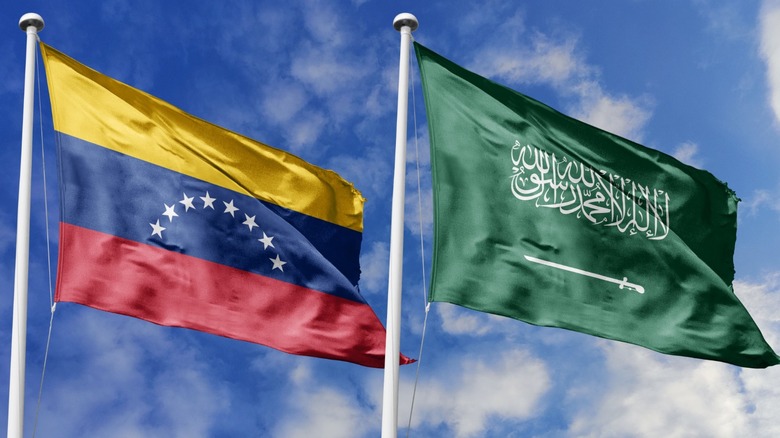
Aside from Venezuela, other countries that have massive reserves include Saudi Arabia (267 billion barrels), Iran (208 billion barrels), Iraq (145 billion barrels), and the United Arab Emirates (113 billion barrels). The United States sits in the top eight, with an estimated 45 billion barrels of crude oil in reserve.
One thing that allowed the U.S. to massively increase its oil reserves and become one of the top 10 countries with the largest oil reserves is the development of fracking. Unlike traditional oil extraction techniques, which siphoned oil deposits from porous material, fracking pumps a special type of fluid deep underground to break the dense rock that holds the oil and make it easier to extract.
Other nations are continually exploring to find new oil fields within their borders, and the U.S. made a new discovery in Texas in January 2026, which potentially has 1.6 billion barrels of oil. So, if there’s a new substantial find or new technologies are developed to efficiently extract more oil from existing wells, then it’s possible that another state can overtake Venezuela as the largest oil reserve holder in the world.

Comments are closed.