
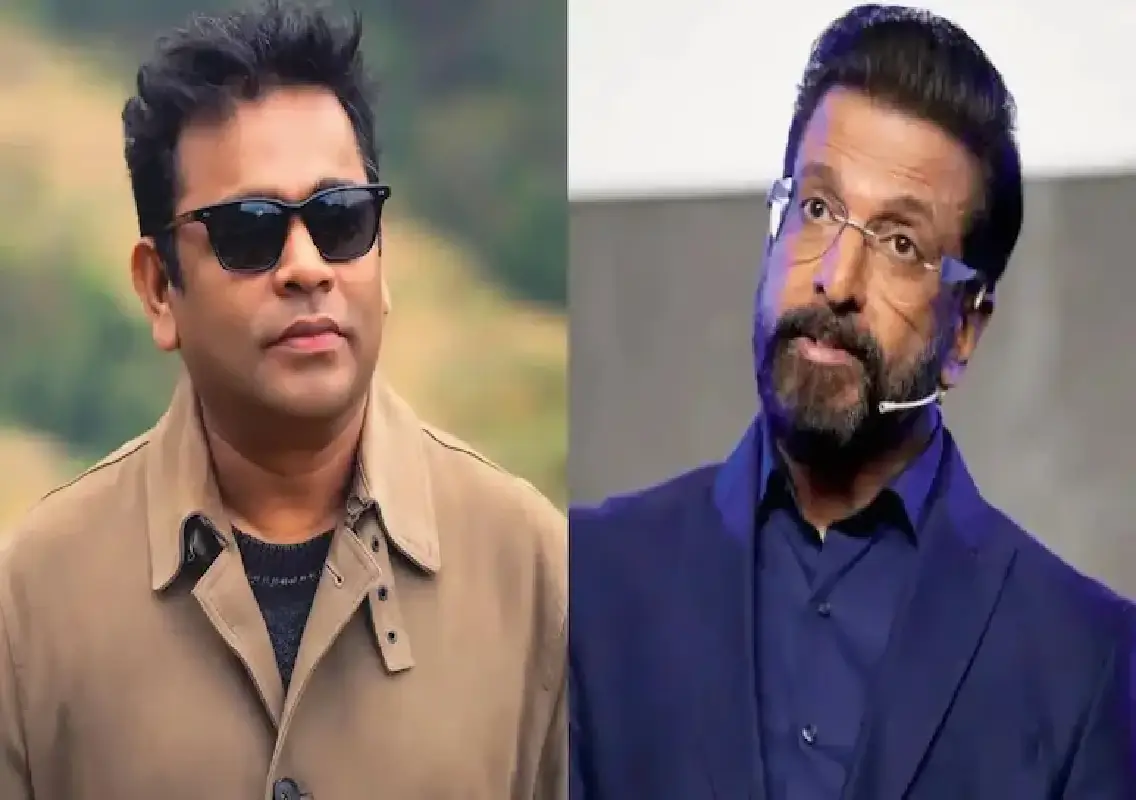

Mumbai: Actor and performer Jaaved Jaaferi has weighed in on the controversy surrounding Oscar-winning composer AR Rahman’s recent remarks on the Hindi film industry, offering a broader perspective on how the industry has evolved with time, technology and changing audience behaviour.
Jaaved Jaaferi on change in the film industry
Speaking to news agency IANS, Jaaved Jaaferi said the transformation seen in the entertainment industry mirrors changes taking place across the world. According to him, the shift is not limited to cinema alone but is part of a much larger global transition driven by technology, digital platforms and artificial intelligence.
“Industry has changed like the world has changed. Digital. AI. The world is changing. Fashion is changing, food is changing. Values are changing. Obviously, the narrative is changing,” Jaaved said.
Highlighting how attention spans have drastically reduced, especially among younger generations, he added that he recently learnt that Gen Z and Gen Alpha audiences have an attention span of just six seconds. “Channel heads say that if you cannot capture it in six seconds, it’s gone,” he noted.
Jaaved explained that while there is still scope for long-form storytelling in films, creators now operate under business pressures and numbers-driven decisions. “You are making a project. Not a film,” he remarked, underlining how commercial considerations increasingly shape creative choices.
AR Rahman’s remarks spark debate
The controversy began after AR Rahman, in an interview with BBC Network, said that work from the Hindi film industry had slowed for him in recent years. He attributed this to shifting power dynamics over the last eight years and hinted that there could be “a communal thing” involved.
Rahman said that the reasons behind this slowdown often reached him indirectly. “It comes to me as Chinese whispers,” he stated. Elaborating further, he explained that decisions were now being taken by people who were not creatively inclined.
“People who are not creative have the power now to decide things, and this might have been a communal thing also, but not in my face,” Rahman said, adding that he had heard instances where he was initially booked for projects, but later multiple composers were hired instead.
Despite this, Rahman maintained a light tone, saying such situations allowed him more time to spend with his family.
Shobhaa De, Shaan and Javed Akhtar respond
Rahman’s remarks drew strong reactions from several industry voices. Author and columnist Shobhaa De called the comment “dangerous” and questioned why such a statement was made. Drawing from her five-decade-long association with Bollywood, she asserted that the industry has largely remained free of communal bias.
“If you have talent, you will get a chance. If you don’t have talent, there is no question of religion being a factor,” De said, firmly rejecting the idea of discrimination in Bollywood.
Singer Shaan also dismissed the notion of a communal or minority bias. He said that not getting work was a personal experience faced by many artists and should not be attributed to larger ideological reasons.
“I have been singing for so many years and I am also not getting much work,” Shaan said, adding that the focus should remain on doing good work rather than overanalysing circumstances beyond one’s control.
Veteran lyricist Javed Akhtar echoed similar sentiments, stating that he had never sensed any communal element in the industry’s treatment of Rahman. He said Rahman commands immense respect in Mumbai’s film circles and remains one of the most revered composers in the country.
AR Rahman clarifies his stand
Following the backlash on social media, AR Rahman issued a video statement on Instagram to clarify his remarks. Emphasising that he never intended to hurt anyone’s sentiments, the composer said music has always been his primary means of connection and expression.
“India is my inspiration, my teacher and my home,” Rahman said, adding that his purpose has always been to uplift and honour culture through music.
He expressed gratitude for the creative freedom India offers and highlighted several projects that reinforced his belief in multicultural collaboration. These included mentoring young musicians, building India’s first multicultural virtual band, and working on major global projects.
Conclusion
The debate sparked by AR Rahman’s remarks has opened up a wider conversation about change, power dynamics and perception in the Hindi film industry. While Jaaved Jaaferi and other industry veterans have largely attributed the shift to evolving times and business realities, Rahman’s clarification has sought to put the focus back on music, creativity and unity. The episode underscores how rapidly changing ecosystems can sometimes give rise to misunderstandings, even among the most celebrated voices in Indian cinema.

Comments are closed.