
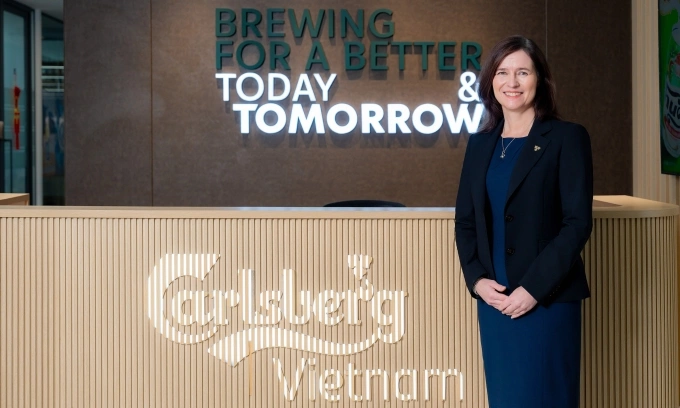

As organizations reassess leadership requirements in an increasingly complex and fast-changing business environment, diversity, equity, and inclusion (DE&I) are being positioned not only as social commitments but also as contributors to long-term performance. In a recent interview, Susanne Skippari shared her views on leadership development, women’s advancement, and the approaches Carlsberg Vietnam has adopted to strengthen DE&I through measurable goals and long-term talent planning.
Susanne Skippari, Chief People & Culture Officer of Carlsberg Group. Photo courtesy of Carlsberg Vietnam |
What motivated you to take on the role of Chief People & Culture Officer of Carlsberg Group, and what stood out to you about Carlsberg from the beginning?
I was drawn to Carlsberg because of its combination of strong heritage, a clear purpose, and a stated ambition for the future. From the outset, it was evident that the group’s growth agenda is not focused solely on financial performance, but also on developing leadership, culture, and capabilities in a way that supports long-term sustainability.
This role also came at a meaningful point in my career. Having worked across global organizations, I have seen that people and culture are not support functions; they are strategic drivers of growth, particularly in dynamic markets.
There is also a strong sense of pride across the organization — in our people, our brands, and in doing business responsibly. That balance between ambition and responsibility was a key factor in my decision.
DE&I is increasingly becoming a leadership priority globally. Why do you believe inclusion is now so central to long-term performance?
Inclusion has a direct impact on the quality of leadership and decision-making, which in turn affects sustainable performance.
When people feel safe to contribute ideas, challenge assumptions, and share different perspectives, organizations benefit from better decisions and greater adaptability. In a global company like Carlsberg, inclusion also helps build trust across cultures and markets and supports closer connections with consumers.
DE&I is therefore not only about representation. It is about creating conditions where talent can develop based on capability and performance, rather than access or assumptions.
Many professionals say leadership becomes “less clear” at senior levels, and for women, expectations can feel even less visible. What does leadership really require at the next level?
At senior levels, leadership shifts from individual performance to creating clarity, alignment, and momentum for others. Expectations are often less explicit, and success depends more on understanding context and navigating complexity.
For women, this can be particularly challenging. Many describe facing contradictory expectations — being confident but not overly so, decisive but not too direct. When expectations are unclear, bias can influence outcomes.
This is why senior leadership requires both individual capability and strong organizational systems. Leaders need self-awareness, trust-building skills, and clear priorities. At the same time, organizations must make expectations transparent, provide timely feedback, and assess potential consistently. Leadership development should not rely on unwritten rules.
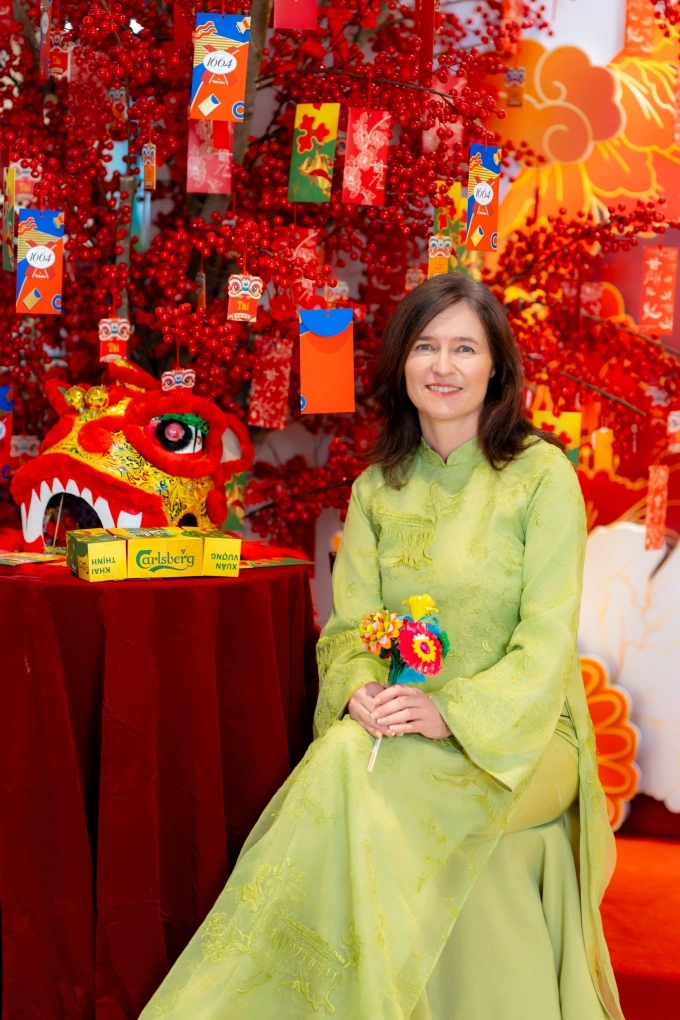 |
Susanne Skippari, Chief People & Culture Officer of Carlsberg Group, wearing Vietnam’s traditional dress ao dai. Photo courtesy of Susanne |
For women stepping into senior roles, what are the most common barriers you see, and what does Carlsberg do differently to ensure progression is fair, measurable, and sustainable?
The most common barriers are not related to capability, but to access, visibility, and confidence in the system.
One challenge is advocacy. While many women receive mentoring, fewer benefit from senior leaders actively advocating for them when leadership roles are discussed. Another challenge is the lack of transparency at senior levels, where success criteria can become more subjective.
At Carlsberg, we focus on strengthening the leadership pipeline early, applying consistent assessment of potential and readiness, and holding leaders accountable for developing diverse talent. Our ambition to reach 40% women in senior leadership by 2030 is approached as a pipeline strategy rather than a short-term target, with the aim of making progression fair, measurable, and sustainable.
Why is women’s leadership such a strategic priority for the group?
Women’s leadership strengthens the leadership pipeline and improves the quality of decision-making, which is critical for long-term performance.
Globally, women currently represent more than 30% of Carlsberg’s senior leadership, and our goal is to reach 40% by 2030. However, the focus is not solely on achieving a numerical target. It is about building leadership teams with diverse perspectives and ensuring opportunity is linked to potential and performance.
Sustainable progress requires attention to succession planning, development pathways, and inclusive leadership expectations over time.
What stands out to you about Vietnam’s approach to DE&I compared to other markets?
Carlsberg Vietnam stands out for the structure and clarity behind its DE&I efforts. Rather than treating DE&I as isolated initiatives, the market has developed a roadmap with defined priorities, measurable indicators, and leadership accountability.
Women currently account for more than 33% of senior leadership roles in Vietnam. In addition, 50% of “Ready now” and “Ready later” successors are women, exceeding the internal target of 45%. This indicates that inclusion is being addressed not only at the leadership level today, but also in future succession planning.
The company has also formalized its commitment by signing the Women’s Empowerment Principles (WEPs) in 2025, reinforcing gender equality through both cultural and structural measures.
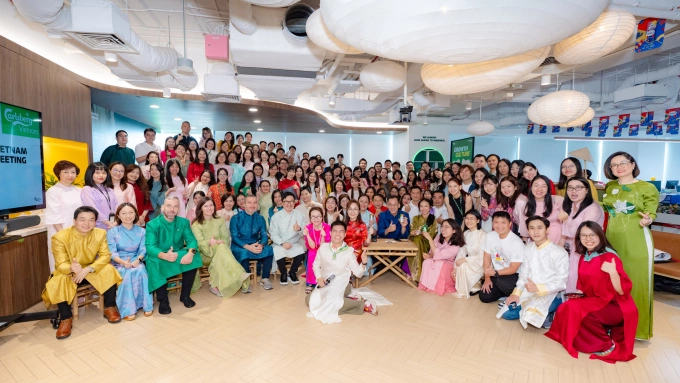 |
Carlsberg Vietnam’s team wearing ao dai at an event. Photo courtesy of Carlsberg Vietnam |
What are the key initiatives in Vietnam that make inclusion real across the organization?
Inclusion becomes meaningful when it is embedded in everyday leadership behaviors and people practices.
In Vietnam, DE&I is implemented through a structured roadmap aligned with the company’s growth culture — the shared expectations for how teams collaborate, learn, and perform. This culture supports inclusion by encouraging trust, open dialogue, and continuous development.
There are three main priorities. First is accelerating female leadership development through initiatives such as the Women Leadership Community, which focuses on mentoring, career development, and peer networking. Second is strengthening inclusive leadership capabilities through targeted development programs for senior leaders. Third is integrating DE&I into daily business routines, including communications, policies, and core training.
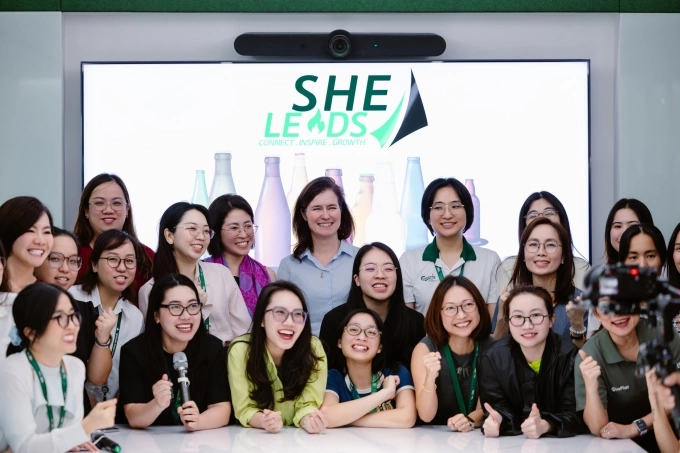 |
Carlsberg Vietnam has kicked off SheLeads, a women’s leadership community designed to build confidence, capability, and a stronger pipeline of future-ready women leaders. Photo courtesy of Carlsberg Vietnam |
How does growth culture connect with DE&I in shaping a workplace where people can perform, belong, and thrive?
Growth culture focuses on behaviors and mindsets that enable individuals and teams to learn, adapt, and deliver sustainable results.
In fast-changing markets, strategy alone is not sufficient; culture determines how effectively strategy is executed. Growth culture shapes decision-making, collaboration, and learning. DE&I reinforces this by ensuring that opportunities to contribute and develop are accessible to all.
When growth culture and DE&I are aligned, they support trust, belonging, and long-term engagement, which in turn enable strong performance.
From a people perspective, what will be most important for Carlsberg to win sustainably in Vietnam and to grow Vietnamese talent for the future?
Vietnam is a competitive and fast-moving market, which makes leadership capability particularly important. Sustainable success will depend on leaders who can provide clarity, make effective decisions under pressure, and build teams that learn and execute consistently.
From a people perspective, growth culture and inclusion are key enablers. Indicators such as a DE&I score of 84 out of 100 suggest that inclusion is being experienced in daily working life. Continued investment in leadership development and in building a diverse talent pipeline will be critical to maintaining momentum.
What message would you like to share with Vietnamese talents, especially women who aspire to leadership, as Carlsberg Vietnam moves into 2026 and beyond?
Vietnam offers a dynamic and opportunity-rich environment. For aspiring leaders, sustained growth requires a learning mindset, ownership, and the ability to lead through change.
For women with leadership ambitions, I would encourage them to seek feedback, build strong support networks, and pursue experiences that stretch their capabilities. It is also important to choose organizations where opportunity is based on potential and performance.
At Carlsberg Vietnam, our aim is to continue building an environment where people can perform, belong, and thrive. The progress seen today reflects what is possible when talent is supported by clear opportunity, and we remain committed to that direction.

Comments are closed.