


When winter weather bears down, it’s important to take the proper precautions to ensure you stay safe on the road. This can include using a 4-wheel drive vehicle, installing a set of snow tires, or both. But when it comes to putting too much air into a car tire, you may actually be making your situation much worse. This one mistake might cause you to lose traction and if that happens, you could be in real danger.
The problem lies with the part of the tire that meets the road as you’re driving. This area, known as the “contact patch,” is vital because it is the immediate point of traction. When you overinflate your tires, that point reduces, giving you less contact. If the road is covered in snow and ice, or even salt and sand, your tires already don’t have the traction that they would normally have. So, if you’ve added more air than you need, you’re increasing the chances of sliding, and possibly getting into a serious accident.
Even if you manage to keep your grip on the road, overinflation can lead to even more long-term problems. Your tires could swell in the middle of the tread, leading to uneven wear, thus decreasing their life. You’re also more vulnerable to unexpected road obstructions, which bulging tires may not be able to handle. Plus, since your tires are struggling to keep contact in bad weather, the damage can actually get much worse and can impact them much quicker.
Understanding PSI and tire maintenance
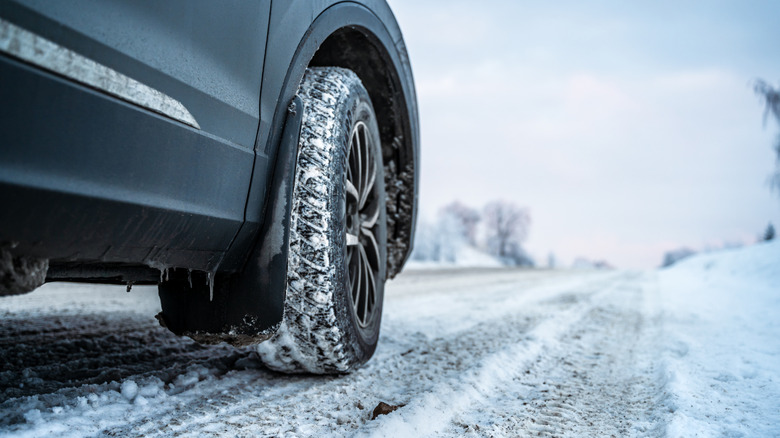
Just as overinflation can lead to tire damage, especially in winter, the same is true for underinflation. While it seems like taking air out of the tires would lead to a bigger contact patch with the road, the fact is that it’s not effective. That’s because there’s not enough air to allow the tread to grip the road like it normally would. Plus, underinflated tires take longer to stop, and they’re harder to handle.
Of course, while overinflating can be intentionally done, underinflated tires can be the result of colder weather. When it comes to the PSI in relation to tire pressure, you can lose around 1 PSI each time the temperature drops by 10 degrees Fahrenheit. Even if you’ve taken steps to ensure your tires have the correct amount of air heading into the winter months, those numbers can fluctuate very quickly.
The best thing you can do is to check the air pressure at least once per month. This is especially important if you know you’re going to be on the road for an extended trip. If you’re adding air yourself, be sure you know the PSI, as it’s not enough to just keep air in the tires. You can find this information on the sticker inside the driver’s car door, or in your owner’s manual. If you have doubts about doing it yourself, the right move is to take your car to a local garage and have them do it for you.

Comments are closed.