
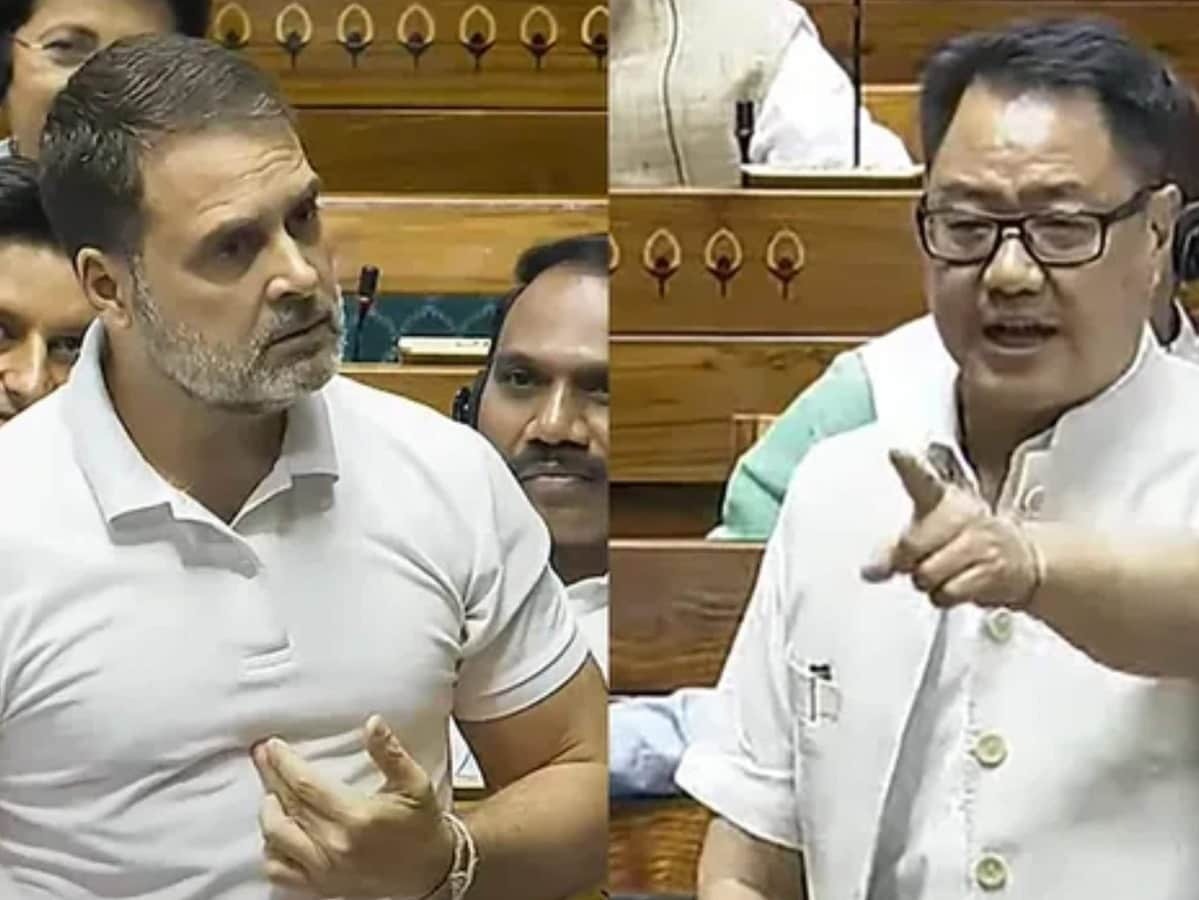

The war of words between the ruling BJP and the Opposition escalated in the Lok Sabha as Union Minister Kiren Rijiju launched a sharp counter-attack against Rahul Gandhi. The debate, centered on the Union Budget and India’s recent trade agreements, saw Rijiju dismissing the Congress leader’s “surrender” remarks as a lack of understanding of global economics.
The “Surrender” Allegation
The controversy began when Rahul Gandhi, the Leader of the Opposition, criticized the government’s trade deal with the United States. He characterized the agreement as a “whole-sole surrender,” suggesting that India had compromised its domestic interests—particularly those of farmers and small manufacturers to appease Washington.
Gandhi’s rhetoric aimed to frame the government as “pro-corporate” and “weak” on the international stage, questioning the long-term impact of the deal on the Indian economy.
Rijiju’s Sharp Retort
Kiren Rijiju, known for his combative style in Parliament, did not hold back. He accused Rahul Gandhi of habitually “demeaning” India’s achievements on global platforms. Rijiju argued that the trade deal is a strategic masterstroke that will integrate India into global supply chains and create millions of jobs.
Key points from Rijiju’s defense:
National Interest First: He asserted that the Modi government never negotiates from a position of weakness and that every clause of the deal was vetted to protect Indian sovereignty.
Economic Literacy: Rijiju took a dig at Gandhi’s understanding of trade, suggesting that the Opposition’s “outdated socialist mindset” prevents them from seeing the benefits of global integration.
Global Standing: He reminded the House that India is now the world’s fifth-largest economy and is treated as an equal partner by the US, unlike in previous decades.
A Divided House
The exchange led to repeated disruptions, with Treasury benches cheering Rijiju’s “befitting reply” and the Opposition shouting slogans against “crony capitalism.” This clash highlights the fundamental ideological divide in Indian politics regarding foreign policy: a “Globalist” approach by the BJP vs. a “Protectionist/Pro-Local” stance by the Congress.
Why This Debate Matters
As India positions itself as the “plus-one” to China in the global manufacturing race, these trade deals are critical. However, with elections in key agrarian states approaching, the Opposition is using the “surrender” narrative to tap into the anxieties of the rural population who fear competition from American imports.
Read More: Fact vs. Fiction Breaking Down the Rijiju-Rahul Clash Over the US Trade Deal

Comments are closed.