

Nature in its most destructive form has converged with political uncertainty to push Bangladesh into an unusually fragile moment. The severe floods of 2025 did not simply recede; they left behind widespread displacement, food insecurity, and administrative strain across large parts of the countryside. From a security and governance standpoint, this environmental crisis has evolved into a broader challenge of maintaining order and stability. Rural districts that once formed the backbone of agricultural production are now facing heightened vulnerability to crime, supply disruptions, and social distress.
In this setting, the interim government’s plan to move swiftly toward a general election appears premature rather than prudent. Organizing polling amid mass displacement and humanitarian need risks undermining the credibility of the democratic process itself. When survival becomes the priority, political participation inevitably suffers.
The period following the floods has revealed serious stress on local governance structures. Millions of people have lost homes, livestock, and livelihoods, creating widespread dependence on relief systems. Officials and aid agencies have reported increased risks of theft and disruptions to supply chains in some flood-hit districts, as overstretched police forces struggle to maintain consistent presence in remote areas.
Relief convoys have at times faced delays, slowing the delivery of food and medical aid to vulnerable communities. Conducting an election under such conditions could expose communities to coercion or influence by informal power networks, weakening the integrity of the vote. Democratic competition, in such circumstances, risks being shaped more by access to resources and protection than by policy debate.
The rural crisis is also contributing to mounting pressure on urban centres. Dhaka, already one of the world’s most densely populated cities, is absorbing large numbers of climate-displaced migrants. This rapid influx is straining housing, sanitation, healthcare, and employment systems, raising concerns about urban instability.
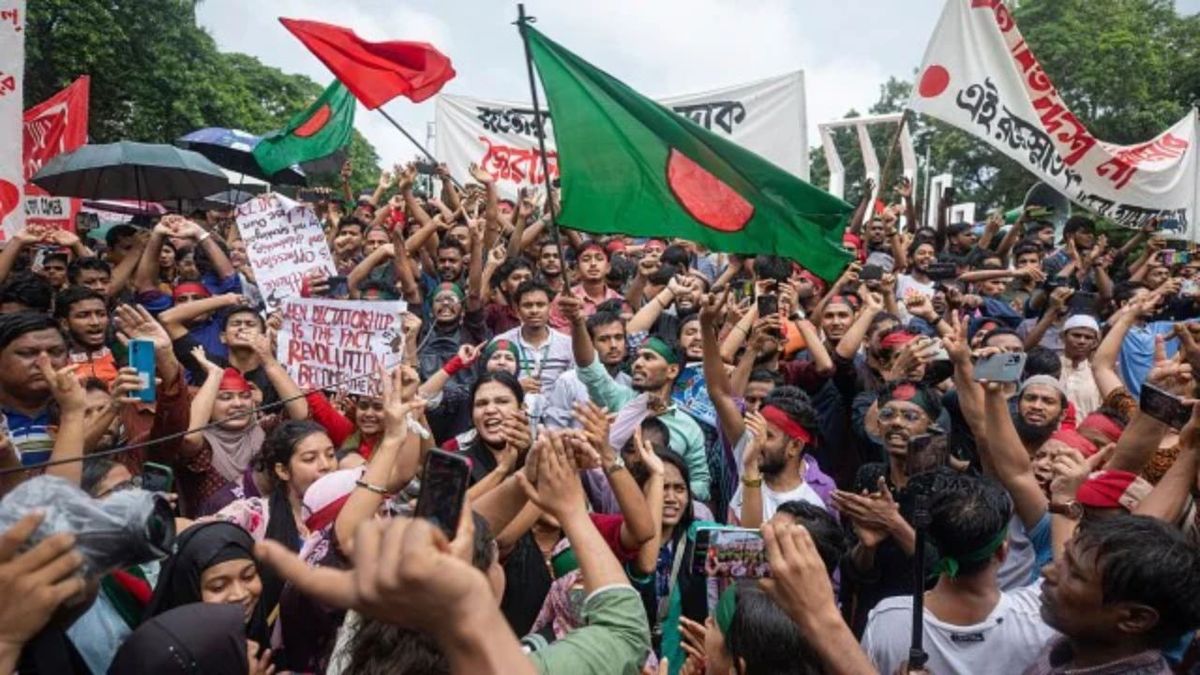
Large-scale political rallies and mobilization in such an environment could further burden fragile civic infrastructure, increasing the risk of unrest. The capital’s immediate priority is to absorb and stabilize new arrivals, not to host high-intensity political campaigns.
Logistically, conducting a credible election at this moment presents formidable challenges. Millions of displaced citizens have lost identity documents, voter records, and permanent addresses. Entire villages remain damaged or inaccessible. Any rushed poll risks excluding precisely those populations most affected by the disaster, resulting in a democratic process that does not fully reflect the national will.
A government elected under such conditions would face questions of legitimacy, particularly from rural constituencies that feel overlooked or marginalised.
The more responsible course may therefore be a temporary electoral pause. A delay of six to twelve months would allow the interim administration to concentrate its institutional capacity on relief, rehabilitation, and restoring basic public order.
Funds that would otherwise be committed to electoral logistics could be redirected toward rebuilding embankments, strengthening food distribution systems, and restoring rural livelihoods. Comparable post-disaster recoveries elsewhere suggest that short-term political restraint can enable longer-term democratic stability.
From an Indian perspective, a stable and economically secure Bangladesh is essential to regional security and cross-border cooperation. Prolonged disorder, displacement, or humanitarian distress inevitably creates spillover pressures in border regions. It is therefore in the broader regional interest that Dhaka prioritizes stabilization before proceeding to national polls.
With elections currently scheduled for mid-February 2026 under the interim administration, policymakers face a difficult but necessary choice. Democracy functions best when citizens are secure, fed, and housed. Only once recovery has taken root and administrative order restored can Bangladesh return safely to the ballot box. Until then, the most urgent mandate remains recovery itself.

Comments are closed.