
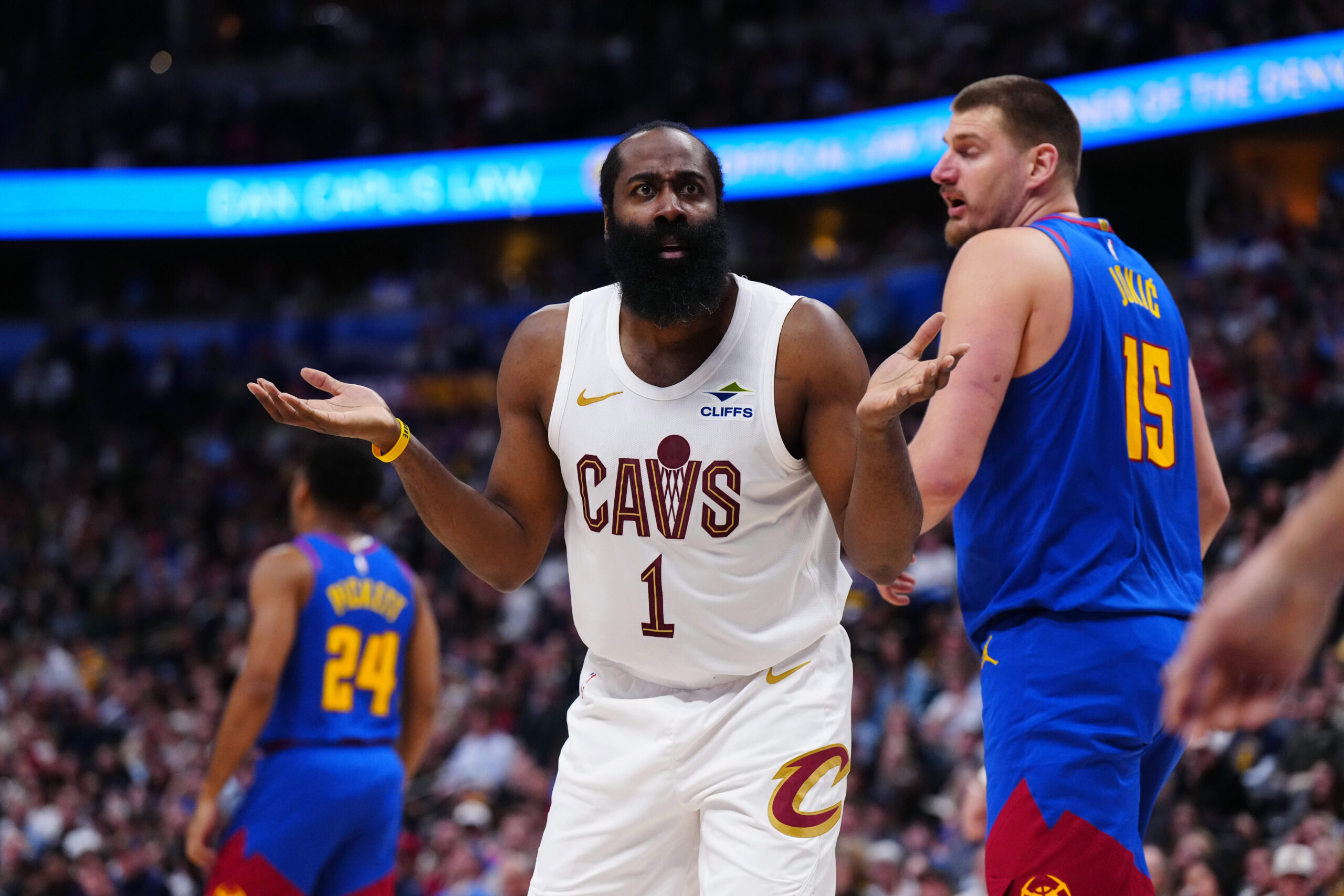

Harden’s strong impact in his first two appearances with the Cavs has immediately reignited the debate surrounding the trade that brought him to Ohio.
Are the Cavs really better with him?
If one of the NBA audience’s favorite pastimes is declaring winners and losers of a tradethis deadline delivered yet another move destined to spark discussion – especially since it involves one of the league’s most polarizing figures.
Harden was traded to Cleveland in exchange for Darius Garland and a second-round pickand his first two outings with the Cavaliers have sharply contradicted the most pessimistic predictions. Part of the public continues to highlight the former Rockets star’s limitations, viewing him as a ball-dominant “system” who struggles to translate his style into ultimate success. It’s no coincidence that Harden is still chasing the championship that would definitively cement his legacy.
Harden’s debut with the Cavs
Despite having virtually no time to build chemistry or practice together, Donovan Mitchell looked immediately comfortable alongside Hardenwhile the fit between “The Beard” and Jarrett Allen proved as natural as expected.
It will take time to understand how Harden’s ball-dominant tendencies – developed most recently with the Clippers – will integrate into head coach Kenny Atkinson’s system, built on off-ball movement and quick reads. Still, the idea of seeing Harden operate more as an offensive organizer, similar to his Brooklyn days, remains realistic.
In the meantime, against both Sacramento and Denver, Harden knocked down clutch three-pointers in decisive momentsshowing leadership and experience. Both games were road wins, achieved without Evan Mobley available.
If the victory over the Kings raised some concerns due to the 126 points allowedthe win against Nikola Jokic and company told a very different story: Cleveland let Denver dictate the tempo, stayed within striking distance, and then struck late with a Harden three and Jamal Murray’s foul on Mitchell with less than a second remaining.
If morning shows the day, Harden can be a difference-makercreating space for Mitchell and elevating the supporting cast through his control of pace, both in transition and in the half court.
Why Harden in Cleveland could work
Two games don’t change a team’s destiny, and one swallow doesn’t make a spring. Still, the outlook of a more complete group compared to the pre-deadline version feels realistic.
Even before Harden’s arrival, some moves had already improved the roster. The experience with De’Andre Hunter had been disappointing, especially in the first half of the season. Turning that into a point-of-attack defender like Keon Elliswho can also hit from three, and a reliable scoring option such as Dennis Schröderrepresents a clear upgrade.
Compared to Garland – often limited by injuries and currently unavailable – Harden brings less dynamism but more controlwhile remaining devastating on step-backs and surgical as a pick-and-roll ball handler. Paradoxically, he also appears less injury-prone at this stage and offers superior size.
That doesn’t make him a great defender, nor necessarily better than Garland on that end, but Cleveland’s issue was an undersized backcourt often targeted by more physical teams. In the postseason, Garland frequently became a clear defensive target.
Harden, without adding defensive quickness, provides a more imposing physical presence that is harder to attack. It may seem like a small detail, but in the playoffs, details matter.
Why Harden in Cleveland might not work
The main criticism aimed at Harden concerns his postseason performancesparticularly in decisive moments. On multiple occasions, he has seemed to fade in key possessions or struggle when the pressure rises.
Still, attributing playoff failures to one player alone is reductive: basketball is played five-on-five, and reliable rotations are essential to survive certain series.
The central issue remains the “Harden system”: a highly heliocentric offense with massive usage, structurally difficult to sustain and even harder to carry through a deep playoff run. After a long regular season and a high-intensity series, it’s plausible that a player with that workload could face physical or mental drop-offs.
If that is the real risk, it will be up to Atkinson to strike the right balance: extract the best from Harden without overburdening him, considering his age and mileage. It’s an objective previously theorized in Brooklyn, Philadelphia and with the Clippers – but rarely achieved due to injuries, either to teammates or to Harden himself.
With a clear hierarchy – Mitchell as the first option, Mobley as an alternative, Allen as the interior anchor – Harden could orchestrate the offense without being its constant engine, arriving fresher in crunch time.
That would be a success. And, in small measure, it’s what we’ve seen in the first two games: not definitive, but certainly promising.

Comments are closed.