
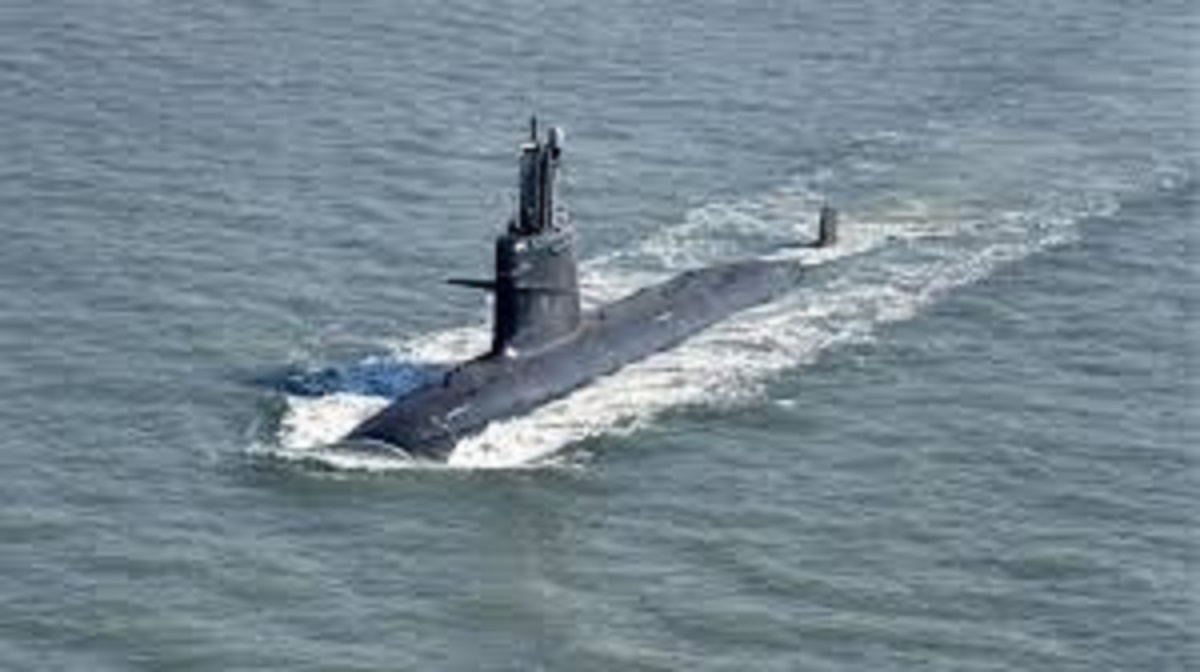

The Indian Navy’s ambitious P-75(I) submarine acquisition plan has now reached the crucial stage. Cost negotiations between the Defense Ministry, Mazagon Dock Shipbuilders Limited (MDL) and Germany’s ThyssenKrupp Marine Systems (TKMS) are largely complete and the proposal is likely to be placed before the Cabinet Committee on Security (CCS) for approval in the next few months.
The project is estimated to be priced between ₹66,000 to ₹70,000 crore after ongoing costs. This will not only be one of the largest conventional submarine deals in the world, but is also believed to be the most expensive underwater capability project ever undertaken by India.
The P-75(I) is the next phase of the original Scorpene-based Project 75, under which six state-of-the-art diesel-electric submarines are to be built. These submarines will be equipped with Air Independent Propulsion (AIP), advanced stealth design and coatings, modern combat management systems and heavy torpedoes, making them capable of conducting both surface and anti-submarine operations.
The design, equipped with AIP technology, gives it the ability to stay underwater for about three weeks without surfacing, which is considered a major qualitative leap over the existing Kalvari-class submarines. This will significantly increase both the firepower and survivability of the Indian Navy.
The industrial structure of this project is based on the strategic partnership model, under which an Indian shipyard will partner with a foreign Original Equipment Manufacturer (OEM) for technology transfer and in-country manufacturing. Under this model, MDL has been selected as the Indian strategic partner, while TKMS will provide the design, AIP system and key technologies. This platform will be an adapted version of the proven Type-214/Type-218 series of TKMS.
Cost negotiations have been long and sensitive. Starting from an ‘Approval Need’ (AoN) of around ₹43,000 crore in 2018, the internal estimate once went above ₹1.1 lakh crore when taxes and contingencies are added. Subsequently, the Cost Negotiation Committee (CNC) conducted a rigorous reassessment, bringing the expenditure down to the range of ₹60,000–70,000 crore and stabilizing the official estimate at around ₹66,000 crore.
After completion of the CNC process, the focus in South Block is now on financial scrutiny and inter-ministerial scrutiny. According to senior officials, the Defense Ministry is trying to get approval for CCS in the current financial year, so that the main contract can be signed and initial payments can be released by the end of 2025–26. According to the Navy’s internal planning, if there are no design freezes and major delays in production, the first submarine could enter service around seven years after the contract, i.e. in the early 2030s.
This project is considered very important from strategic point of view. The rapid deployment of modern submarines by China and Pakistan, particularly the entry of Chinese AIP submarines into Pakistan and the growing presence of the Chinese Navy in the Indian Ocean region, have further highlighted the undersea capability gap facing India. P-75(I) is considered the key to bridging this gap, securing sea lanes and strengthening deterrence capability in the Arabian Sea and the Bay of Bengal.
At the industrial level also, this project will create long-term opportunities for MDL and the country’s Tier-II and Tier-III companies. Also, transfer of complex technologies such as fuel-cell based AIP, silencing technology and integrated platform management will lay the groundwork for future indigenous submarine projects and potential exports.
However, some risks remain. Last-minute differences over intellectual property rights, limits on indigenous content and long-term maintenance conditions could impact the timeline for CCS approval. Additionally, the Navy’s 30-year submarine plan is already behind schedule and any additional delays will further increase the pressure on aging submarines.
Despite this, there are indications that the political and strategic leadership views the P-75(I) as a major modernization project and is willing to accept its financial burden while keeping the regional maritime balance in mind. If the CCS is approved in the next three months and the contract is signed in 2025–26, the Indian Navy will have a steady supply line of advanced submarines for the next decade, which will also buy time for parallel indigenous and nuclear submarine programmes.
Also read:
Former PM Deve Gowda praised the budget; Emphasis on employment, farmers and inclusive development!
‘Ji Ram Ji’ scheme, Rs 10 lakh crore will be spent on rural development in 10 years: Shivraj!
Rahul accused of breaking dignity: Sudhanshu Trivedi!

Comments are closed.