
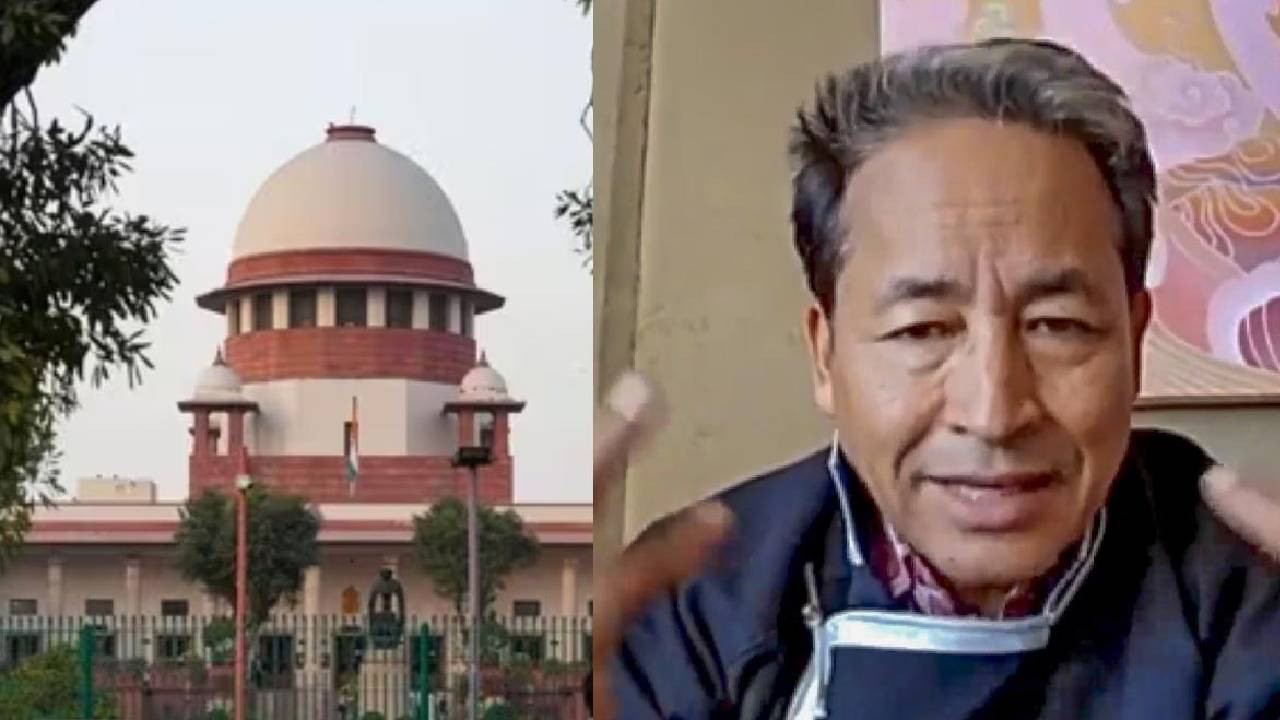

The atmosphere remained serious during the hearing in the Supreme Court. The bench of Justice Arvind Kumar and Justice PB Varale asked direct questions to the government. The court asked whether the statement was over-construed. The judges said that it is important to read the full context. Decision cannot be taken on the basis of any one line. The court acknowledged that Wangchuk’s words could also be a matter of concern. Every disagreement is not anti-national. There was silence in the court room after this comment.
Was the speech misinterpreted?
Additional Solicitor General KM Nataraj argued on behalf of the government. He said the speech had mixed signals. His argument was that this could incite the youth. But the court said that words cannot be distorted. The judges clearly said that there is a difference between concern and provocation. If someone expresses fear of violence, that could also be a warning. The court said that it is not appropriate to make excessive interpretations. This further intensified the debate.
Why did Gandhiji’s name come into discussion?
During the hearing, Solicitor General Tushar Mehta raised objection. He said that Wangchuk should not be compared with Mahatma Gandhi. His argument was that this could become a headline. He said that there should be no inappropriate reference to the name of the Father of the Nation. The court replied that the matter was read in a different context. The judges clarified that what is written outside does not influence the court. This moment became the most talked about part of the hearing.
Is the court influenced by media headlines?
The Solicitor General said that the media may portray this comment differently. He feared that this would become news. The court bluntly said that it has nothing to do with the media. The duty of the court is to interpret the law. The judges said it was their right to ask questions. If the government has any objection then it should give reasons. This clear stand of the court proved important in the entire case.
Was the use of national security law justified?
This case pertains to detention under the National Security Act. The government says that Ladakh is a border area. Law and order could have deteriorated there. Therefore, precautionary action was taken. On the other hand, Wangchuk’s wife Gitanjali Angmo said that it was a peaceful protest. Criticism of the government is a right in a democracy. The court had earlier also asked for reconsideration of the detention. Now the court has asked for documents and video records.
Did the question of health also arise?
The issue of Wangchuk’s health also came up during the hearing. The wife told the court that health is a matter of concern. The government responded that regular medical checkups were being conducted. The situation is said to be normal. The court has asked for a report on this also. The judges said that the security of a person in custody is the responsibility of the state. Health cannot be taken lightly. This also gave a human dimension to the matter.
What direction will this matter take next?
Now the Supreme Court has fixed the next hearing. Instructions have been given to present all the necessary documents. The eyes of the country are fixed on this decision. This matter was not limited to just one person. The question is what is the limit of protest. And what is the extent of the power of the government. The court’s decision may also influence further political debate. At present the final decision is awaited.

Comments are closed.