

“At this time of year I don’t dare stop for more than five minutes,” the 38-year-old says, his breath turning white in the cold air. “My eyes never leave my phone screen, because missing just one ride can cost me tens of thousands of dong (VND10,000 equals US$0.38).”
Each trip in the days leading up to the Lunar New Year holiday, which runs from Feb. 14 to 22, is not just a way to earn a living, but also a race to secure a decent year-end meal, money for his parents and new clothes for his children, he says.
After five years at the job he knows the “peak-season rules of the game” by heart. To earn VND1 million or more in a day he has to work through lunch and late into the night when other drivers are resting.
His workday starts early in the morning and often ends at dawn the next day, stretching to as long as 18 hours. Sleep has become a luxury, limited to brief 15- to 20-minute naps with his head slumped on his motorbike seat.
The toll is evident. His eyes are sunken and bloodshot from road dust and chronic lack of sleep. His hands are cracked, calloused, and stiff from exposure to the night dew.
“Many nights I collapse on the floor of my rented room before I can even take off my sweat-soaked uniform,” Dat says. “The numbness runs from my neck down to my lower back. My joints feel like they’re falling apart.”
Still, the hope of a better Lunar New Year than last year pushes him back onto the road each morning.
Dat, a ride-hailing driver, stays on his motorbike late into the night to earn more money amid soaring Lunar New Year demand. Photo courtesy of Dat |
Dat is far from alone in this daily grind. Many delivery workers in the country are also trading their health for income in what they call “a year-end gamble.”
Hoang, 30, is the sole breadwinner for a family of four in Hanoi. Financial pressure has driven him to work like a machine: standing all day behind the counter at a convenience store before delivering orders by motorbike until 2 or 3 a.m.
To fight off drowsiness, he relies on cigarettes and energy drinks.
“I burn through nearly 30 cigarettes a night and drink energy drinks instead of water,” he admits. “I know it’s harmful, but without them I wouldn’t stay awake long enough to ride.”
After two weeks of what he describes as “selling my life” to meet surging Lunar New Year delivery demand, his body began sending warning signals. He lost five kilograms, his skin darkened, and he started vomiting and experiencing abnormal heart palpitations.
On Monday morning also the 22nd day of the final lunar month, eight days before Tet peaks, a severe bout of dizziness nearly caused an accident while he was driving, forcing him to seek treatment at the Hanoi Medical University Hospital.
Reviewing Hoang’s test results, the doctor shook his head. He diagnosed him with stage-two hypertension, anxiety disorder and severe stress. His liver enzyme levels and kidney function indicators were in the danger zone, direct consequences of stimulant abuse, chronic sleep deprivation and repeatedly holding in urine to avoid missing rides.
“The doctor said I’m draining my own ‘fuel tank,'” Hoang says quietly. “If I keep this up, I could be spending Lunar New Year in the emergency room instead of at home.”
Demand for essential goods during the Lunar New Year holidays is projected to increase by 30%. Delivery service provider Vietnam Post reported a 25-30% increase in shipments in the days leading up to the holidays. Logistics companies such as J&T Express have increased manpower by 20% to meet the demand.
For ride-hailing drivers this period represents both a golden opportunity and a form of physical and mental “torture.”
Many drivers say they earn VND3-5 million a day in the final days before the Lunar New Year, increasing their income for the month by VND4-5 million more than normal. But the price they have to pay is working nonstop for up to 18 hours a day, sleeping only four to six hours, and sometimes dozing off on their motorbikes.
Vietnam’s ride-hailing driver numbers have shot up to over 700,000, up from just 200,000 before the Covid pandemic. Be accounts for 400,000 drivers, Grab for around 300,000 and Xanh SM for some 90,000. The total is equivalent to half the workforce of the leather and footwear industry, Vietnam’s second-largest employer.
Some 95% of Be drivers rely on ride-hailing as their primary job, 54% work at high intensity, and 60% operate simultaneously on multiple apps.
“The algorithm demands constant ride acceptance, leaving no idle moments,” one driver tells Tia Sang magazine. “You can’t turn off the app or reject too many rides, or the system labels you ‘lazy’ and punishes you the next day with only the lowest fares.”
In the run-up to Lunar New Year many drivers complete 25-30 trips a day, covering 200-250 kilometers. Fares double or triple during the holidays and can rise four- to five-fold during peak hours, but the pressure on drivers rises even faster.
Drivers also describe forms of silent suffering that productivity metrics fail to capture: They sit so long their hips ache and they get hemorrhoids, and often endure urinary infections and other problems caused by holding their urine because they cannot find a restroom.
“Sometimes I have to buy a cup of coffee just to use the toilet, which wipes out the earnings from an average trip,” one driver says.
A 2021 survey of 549 motorbike taxi drivers in Hanoi, published in the Journal of Transport and Health, found that 22.6% suffered from chronic fatigue and 22% from lower back pain.
Directly linked to these conditions were factors such as being overweight, alcohol consumption and excessively long working hours.
The World Health Organization reported in Environment International journal in 2021 that people working more than 55 hours a week face a 35% higher risk of stroke and a 17% higher risk of death from heart disease compared with those working 35-40 hours.
The trade-off extends beyond physical health. Cao Tran Thanh Trung, executive director of Lumos Psychological Services Company Limited, says working alone on the streets at high intensity and under constant time pressure makes workers prone to emotional burnout. They become irritable, disconnected from their families, and gradually see themselves as money-making machines. Without intervention, burnout can lead to declining performance, sleep disorders, prolonged anxiety, and even depression.
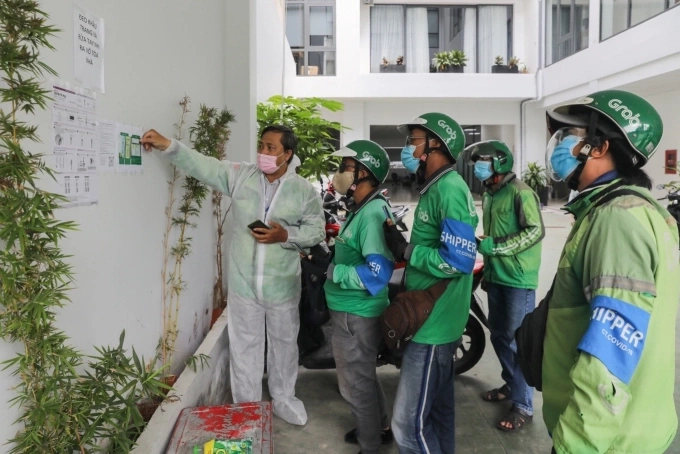 |
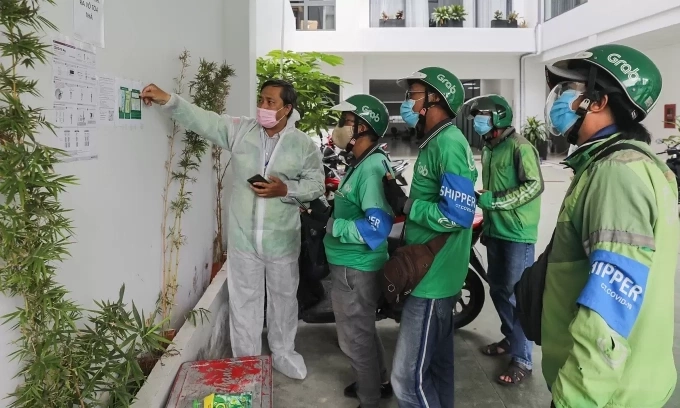
Ride-hailing drivers attend a training session before starting work in Ho Chi Minh City. Photo by Read/Quynh Tran |
Dr. Nguyen Viet Chung, head of the mental health department at Hanoi’s E Hospital, says the Lunar New Year is traditionally a time for reunion and rest, but in modern society it has turned into a collective “success exam.” A person’s worth, especially that of family breadwinners, is often measured by tangible standards such as income, bonus and gifts.
This invisible yet intense pressure pushes workers toward negative coping mechanisms, driving them to exceed their biological limits and plunge into a frenzied money-making race before the holiday.
“They’re not just earning money to spend,” Chung says. “They’re earning money to buy social recognition and a sense of security against judgment.”
To prevent such outcomes, experts advise ride-hailing drivers not to work more than four consecutive hours on the road, to perform stretching exercises to improve circulation and reduce spinal strain, and to stop replacing water with energy drinks. Drivers should carry water and fruits such as bananas or apples for sustained energy. Night drivers should ensure at least four hours of uninterrupted deep sleep in a quiet environment to allow the brain to recover.
Those working at high intensity should get blood and urine tests done every six months to monitor creatinine levels and liver enzymes. If symptoms such as foamy urine, leg swelling, persistent lower back pain, or heart palpitations appear, they should stop working and seek medical attention immediately.
“Making money is a legitimate quest, but without protecting their health, workers may ultimately pay with their lives,” Dr. Chung says. “Don’t let the Lunar New Year dream turn into a hospital nightmare.”

Comments are closed.