
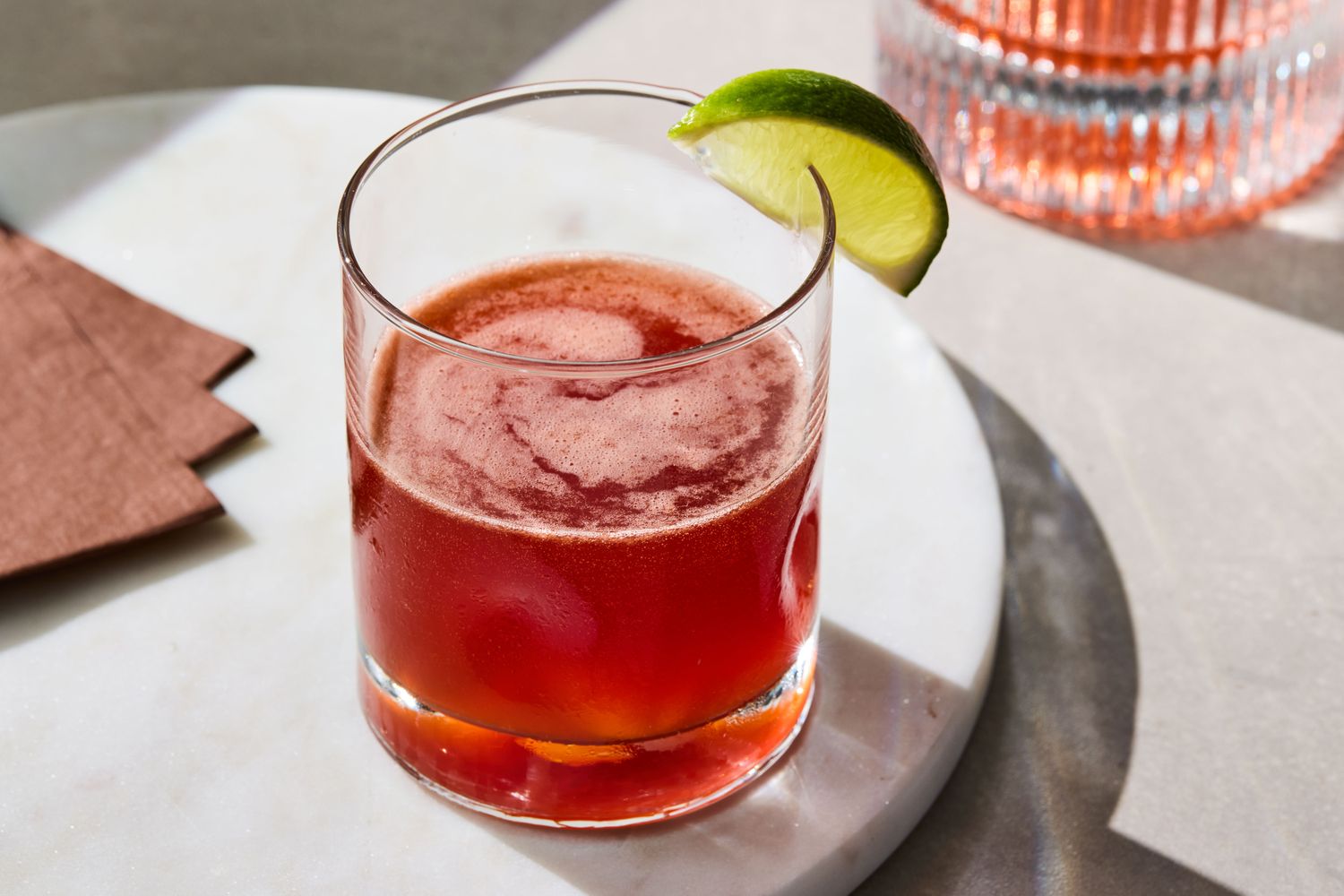

The Sawyer is a modern classic that combines gin, lime juice, simple syrup, and 28 dashes of three types of bitters. Created around 2010 by Don Lee while running the bar program at David Chang’s now-closed Momofuku Ssäm Bar in New York City, the drink was designed as a late-night sipper that was bracing, restorative, and unapologetically bitter.
Lee first served it to WD-50 chef Wylie Dufresne, a devoted gin drinker and longtime regular dating back to Lee’s early days at cocktail bar Please Don’t Tell (PDT). The cocktail was named after Dufresne’s daughter, Sawyer, and emerged from a period when chefs and bartenders shared quiet, post-service moments at Ssäm Bar.
The Sawyer belongs to a particular moment in modern cocktail history when bartenders began treating bitters not as garnishes but as ingredients capable of heavy lifting. Like Lee’s Little Bitter, his earlier rum-and-Fernet drink from PDT, the Sawyer owes a debt to other cocktail contemporaries, such as Giuseppe Gonzalez’s Trinidad Sour which framed Angostura and Peychaud’s bitters as ingredients worthy of heavy use. What results is a drink that looks like an overly-bittered Gimlet on paper but drinks closer to a spiced, gin-based digestif suited to the end of the night.
Why the Sawyer works
If 28 dashes of bitters seems like an overwhelming amount in a single cocktail, that’s because it is; most cocktails that utilize bitters only use a few dashes. The Sawyer succeeds because it preserves a classic sour base. Similar to a Gimlet, gin supplies the structural backbone with notes of juniper, citrus peel, and dryness, while lime and simple syrup keep the drink firmly within familiar territory.
Unsurprisingly, the real weight comes from the bitters. Angostura contributes clove, allspice, and burnt sugar notes; Peychaud’s adds anise and brightness; and orange bitters knit the spices back to the citrus.
Used in this volume, the bitters behave less like seasoning and more like a secondary spirit, creating a drink that opens with pine and spice on the nose, turns dark and warming on the palate, and finishes cleanly with lime. It is intense but measured, proof that bitterness, when thoughtfully applied, can be a perfect complement to sweetness.

Comments are closed.