
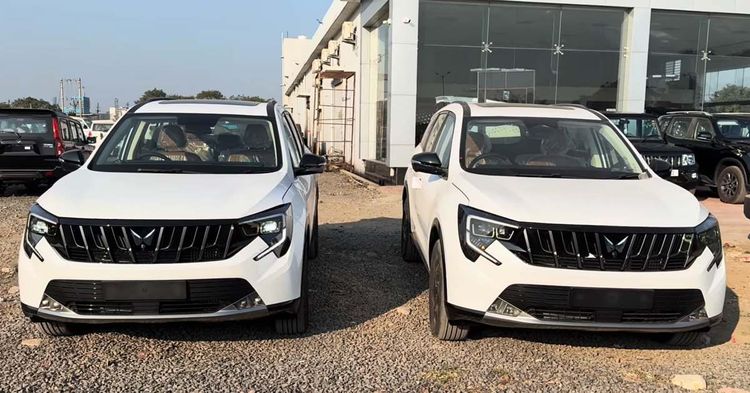
Mahindra Crosses Rs 50,000 Crore Quarterly Revenue, Becomes India’s Second-Largest Carmaker

It is a number that would have seemed ambitious just a few years ago, but Mahindra & Mahindra (M&M) has just smashed through a massive financial ceiling. For the first time in its history, the homegrown SUV giant has reported a quarterly revenue crossing the Rs 50,000 crore mark. This record-breaking performance for the third quarter of FY26 underscores just how dominant Mahindra has become in the Indian automotive landscape, riding a wave of unprecedented demand for its SUVs.
Profit Surges on SUV Demand
The headline number is backed by equally impressive profitability. M&M’s Profit After Tax (PAT) for the quarter rose by a sharp 39 per cent, settling at Rs 5,021 crore. This growth isn’t just about selling more cars; it’s about selling expensive cars. The average selling price of Mahindra vehicles has been climbing steadily, driven by top-end variants of the Scorpio-N, XUV700, and the ever-popular Thar. While the broader market has shown signs of softening, Mahindra’s order books tell a different story. The company’s strategy of focusing squarely on “authentic” SUVs—ladder-frame beasts and sophisticated monocoque off-roaders—has paid off handsomely. Unlike rivals who have diluted their SUV portfolio with cross-badged hatchbacks, Mahindra has stuck to its DNA, and the consumer has rewarded them with their wallet.
Mahindra’s “Rs 50,000 crore” moment is also backed by the company’s own consolidated print: Q3 FY26 revenue of Rs 52,100 crore, up 26 per cent year-on-year, and consolidated PAT of Rs 4,675 crore (up 47 per cent YoY; 54 per cent excluding the labour-code impact, as flagged by the company). The quarter wasn’t just about pricing power, it was also about scale: Mahindra reported quarterly volumes of 302,000 vehicles (including LMM and MEAL), with UV volumes at 179,000 units. Even inside the “SUV wave” narrative, the share gains are measurable, with Mahindra claiming a Q3 SUV revenue market share of 24.1 per cent (up 90 bps YoY), and leadership in LCVs under 3.5T at 51.9 per cent share.
This momentum has been visible in the retail race too. In February 2025, Mahindra’s domestic PV dispatches were reported at 50,420 units (up 19 per cent YoY), ahead of Hyundai’s 47,727 units in the same month, effectively flipping the No. 2 table spot on a monthly basis. By Jan–Jul 2025, Mahindra’s sales were reported at 351,065 units, over 21,000 units ahead of Hyundai in that period, underlining that this wasn’t a one-off spike. Demand intensity has also been unusually quantifiable: the Thar Roxx reportedly drew 176,218 bookings in 60 minutes, while the Scorpio-N had earlier logged 100,000 bookings in 30 minutes, showing how Mahindra’s launches have repeatedly broken “normal” booking curves.

Mahindra & Mahindra rewrote the hierarchy of the Indian automotive market in Calendar Year 2025, delivering a sales performance that effectively broke the long-standing dominance of its rivals. In a year defined by fierce competition and softening demand for many players, the homegrown SUV specialist recorded its highest-ever annual passenger vehicle sales, firmly establishing itself as the second-largest carmaker in the country. The company closed 2025 with a massive domestic wholesale tally of 5,92,771 units, a figure that represents a significant leap over the 528,460 units it clocked in the previous calendar year. This growth is not merely incremental; it is a volume expansion of over 64,000 units in just twelve months, signaling a structural shift in what Indian car buyers are prioritizing.
This surge in volume allowed Mahindra to dismantle the traditional podium order, overtaking both Hyundai Motor India and Tata Motors to secure the coveted Number 2 spot for the calendar year. While the race was tight, Mahindra’s aggressive product strategy pushed it ahead, capturing approximately 13.3 per cent of the domestic passenger vehicle market. The momentum became visible early in the year, particularly in February 2025, when Mahindra dispatched 50,420 units to dealerships, decisively beating Hyundai’s 47,727 units for that month. That specific victory was not a statistical anomaly but a precursor to a sustained trend where the demand for “authentic” SUVs outweighed the broader market’s appetite for hatchbacks and sedans.
A relentless barrage of successful product launches and sustained demand for existing blockbusters drove this historic ascent. The portfolio fired on all cylinders, with the Scorpio-N and Scorpio Classic continuing to serve as the volume backbone, while the XUV700 maintained its premium positioning without losing momentum. However, newer entrants delivered the critical delta in 2025. The introduction of the XUV 3XO revitalized Mahindra’s standing in the compact SUV segment, while the launch of the five-door Thar Roxx expanded the lifestyle off-roader niche into a practical family proposition. By successfully managing the production ramps for these models, Mahindra converted its massive order book into retail deliveries faster than its competitors could clear their inventory, proving that in 2025, the Indian market belonged to the SUV specialist.
The 50k Milestone: What It Means
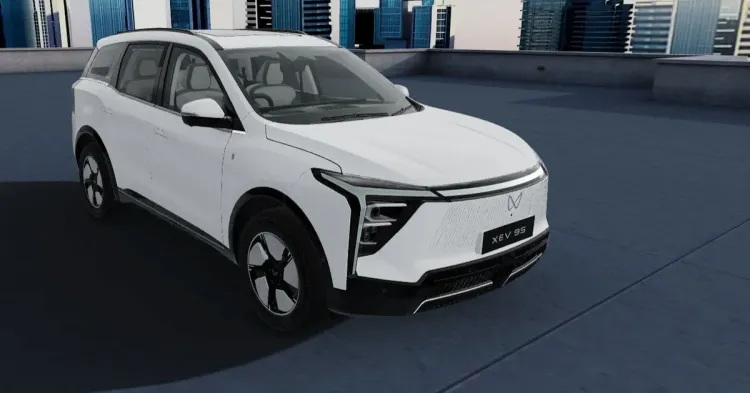
Crossing Rs 50,000 crore in revenue in a single quarter places M&M in an elite league of Indian corporations. It signals that the company has successfully transitioned from being a rural-focused utility vehicle maker to a premium lifestyle brand. The revenue surge is also fueled by its farm equipment sector, but the star of the show remains the automotive division. This financial muscle gives Mahindra the firepower it needs for the next battle: electric vehicles. With the “Born Electric” range on the horizon, this cash surplus is vital for funding the massive R&D and manufacturing setups required to challenge global players.
Operational Efficiency Kicks In
Revenue is vanity, profit is sanity, but cash is reality. Mahindra seems to have managed all three. The 39 per cent jump in PAT indicates that supply chain issues—which plagued the XUV700 launch days—are largely in the rearview mirror. Production lines are humming, and the waiting periods, while still high for some models, are translating into actual deliveries faster than before. This result sets a high benchmark for the industry. As competitors struggle with inventory pile-ups and heavy discounting to move metal, Mahindra is in the enviable position of managing demand rather than chasing it. The Rs 50,000 crore revenue figure is more than just a statistic; it is a declaration that the Indian SUV buyer has firmly chosen their champion.

Comments are closed.