
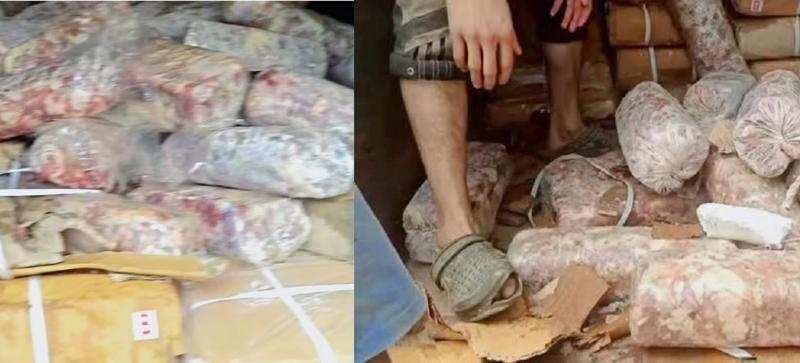
J&K Assembly uproar over rotten meat; huge quantity of unsafe meat, cheese seized in 2025-26

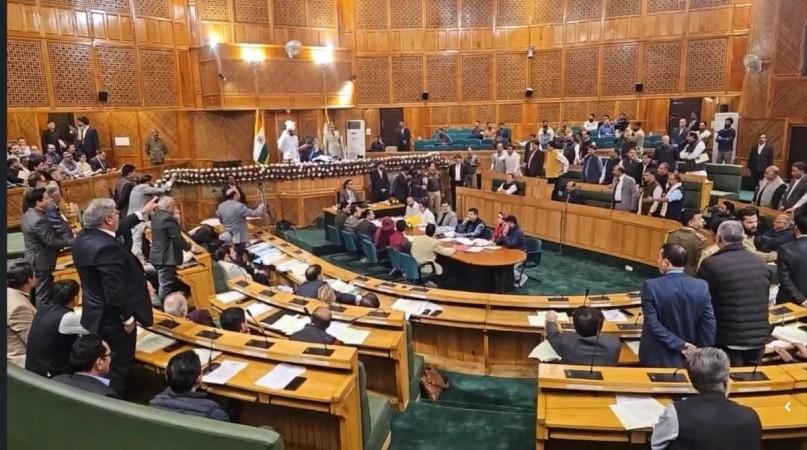
The Jammu and Kashmir Legislative Assembly on Friday turned stormy over what many members described as a growing and dangerous trade in rotten mutton and adulterated food. Tempers ran high as legislators from across party lines demanded tough, visible action against those playing with public health.
There was rare unity in the House. Members didn’t just call for stricter enforcement — they pushed for stronger preventive measures and even the attachment of properties belonging to those found guilty of selling unsafe food.
Four ruling National Conference MLAs — Mubarak Gul, Mir Saifullah, Pirzada Farooq Ahmad Shah, and Hasnain Masoodi — had jointly raised the issue through a starred question. What followed was an intense discussion, with several members linking the sale of rotten food to rising health concerns, including the alarming increase in cancer cases and recurring disease outbreaks.
Mubarak Gul was blunt. He said authorities must identify and nail those behind the illegal trade in rotten meat and attach their properties to send a message that such crimes will not be tolerated.
Farooq Ahmad Shah went a step further, calling the menace “worse than drugs.” He demanded the creation of a dedicated enforcement wing at Lakhanpur, the establishment of slaughterhouses in every Municipal Committee, and even sought a half-hour discussion in the House to debate the matter in detail.
Other MLAs echoed similar concerns, stressing that enforcement on the ground needs to be strengthened. They argued that without adequate manpower, routine inspections, and strict checking mechanisms, such incidents will continue to resurface.
Responding to the debate, Health Minister Sakina Itoo acknowledged what many suspected — the department is short-staffed. There was, she said, “no denial” about the manpower crunch. However, she informed the House that recruitment has already been initiated to fill vacant posts.
The Minister made it clear that the issue directly concerns public health and cannot be treated casually. At the same time, she pointed out a legal limitation: under the Food Safety and Standards Act, 2006, Food Safety Officers do not have the power to arrest anyone.
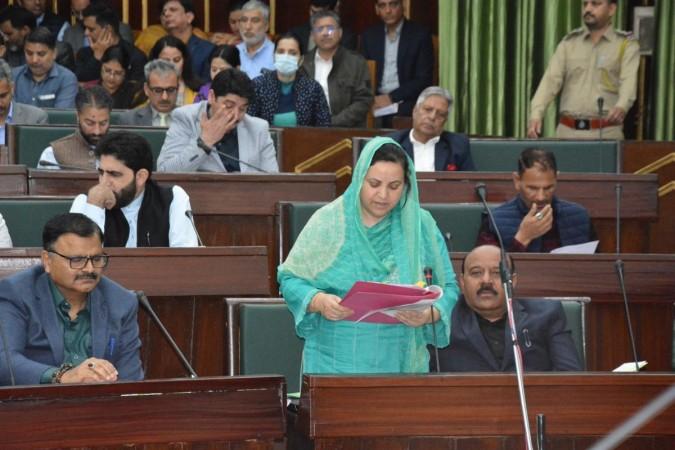
She explained that while officers can inspect premises, collect samples, issue improvement notices, suspend or cancel licences, and file prosecutions in court, arrests can only be carried out by the police under the Criminal Procedure Code.
The Speaker stepped in, asking why the Government could not bring an amendment to the law if stronger provisions were needed.
National Conference MLA Tanvir Sadiq supported that suggestion, urging the Government to consider amendments and to set up a separate task force to handle such cases. He noted that the police are not directly accountable to the House, underlining the need for a more focused enforcement mechanism.
Earlier, in its written reply, the Government placed detailed figures before the House. During the current financial year 2025–26 (up to December 2025), 12,183.5 kilograms of rotten or unsafe meat and chicken worth ₹29,19,060 were seized and destroyed across the Union Territory.
A total of 1,676 inspections were carried out, and 144 samples of meat and meat products were collected. Of these, 18 were found to be “Not of Standard Quality” (NSQ). Additionally, 2,139 kilograms of meat worth ₹3,90,137 were seized during enforcement drives.
District-wise, the highest seizure was reported from Srinagar (4,220 kg), followed by Jammu (3,881 kg) and Kupwara (1,520.5 kg). Other districts included Anantnag (700 kg), Ganderbal (770 kg), Pulwama (450 kg), Budgam (234 kg), Bandipora (162 kg), Baramulla (125 kg), and Shopian (121 kg). Altogether, 12,183.5 kilograms of rotten meat worth ₹29,19,060 were destroyed.
The problem was not limited to meat. The Government disclosed that 173 samples of cheese were lifted, and of the 157 reports received so far, 47 were found sub-standard and one was unsafe. In Jammu, 6,465 kilograms of cheese worth ₹13,92,150 were seized and destroyed, while in Samba, 1,200 kilograms worth ₹2,40,000 met the same fate — a total of 7,665 kilograms valued at ₹16,32,150.
Samples were sent for testing both within and outside Jammu and Kashmir, including accredited laboratories in Kashmir, Ghaziabad, New Delhi and Hyderabad.
The House was also informed that two NABL-accredited Food Testing Laboratories are functional in Jammu and Srinagar, supported by 12 Mobile Food Testing Labs. However, both main laboratories are grappling with staff shortages — 11 out of 19 sanctioned posts are vacant in each.
The Government said these posts will be referred to the J&K Services Selection Board once the recruitment rules are finalised with the Finance Department’s concurrence. In the meantime, outsourced staff are being engaged using funds provided by FSSAI under the Annual Work Plan.
The Government reiterated that enforcement under the Food Safety and Standards Act is a statutory process involving inspection, sampling, adjudication, and prosecution, and does not mandate routine registration of FIRs for every violation.

Comments are closed.