
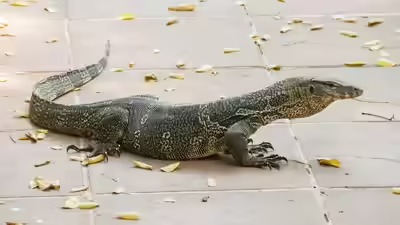

What are monitor lizards
Monitor lizards belong to the genus Varanus. There are over 80 species around the world. The water monitor, Nile monitor, and Asian water monitor are some of the most well-known species.They are reptiles that eat insects, rodents, birds, eggs, small mammals, and sometimes dead animals. They eat pests like rats and bugs, which makes them an important part of the ecosystem because they help keep things in balance.Most monitor lizards don’t like being around people. Instead of facing danger, they rely on their speed and ability to climb or swim to get away from it.
Why do monitor lizards enter residential areas
Monitor lizards typically enter residences or enclosures for pragmatic purposes rather than to assault individuals. Some common reasons are:Search for food
- They are drawn to trash cans, pet food, birds, and rodents. If there are rats around, monitor lizards might follow their scent.
Access to water
- When it’s hot outside, reptiles look for places that are cool and wet. They may be drawn in by leaking pipes, garden ponds, or open drains.
Shelter
- There are safe places to hide in storage rooms, wood piles, construction debris, and thick plants.
Habitat loss
- Urban expansion often reduces natural habitat, pushing wildlife closer to human settlements.
According to conservation groups and wildlife management agencies, most residential sightings are accidental or food-driven rather than aggressive behaviour.
Are monitor lizards dangerous to humans
Monitor lizards are not typically a threat to humans. They are not known to attack people without provocation.If you touch them or corner them, they might bite. Their strong jaws and the bacteria in their mouths can hurt you if they bite you. If a wild animal bites you, you should clean the wound right away and see a doctor to make sure it doesn’t get infected.Some scientific studies say that some types of monitors make weak venom proteins, but these are not thought to be dangerous to people in normal situations.Most of the time, the lizard tries to get away after the encounter.
What to do if a monitor lizard enters your home
Stay calm
- Don’t yell, chase, or try to hit the animal. It may become defensive if you move suddenly
Keep distance
- Make sure that kids and pets are moved away from the area.
Isolate the place
- If you can, close all the doors inside to keep the lizard in one room. This makes it easier to save.
Provide an exit if it’s safe
- You can let the lizard go if it is close to an open door that leads outside and there is a clear path. They will often run away when they have the chance.
Contact wildlife authorities
- Call your local animal control, wildlife rescue, or environmental agencies. People who have been trained can safely catch and move the reptile.
Don’t try to use poison, chemicals, or traps you make yourself. These methods can be harmful to other animals, against the law, and dangerous.
How to prevent monitor lizards from entering your property
The goal of prevention is to stop people from being attracted to something and to keep them from getting to it.Close off entry points
- Fix cracks in the walls
- Put in door sweeps
- Put a mesh over the vents
- Repair broken fences
Monitor lizards can fit through holes that are surprisingly small.Secure garbage
- Use bins that are tightly sealed.
- Throw away food scraps on a regular basis.
- Don’t leave scraps outside.
Keep rodents in check
- Fewer rats means less food for reptiles, which means fewer reptiles.
Clear hiding spots
- Remove the piles of wood
- Cut back thick bushes
- Get rid of the mess around the house
Keep birds and pets safe
- If you have chickens or small animals, make sure their enclosures are safe.
Do home remedies work in stopping monitor lizards from entering homes
There is no scientifically proven household item that always keeps monitor lizards away. There isn’t any scientific evidence to back up online suggestions like chemical sprays, strong smells, or powders. Some of them could hurt pets, people, or the environment.The safest choices are still physical prevention methods and professional help with wildlife.
Key points to remember when you spot a monitor lizard in your home
- Most of the time, monitor lizards are not aggressive.
- Many kinds are protected by law, so don’t hurt them.
- Don’t try to kill or catch them yourself.
- For safe removal, contact wildlife experts.
Sealing off entry points and getting rid of food sources are two things that prevention focuses on. It’s scary to find a monitor lizard in your house, but you need to know what to do. If you stay calm, know the law, and take steps to keep everyone safe, the problem can be solved safely for both people and animals.

Comments are closed.