
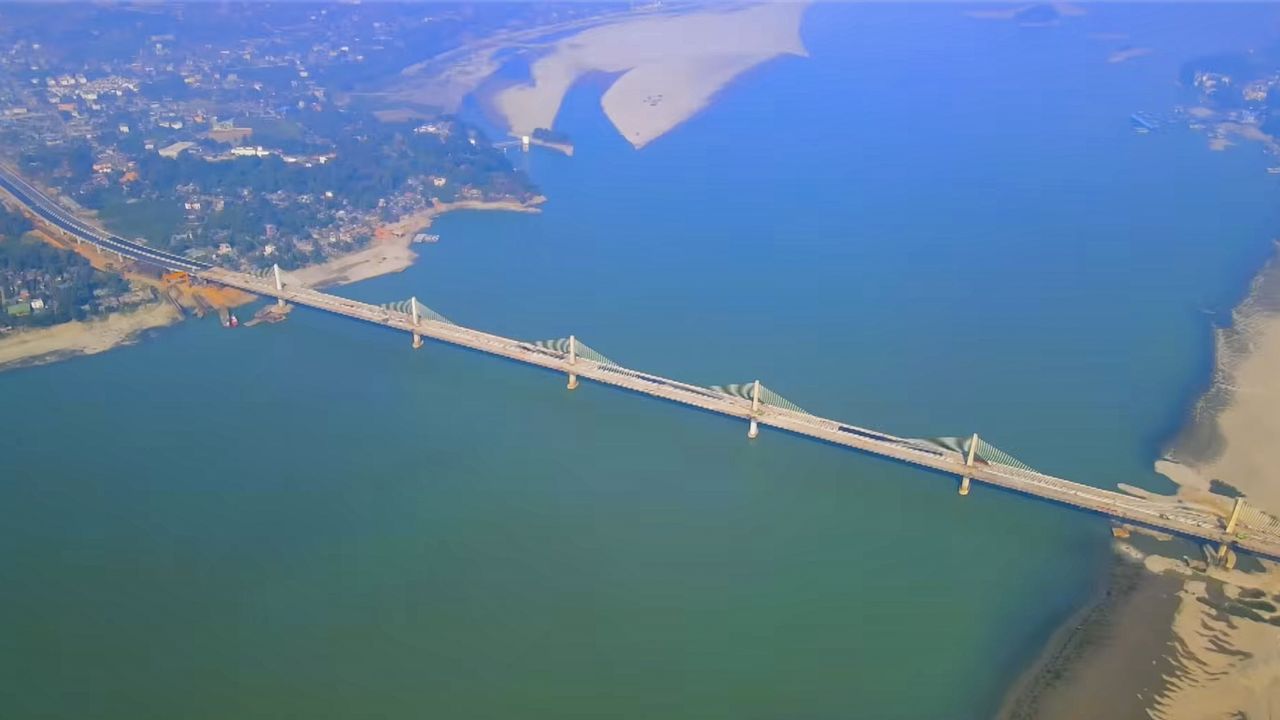

Prime Minister Narendra Modi has gifted projects worth Rs 5450 crore to Assam. Prime Minister Modi has inaugurated Kumar Bhaskar Verma Setu in Guwahati, built at a cost of Rs 3,000 crore. This project is considered very important for Assam.
This 6-lane bridge in Guwahati will ease connectivity between Guwahati and North Guwahati. This bridge will boost the development of Assam. Have you ever wondered why this bridge is named after Kumar Bhaskar Verma, who was he, what is his historical importance?
Also read: Banner of Northeast! Tipra Motha-NPP’s eye on Assam, know the new equation
Who was Kumar Bhaskar Verma?
Bhaskar Varman was one of the great emperors of Assam. He is also called Kumar Bhaskar Varman or Kumara Raja. He was the last and most powerful king of the Varman dynasty. His reign lasted from approximately 600 to 650 AD. He remained in power for 50 years. Kamrup is also a name of Assam. The capital here was Pragjyotishpur. Today it is near Guwahati. The Varman dynasty began with Pushyavarman in the 4th century. He is considered to be a contemporary of the Gupta emperor Samudragupta.
Father was killed, Bhaskar emerged as a great warrior.
The reign of the Varman dynasty lasted for about 300 years. Bhaskar Varma, ruled in the 6th century. His conflict with the Gupta dynasty continued. When Mahasen Gupta attacked Kamrup, Bhaskar Varman’s father was killed. His elder brother Suprasita Varman ruled, but died soon after. After this Bhaskar Varman ascended the throne around 600 AD. At that time many dynasties were fighting among themselves in North India.
Also read: From China’s move to flood havoc, why is ELF necessary for the Northeast? inside story
The greatest kings of the Varman Empire
Bhaskar Varman expanded his kingdom. His kingdom extended up to modern West Bengal. He stood strong in the western areas of Kamrup also. Bhaskar had regained control over many parts of his empire that were lost in the wars.
The name is also there in historical records
Many records of Kumar Bhaskar are still there. Their records are found till Sylhet in Bangladesh. Chinese traveler Hiuen Tsang, when he came to Kamrup from Nalanda in 642-643 AD. Chinese travelers, during his time, stayed at Kumar Bhaskar’s place. Hiuen Tsang stayed for a month and was greatly respected by the king. Bhaskar, along with 20,000 elephants and 30,000 boats, led them to Harsha on the Ganges. Both the kings met and went to Kannauj. King Harshvardhan also respected Bhaskar.
Also read: Many parties of North-East will come together to form a new party, will they be with BJP or against it?
Emperor Bhaskar was the wall of India
The seal of the Bhaskar period empire has been found in the Nalanda excavations. Bhaskar Varman had no children. After him the Varman dynasty became weak. After his death Mlechchha attacked. Then the Pala dynasty emerged. Gradually the story of the Varman empire disappeared. As long as Bhaskar Varman remained in power, attacks from the north-east into the rest of India continued to fail. He stood like the wall of India.

Comments are closed.