
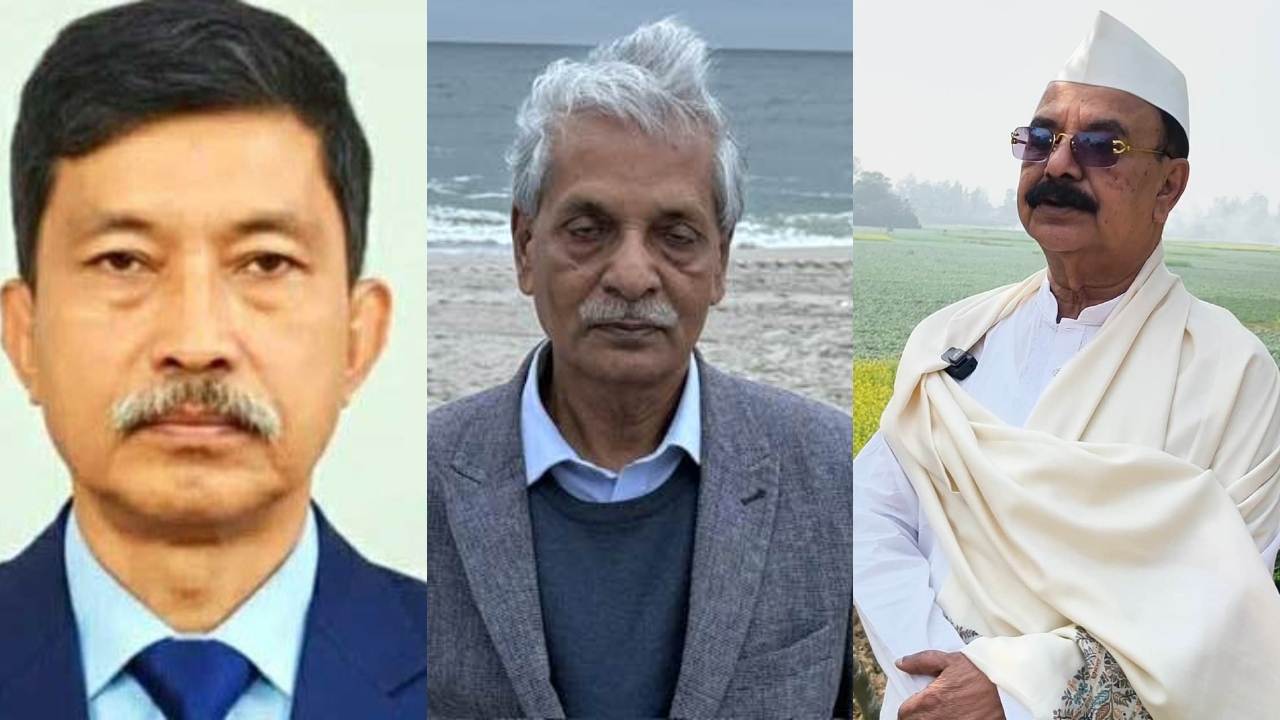
Who were the 3 Hindu candidates who won in Bangladesh elections and which party gave them the tickets? Worst result in 2 decades

bangladesh The Nationalist Party (BNP) is preparing to form the government after its big victory in the recently concluded general elections. According to the election results, BNP has achieved more than two-third majority by winning 211 out of 299 seats in the Parliament. Jamaat-e-Islami managed to win 68 seats. The special thing is that BNP’s three Hindu Candidates were elected to Parliament, symbolizing the party’s hold on minority communities. Also proof that BNP is a party that takes everyone along. This is because minority participation and communal tension in the country have always been a matter of concern in Bangladesh. Know who are the Hindu candidates who won from BNP.
1. Gayeshwar Chandra Roy: How is he a strong supporter of unity in diversity?
Gayeshwar Chandra Roy is a senior leader of Bangladesh Nationalist Party (BNP) and is considered one of the prominent faces of the minority Hindu community. He contested the election from Dhaka-3 constituency and won with 99,163 votes, defeating his nearest rival, Md Shahinur Islam. Roy has also been a standing committee member of BNP and a former minister of state, so his victory has both political and symbolic significance. Especially when there is a public debate going on in Bangladesh on security and participation against minorities. His success not only shows the strong comeback of BNP, but also indicates the suffering of the minority community and presenting its political voice strongly in the Parliament. His political identity has long been in favor of social diversity and national unity in Bangladesh and with this victory he has emerged as an influential voice in national politics.
Read this also:Tariq Rehman won the election by following ‘Modi ji’s path’, the strategy of ‘call me sir, not brother’ became a game changer.
2. Nitai Roy Choudhary: How did you strengthen the participation of minority community?
Nitai Roy Chowdhury is playing the political leadership role as the Vice President of Bangladesh Nationalist Party and won a landslide victory from Magura-2 constituency. He defeated Jamaat candidate Mustarshid Billah with a total of 147,896 votes and won a decisive mandate. Choudhary’s victory further diversifies BNP’s electoral strategy as he not only won the trust of voters in his constituency but also strengthened the wider support of the minority community. His political influence within the BNP is considered large and his vice-presidential role in the party gives him a central position on policy decisions and issues of representation. With the victory, Chaudhary gives the message that minority leadership can also be a part of politics, which is an important step towards change in the political scenario of Bangladesh.
Read this also:Bangladesh Election Result: How safe will Hindus be under Tariq Rehman’s rule? Population has decreased since 1971, now a big challenge
3. Advocate Deepen Dewan: How is the strong face of the Hindu community?
Advocate Deepen Dewan has won the election from Rangamati constituency on behalf of Bangladesh Nationalist Party, where he defeated his nearest rival Independent candidate Pahel Chakma by getting 31,222 votes. Diwan comes from a legal background and has been active on issues such as social justice, community rights and constitutional protection of minorities in his constituency. Her victory establishes a strong representation for the minority community within the BNP and shows that social issues and the role of local leadership are also increasingly being recognized in national politics. Diwan can play an important role in bringing the voice of the tribal and minority communities included in the diverse cultural structure of Bangladesh to the Parliament.
The three candidates who won the elections on BNP ticket are part of the huge victory of BNP and by winning from different constituencies, they have proved that the people of Bangladesh are now ready to give a major political role to diverse communities. These victories are being considered an important sign to promote the participation of minorities in the politics of Bangladesh.
Why did the only Hindu candidate of Jamaat lose the election?
Jamaat-e-Islami Party had also nominated a Hindu, Krishna Nandy, to contest the elections by giving him a party ticket, but Krishna Nandy lost the election on Khulna-1 seat. BNP candidate Ameer Ejaz Khan won this seat. He got 121,352 votes.
Why is the representation of minorities the lowest in 2 decades?
About 8 percent of the population of Bangladesh is Hindu. Despite this, only 3 Hindu MPs were elected in the 2026 general elections. Earlier during Sheikh Hasina’s era this number used to remain from 14 to 20. This time all the winners are from BNP. Jamaat’s Hindu candidate lost. A total of 79 minority candidates were in the fray, yet the representation remained very low. The main reason behind this is believed to be polarization of votes.
Read this also:Bangladesh Election 2026: ‘Relations on equal footing’, if Tariq Rehman becomes PM, what will India get, what will change?
How many minority candidates contested the elections?
A total of 79 candidates from religious and ethnic minority communities contested the Bangladesh general elections, including 10 women. He represented different political parties as well as independent groups. Out of 60 registered political parties, 22 had given tickets to minority candidates. BNP fielded six minority candidates, and four of them won. Despite this, political experts say that minority representation in Parliament is still less than the total seats.

Comments are closed.