
With no Parliament or Speaker, how will the swearing-in ceremony take place in Bangladesh? Learn the constitutional rules.

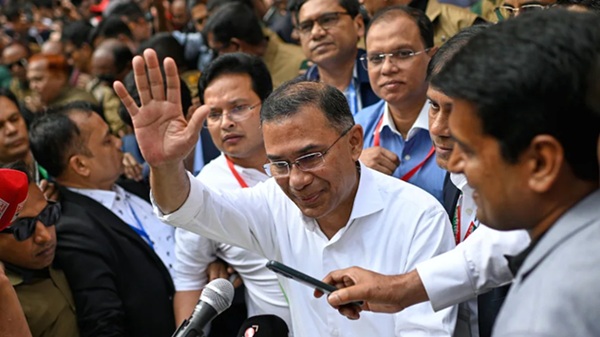
New Delhi. The Bangladesh Nationalist Party (BNP), led by Tariq Rahman, has secured a landslide victory in the general elections held after the fall of Sheikh Hasina’s government in Bangladesh and is preparing to form a government. According to reports, Tariq Rahman is expected to be sworn in as Prime Minister on February 17th. But the big question in the current situation is: when neither Parliament nor the Speaker is present, how will the swearing-in process be completed?
What the Constitution Says After Election Results
According to the Bangladesh Constitution, the process of forming a new government after a general election begins with the swearing-in of the elected members. The rule is that the oath must be administered within three days of the final results being announced. However, the results announced by the Election Commission are not considered final. The results are formally considered final after the government issues an official gazette notification, and the swearing-in ceremony is conducted within three days.
Article 148 of the Constitution clearly stipulates that elected members be sworn in within three days of the publication of the official gazette. Sources close to Muhammad Yunus, who served as the chief advisor to the interim government, say the entire swearing-in process will be completed by February 18th and there is unlikely to be much delay.
When there is no Parliament, who will administer the oath?
Under normal circumstances, the Speaker of Parliament administers the oath to elected members. However, after the 2024 agitation, Parliament has been dissolved. There is no Speaker in office, nor does the House exist. Even the Deputy Speaker is reportedly in jail. The Constitution provides for such extraordinary circumstances.
Under Article 148, the Chief Election Commissioner can administer the oath to members. Furthermore, the President can nominate someone to administer the oath. If necessary, the Chief Justice of India can also be entrusted with this responsibility. This means that the constitutional process can proceed even in the absence of Parliament.
What will the President’s role be?
The current President of Bangladesh is Mohammad Shahabuddin, who assumed office in 2023. The President’s term in Bangladesh is five years, and his current term will last until 2028.
After the swearing-in, the President will formally invite the majority party, the BNP, to form the government. Bangladesh’s Parliament has a total of 300 seats, and a party that wins 151 seats is considered a majority. This time, the BNP won over 200 seats, securing a two-thirds majority.
The President administers the oath of office to the Prime Minister. Subsequently, under Article 56 of the Constitution, the President also administers the oath of office to the members of the Council of Ministers. Once this process is complete, the new government formally comes into existence and the Prime Minister assumes office.

Comments are closed.