
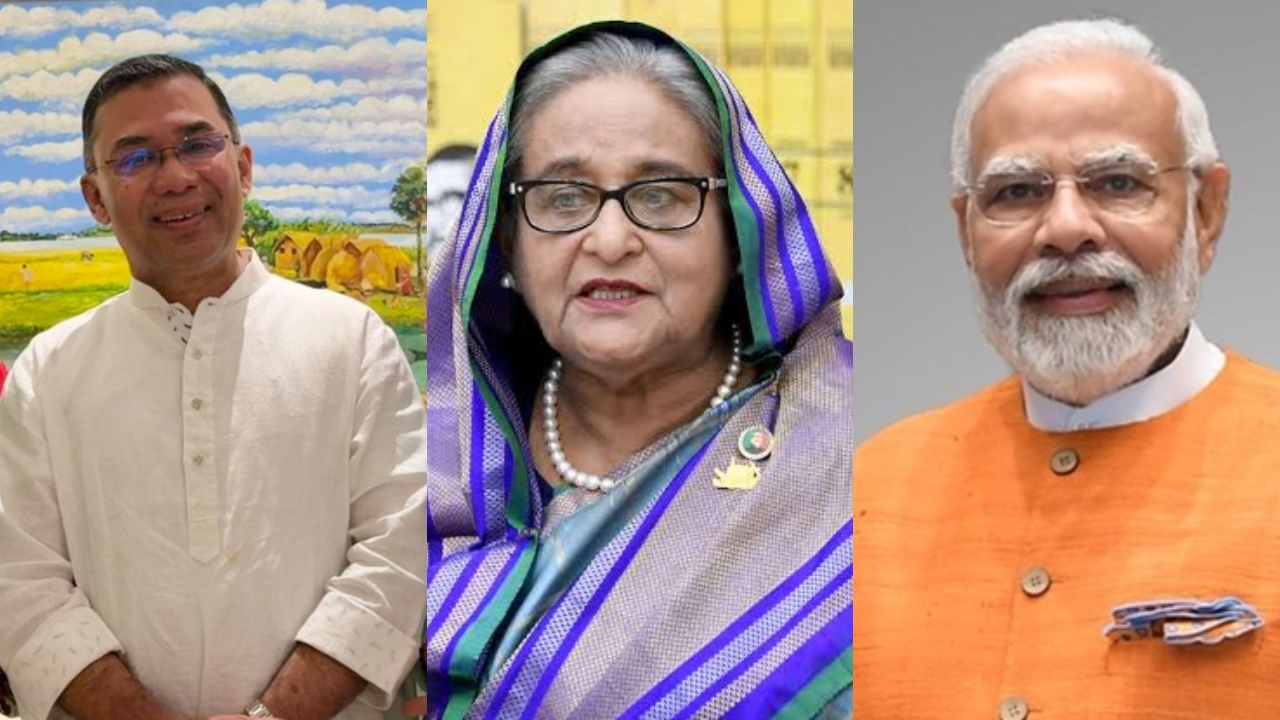
‘Rahman’s victory, Modi’s congratulations’, will India-Bangladesh relations be back on track?

bangladesh The way New Delhi reacted after BNP’s decisive victory in the 2016 general elections has given rise to a possible ‘reset’ in South Asian diplomacy. Prime Minister Narendra first issued a message in Bengali, congratulating Bangladesh Nationalist Party leader Tariq Rahman on his victory and expressing confidence of India’s support for a democratic, progressive and inclusive neighbourhood. In response to this, BNP also responded positively and indicated improvement in relations. But the question is, was this just a diplomatic courtesy or really the beginning of a ‘reset’ in India-Bangladesh relations?
The tone of India was certainly warm, but also carefully woven. Because in July 2024, when Sheikh Hasina came to India after the Gen Z-led rebellion and her party Awami League was kept out of the elections, the sourness in the relations between the two countries was clearly visible.
Read this also:Who were the 3 Hindu candidates who won in Bangladesh elections and which party gave them the tickets? Worst result in 2 decades
What clues are hidden in Modi’s message?
PM Modi has talked about strengthening ‘many types of relationships’. This was not just a formal congratulation, but a signal that Delhi was ready to work with the new government, but also made it clear that India would not compromise on its security on ‘Red Line’ radicalism, cross-border terrorism and support to insurgent groups.
Why did relations deteriorate?
Distrust increased after the political turmoil of July 2024. There was a perception in Bangladesh that Delhi gave excessive support to Sheikh Hasina’s government. This is the reason why old complaints also resurfaced. Such as allegations of killings on the border, water sharing disputes, trade barriers, inflammatory statements and others.
What was the result?
Voice services are almost at a standstill after the Gen Z movement deepened the bitterness in India and Bangladesh. Train and bus services were suspended. There has been a reduction in flights to Dhaka and Delhi.
What has been India’s history with BNP?
Bangladesh Nationalist Party is not new to India. In 2001, when BNP formed the government with Jamaat-e-Islami under the leadership of Khaleda Zia, relations cooled down. Two Indian ‘Red Lines’ were then tested. Accused of allegedly supporting north-eastern rebels and protecting Hindu minorities. Indeed, the recovery of 10 truckloads of weapons in Chittagong in April 2004, allegedly meant for Indian insurgents, dealt a deep blow to trust.
Read this also:Tariq Rehman won the election by following ‘Modi ji’s path’, the strategy of ‘call me sir, not brother’ became a game changer.
At that time the economic relations between the two countries also faltered. Tata Group’s proposed $3 billion investment got stuck in a gas price dispute and ended in 2008. In 2014, Khaleda Zia had to cancel her meeting with then President Pranab Mukherjee. It was a big signal for Delhi that relations are not smooth.
Then why did India invest so much in Sheikh Hasina?
During her 15 years of rule, Sheikh Hasina gave India what it wanted. Crackdown on insurgents in the North-East, better connectivity, pro-India stance vis-à-vis China and others. But these close relations became politically controversial within Bangladesh.
Is ‘reset’ possible with new government?
It is possible, but it is not easy either. BNP is a politically experienced and relatively moderate party, but the question is how will Rehman handle domestic pressures and anti-India sentiment? Delhi’s strategic experts also believe that the ‘pendulum’ had earlier swung too far to one side, now there is a danger of swinging to the other side.
Will Sheikh Hasina’s presence become a hindrance??
There are reports that after 2024, thousands of Awami League members are in India. If Delhi gives them an active political platform, it may be seen as interference in Dhaka. Unless Hasina signals a change in leadership or introspection, her active presence could complicate relations.
What will happen to security and defense cooperation?
Despite tensions, security cooperation continues. Annual military exercises, coordinated naval patrols, annual defense talks and a $500 million Indian Defense Line of Credit also continue. Foreign affairs experts say that BNP will not withdraw this cooperation.
How important are economic and geographical compulsions?
There is a 4,096 km long common border between India and Bangladesh. There are deep cultural ties between the two countries. Bangladesh is India’s largest trading partner in South Asia. India is Bangladesh’s largest export market in Asia. Distance is not a practical option for both countries.
Important question: Who will take the initiative?
Being a big neighbor, India should take initiative. This can be the path to outreach, dialogue and practical cooperation. Rahman has indicated that he will not let the past become the enemy of the future. Now it remains to be seen whether concrete diplomacy can replace rhetoric. The key to the reset lies in one question: will Delhi abandon caution and move forward with confidence and will Dhaka rise above domestic politics and choose a stable partnership?
Read this also:Bangladesh Election Result: How safe will Hindus be under Tariq Rehman’s rule? Population has decreased since 1971, now a big challenge
Does India need to extend a hand?
On the question of whether India-Bangladesh relations will get back on track, foreign affairs expert Dr. Brahmadeep Alune said, ‘India needs to review its Bangladesh policy. It is necessary to do this not only with Bangladesh but also with other neighboring countries. You need to learn a lot from Bangladesh. This is because Sheikh Hasina’s support cannot be considered as support for Bangladesh. Being an elder brother, we need to understand the responsibility. Tariq Rehman is helpless on this issue. The people there have voted against Sheikh Hasina. In such a situation, India needs to find a way to extradite Sheikh Hasina. If this does not happen, relations with India will remain bad. Or it is possible that Sheikh Hasina may go to a safe place in some European country. Sheikh Hasina is a basic factor in India-Bangladesh relations. Cannot deny him. Only then can other things move forward. It would be good if India itself takes the initiative to improve relations.

Comments are closed.