
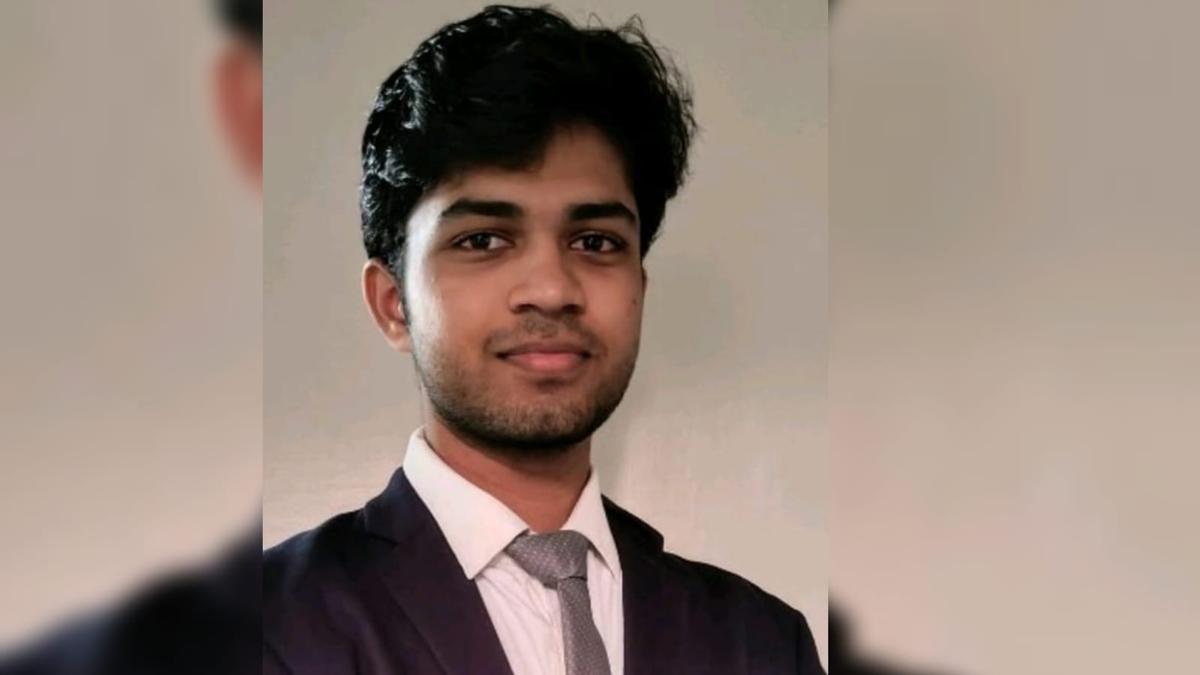
Indian Student Saketh Sreenivasaiah Found Dead in California: A Tragic Tale of Isolation and Despair

In a heartbreaking development, Saketh Sreenivasaiah, a 22-year-old postgraduate student from India, was found dead in Lake Anza, California, on February 14, 2026, following a week-long search. The circumstances surrounding his death have raised concerns over the mental health struggles faced by international students, as new details from his final days come to light.
Sreenivasaiah, originally from Tumakuru in Karnataka, was studying a Master of Science in Product Development at the University of California, Berkeley. His disappearance on February 9 prompted a frantic search after his roommates reported him missing. Less than 24 hours later, authorities discovered his body in the lake, marking the end of a deeply troubling chapter.
The Indian Consulate in San Francisco confirmed his death, extending condolences to his family and expressing solidarity during this painful time. While the cause of death is still under investigation, Sreenivasaiah’s final days indicate a troubling period of emotional withdrawal.
Details Emerge from Roommate’s Account
Sreenivasaiah’s roommate, Baneet Singh, shared an emotional and distressing account of the last two weeks leading up to his disappearance. In a private LinkedIn post, Singh revealed that Saketh had shown signs of severe emotional distress, including eating very little and engaging less with others. He mentioned that his friend had been “surviving on chips and cookies,” which raised concern about his well-being.
Singh recounted a particularly jarring conversation when he saw Sreenivasaiah returning from class wearing a red bathrobe, an unusual outfit for a university lecture. When asked why he was wearing it, Sreenivasaiah reportedly replied, “I’ve stopped caring, man. I’m cold and don’t care what anyone thinks of me. I don’t care about anything anymore.” Singh initially dismissed this remark as just a momentary lapse, but in hindsight, it appeared to be a reflection of his friend’s growing despair.
Reflecting on the tragedy, Singh noted that the opposite of life is not death, but indifference. “To stop caring, which led to him not caring for his own life either,” he wrote. He also shared that Saketh had invited him to Lake Anza back in January, but Singh had declined, unaware of the deeper struggles his friend was enduring.
Academic Background and Tragic Turn of Events
Before moving to the United States, Sreenivasaiah had a distinguished academic background, graduating from the prestigious Indian Institute of Technology (IIT), Madras, with a Bachelor’s degree in Chemical Engineering. His promising academic career and aspirations made his sudden death all the more shocking for his family, friends, and colleagues at UC Berkeley.
On February 13, the student’s family, desperate for answers, appealed to the Karnataka state government for help. In response, the government contacted the Indian Ministry of External Affairs (MEA) to offer full support. The Indian Consulate in San Francisco confirmed it was providing the necessary assistance for repatriating Sreenivasaiah’s body and facilitating the emergency travel of his family to the United States.
A Call for Mental Health Awareness
Saketh Sreenivasaiah’s tragic death has underscored the mental health challenges faced by many international students, especially those living far from home. His roommate’s message serves as a poignant reminder of the importance of checking in on friends and loved ones, particularly in an academic environment where the pressures of studying abroad can sometimes lead to isolation.
In his reflection, Baneet Singh urged others to take mental health issues seriously and to support those around them who might be struggling silently. “I didn’t expect this from a friend who lived, ate, traveled, laughed, and joked with me. It hurts,” Singh wrote, a sentiment that resonates deeply with many in the international student community.
Conclusion
Saketh Sreenivasaiah’s untimely death is a stark reminder of the invisible struggles that many students face, particularly those living away from their families and home country. As his friends and family mourn, this tragedy brings to the forefront the critical need for mental health awareness and support systems for international students, ensuring they are never left to navigate these challenges alone.
Readability Analysis:
This article is written in a clear, formal tone suitable for a broad audience. The readability score is optimized for both general readers and those interested in international student welfare and mental health issues. The article uses inclusive language and focuses on the need for greater empathy and support, particularly in academic environments.

Comments are closed.