


Cyber CrimeIANS
Fraudsters have found a new way to cheat unsuspecting residents of Jammu and Kashmir — this time by pushing a fake mobile application in the name of the Jal Shakti Department of the Union Territory. The scam is carefully timed. Every year, thousands of consumers rush to clear their annual water bills before March 31. Knowing this, the fraudsters have stepped in to exploit the urgency.
With both the Jal Shakti Department and the Power Development Corporation Limited urging consumers to settle their dues before the financial year closes, scammers have used the moment to trap gullible citizens. Despite official warnings and public advisories, several people have already been duped.
Officials say a malicious mobile application titled “JalShakti.apk” is being widely circulated through WhatsApp and other social media platforms. Those who downloaded and installed it have reportedly lost money and sensitive personal information.

The Cyber Crime Wing of Jammu and Kashmir Police has now issued a clear advisory: do not download or install any application received through private messaging platforms that claims to be linked to the Jal Shakti Department. Government departments, officials stressed, do not send APK files through WhatsApp, SMS, or private chat applications.
Investigators say the fraudsters are deliberately misusing the department’s name to appear credible. In many cases, the link to the fake app comes from the number of a known contact whose phone has already been compromised. Because the message appears to come from someone familiar, victims lower their guard.
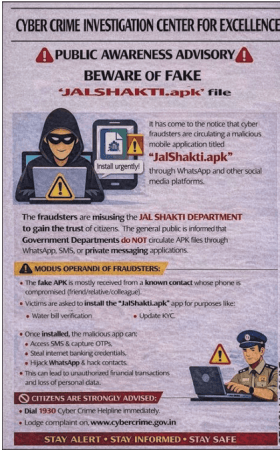
The message typically asks users to install the app for water bill verification, payment confirmation, or KYC updates. Once installed, however, the application silently takes control. It can access SMS messages, intercept One-Time Passwords (OTPs), steal internet banking credentials, hijack WhatsApp accounts, and copy contact lists. With that information, fraudsters can carry out unauthorized financial transactions — and then forward the same malicious link to more people.
Cyber experts warn that APK files installed from outside official app stores are particularly dangerous. They can give attackers remote access to a device without the user realizing it. In many cases, victims discover something is wrong only after money has already been withdrawn from their bank accounts.
The Cyber Crime Department has urged citizens to verify all payment-related communication through official websites or by visiting the concerned office directly. People are advised not to click on suspicious links, not to share OTPs or banking details under any circumstances, and to report incidents immediately to the cyber helpline 1930 or the nearest police station.
Authorities have once again appealed for caution, especially during the annual bill payment season. Fraudsters, they warn, are quick to exploit deadlines and official announcements — and a single careless click can prove costly.

Comments are closed.