
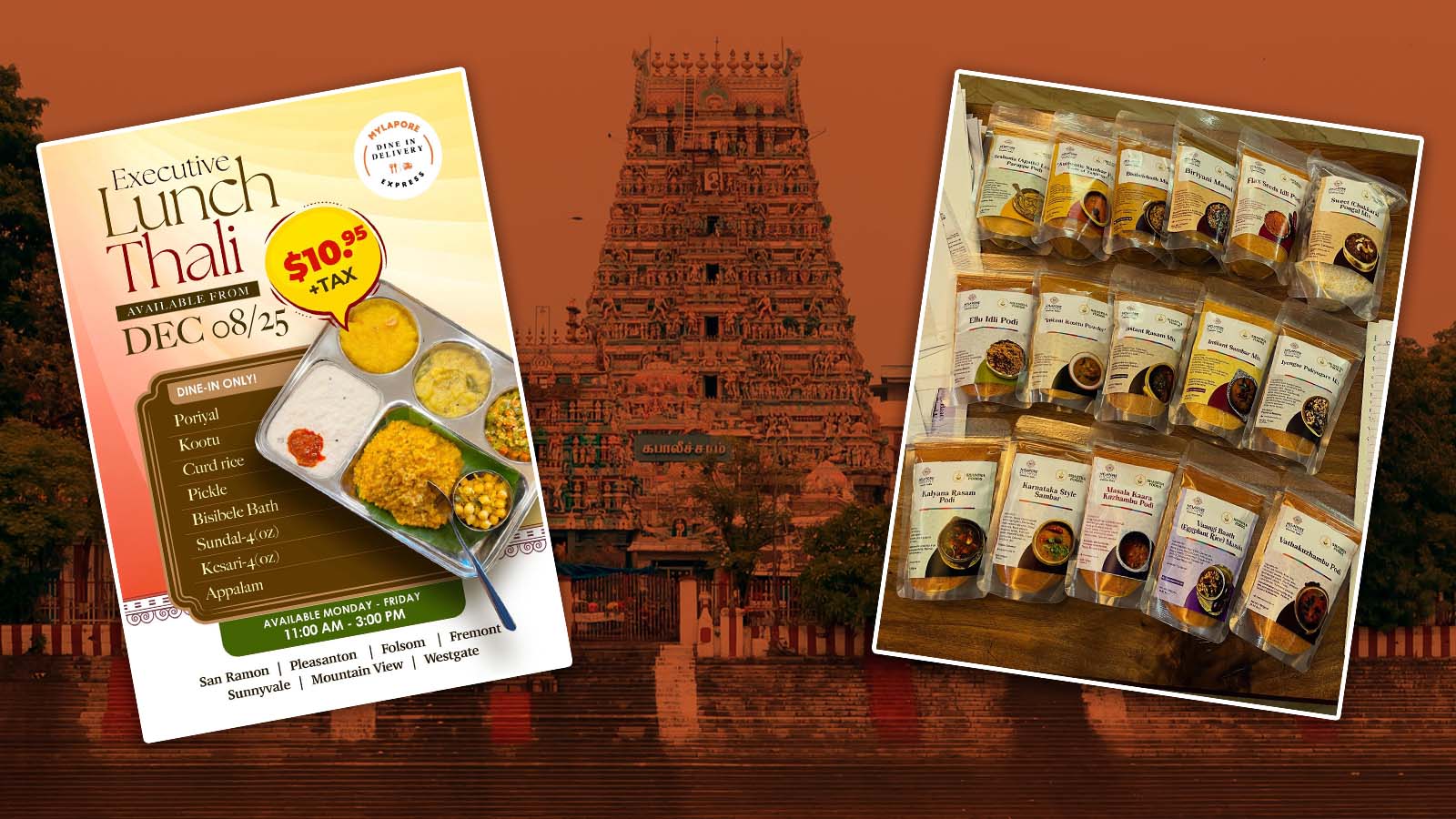

A transatlantic trademark dispute over an ancient Chennai neighbourhood’s name has turned contentious, highlighting the stark differences between Indian and American intellectual property laws. At the centre of the controversy are two businesses that share a name rooted in Chennai’s heritage—Mylapore Kitchens, a Chennai-based food products brand, and Mylapore Express, a Bay Area-based South Indian restaurant chain.
Mylapore Kitchens, founded by Chennai entrepreneur Subha in 2019, produces and markets whole spices, ground masalas, ready-to-eat mixes and so on, and is currently not engaged in the catering or restaurant business. Since 2019, it has been directly shipping products to customers in the US and elsewhere abroad.
Conflict origins
The conflict erupted when Mylapore Kitchens expanded its distribution network to the US through Shastha Foods in March 2024. Its products began hitting the shelves at various American outlets. It soon found itself embroiled in a legal notice from Mylapore Express, which claims exclusive rights to the “Mylapore” wordmark for food products in the US market.
Also read | What Bloomsbury-Cornwall deli row over sabzi says about ownership of common food words
The irony of the dispute is not lost on those following the case. Just months before the legal confrontation, the owners of both businesses had shared a convivial lunch in Chennai. Subha recounted the meeting with warmth on social media, describing how Jai, the owner of Mylapore Express, and his wife Sudha visited her establishment.
“We got talking. We did the live (on social media). I truly didn’t know how the time flew by,” she wrote in a social media post, adding that the couple had promised to return for a home-cooked meal to meet her pets.
Legal, social media battles
That camaraderie, however, has since given way to legal notices and social media salvos. Mylapore Express has demanded that Mylapore Kitchens cease using the “Mylapore” name in the American market, citing its registered trademark. In a Facebook post, the former said: “In the United States, ‘Mylapore’ is a registered trademark for food products…Mylapore Kitchens in India is a well-known and respected store—but their name isn’t trademarked in the US, and we’re not connected or affiliated with them.”
Subha pushed back against what she viewed as an attempt to claim ownership over a geographical and cultural identity. “So now Mylapore, a place that’s dear to so many of us, is someone’s right?” she wrote on the Mylapore Kitchens Facebook page.
Also read | ‘Captain Cool’ trademark: Why Dhoni may have to face many legal bouncers
She detailed her company’s journey—from registering the name in India in May 2019 after confirming it wasn’t already taken domestically, to building a business that now employs women almost excluviely, and ships to customers worldwide. “Everyone has a story. Mylapore belongs to us all,” she asserted.
Cultural heft of Mylapore
The name “Mylapore” carries significant cultural weight. Derived from a neighbourhood in Chennai known for its temples, historic buildings and traditional vegetarian food culture, the term evokes authenticity and heritage—qualities both businesses are eager to leverage. For Mylapore Kitchens, the name represents its roots in South Indian culinary traditions.
For Mylapore Express, operating restaurants in the US, it signals a connection to South Indian gastronomy. The company operates across three segments: Mylapore South Indian, Mylapore Express, and Idly Express, which offers only takeouts, with a menu that excludes dosas.
The Federal Premium | Why Mylapore is getting carpeted with kolams
The legal dispute between the two entities has raised questions about the consistency of territorial claims, though the legal frameworks governing trademarks in India and the US differ substantially.
Under US trademark law, registration confers strong territorial rights, and the “first to use” or “first to register” principle often prevails, even for geographical names. In India, however, the Trademarks Act provides more leeway for challenging marks that are geographically descriptive or lack distinctiveness, particularly when they refer to well-known locations. This divergence explains why both businesses could operate under similar names in their respective home markets without initial conflict—until their markets overlapped.
Strong reactions
The dispute has drawn strong reactions on social media, with supporters of Mylapore Kitchens questioning the validity of trademarking a place name. “For me, the irony is that the name Mylapore, which is a place in India, can be trademarked in the USA! That doesn’t make sense at all!” wrote one commenter. Others suggested workarounds, from minor name modifications to filing counter-trademarks in India.
Mylapore Express, meanwhile, has sought to frame the issue in legal rather than emotional terms, noting that “what matters here is who holds the trademark and not whether you can trademark ‘Mylapore.'” The restaurant chain disabled comments on its clarification post, citing “keyboard warriors” posting “garbage without knowing anything about trademark laws.”
As both parties dig in, the case could perhaps serve as a cautionary tale for Indian businesses expanding internationally. What was once common ground—a Chennai neighbourhood’s name—has become a legal battleground, causing pain to both parties.

Comments are closed.