
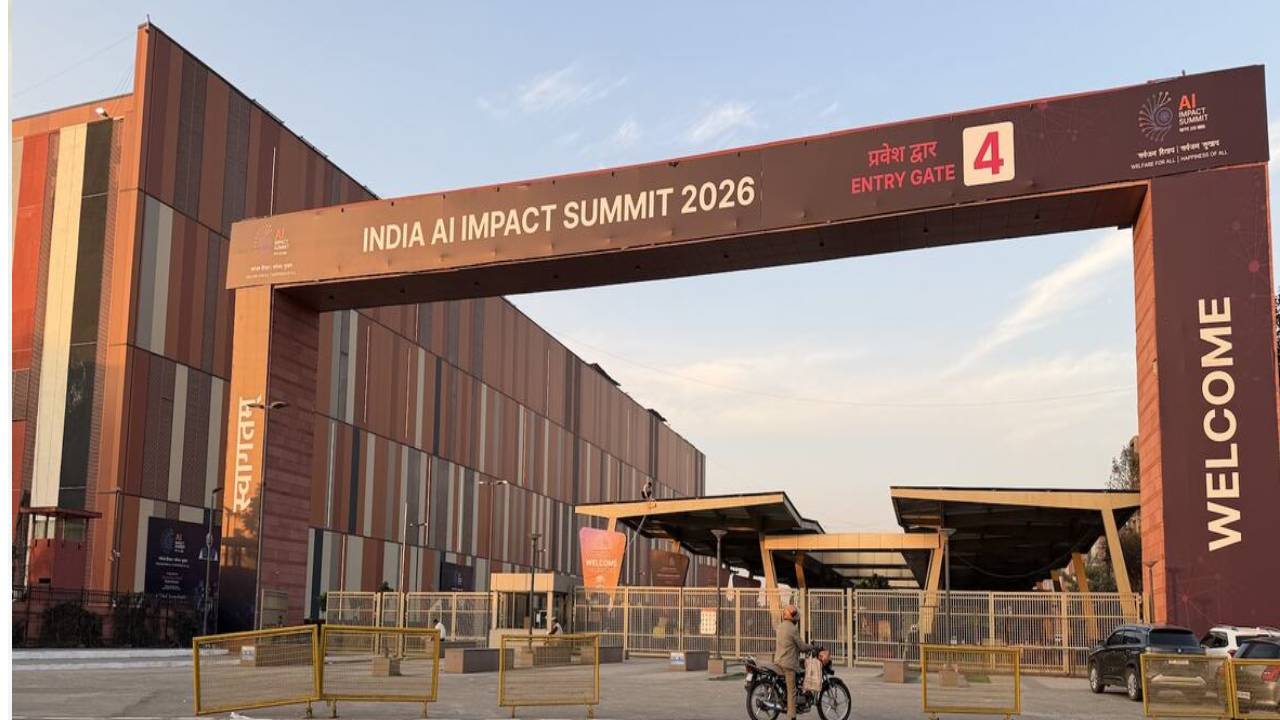
Presence in 100+ countries, 40+ big companies and 500 sessions; Know 10 big things about AI Summit to be held in Delhi

India AI impact summit 2026: From Monday, New Delhi is going to become the center of global discussion regarding Artificial Intelligence (AI). India is hosting the AI Impact Summit 2026 and through this platform it wants to present its ground-breaking AI solutions to the world. Also, India’s target is to become a strong voice of the Global South and maintain its place in the top column of technological leadership.
This summit is being organized for the first time in the Global South. This conference, which will run from 16 to 20 February, will be officially inaugurated by Prime Minister Narendra Modi on 19 February.
When will PM Modi inaugurate AI Impact Expo?
The Prime Minister will inaugurate the India AI Impact Expo 2026 organized at Bharat Mandapam at 5 pm on Monday. According to the Prime Minister’s Office, this expo will be a national showcase of “AI in Action”, where policy and practice, innovation and expansion, and engagement between technology and common citizens will be seen.
How did this summit start?
This conference is a new chapter in the ongoing international conversation on AI governance and innovation. It began with the AI Safety Summit held at Bletchley Park, UK in November 2023, where 28 countries signed the Bletchley Declaration and focused on the security risks associated with AI.
After this, security as well as innovation and exclusion were discussed in the Seoul summit in May 2024. At the Paris AI Action Summit in February 2025, emphasis was placed on practical implementation and economic opportunities, although safety and security issues were not given much importance.
What is the vision of India?
India’s approach is somewhat different. While earlier summits focused on big risks and regular frameworks, New Delhi is emphasizing “People, Planet, and Progress”. According to Electronics and IT Secretary S Krishnan, India is focusing on developing AI technology to solve ground problems. This reflects India’s position, where it wants to be an emerging AI power as well as the voice of the Global South.
This conference is taking place at a time when major changes in the global economy are expected due to AI. World leaders and corporate heads will discuss the future of AI and its impacts.
Who will be included in this program?
There will be participation in this AI summit from governments, industry leaders, researchers, civil society organizations and international institutions. Representatives of more than 100 countries will participate in it, including more than 20 heads of state and government. These include French President Emmanuel Macron, Brazilian President Luiz Inacio Lula da Silva, Spanish President Pedro Sanchez Perez, Swiss President Guy Parmelin, Netherlands Prime Minister Dick Schoof and Estonian President Alar Karis.
Ministerial delegations from more than 45 countries will also participate in it. After India’s formal invitation, a delegation from China is also going to attend this summit. CEOs of more than 40 big companies of the world and India will also participate in it. These include Google’s Sundar Pichai, OpenAI’s Sam Altman, Anthropic’s Dario Amodei, Microsoft’s Brad Smith, Adobe’s Shantanu Narayen and Qualcomm’s Cristiano Amon. The Prime Minister will address the CEO Roundtable and also host a dinner.
Is this AI summit also important for Indian engineers?
According to Abhishek Singh, CEO of IndiaAI Mission, an important topic of the conference will be democratization of AI. Along with this, real AI solutions developed by Indian engineers in areas like health, agriculture and education will also be displayed.
Abhishek Singh said that at present AI has been developed by only a few countries and most of the countries are only its users. If the data is not inclusive, there will be bias in the results. Therefore, ensuring equal access to datasets, computing resources, models, algorithms and applications will be an important issue of the conference.
The conference will have seven theme-based working groups, which will be co-chaired by representatives of the Global North and Global South. These groups will present proposals for AI Commons, trusted AI tools, shared computing infrastructure and use of AI in various fields.
This conference is taking place at a time when serious questions are being raised about the future of employment due to AI. India’s IT sector, which has been the mainstay of the country’s economy for the last two decades, is now facing challenges due to AI. There are also concerns about the increasing pressure of AI on resources like energy and water.
How many sessions will there be in AI Summit?
Over 500 sessions will be organized over the next five days, discussing AI safety, governance, ethical use, data protection and India’s ‘Sovereign AI’ policy. There will also be an emphasis on developing indigenous foundation models for strategic areas.
What things will be discussed in this AI summit?
The conference will also discuss how AI is impacting different professions and industries, what new skills will be needed in the changing job market, and how farmers, small businesses and ordinary citizens can benefit from AI. There is a possibility that some AI language models developed in India may also be launched during this period. Some of the 12 applications approved for creating large and small language models may be officially launched.

Comments are closed.