
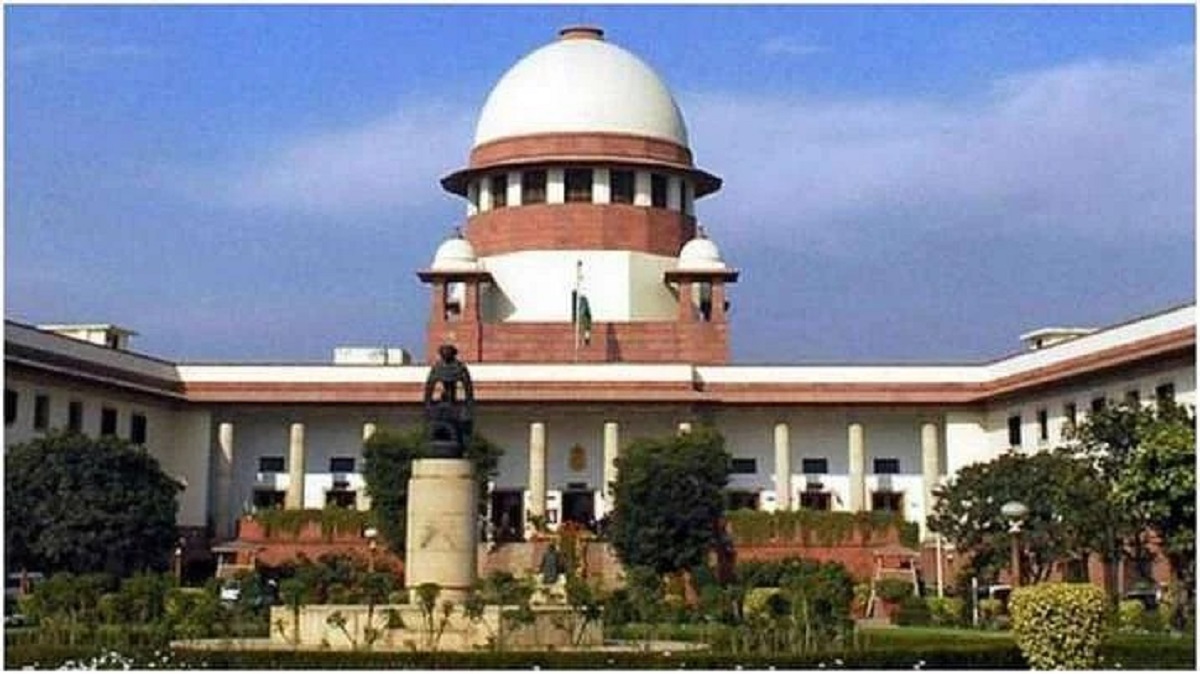

The Supreme Court of India has taken a major step towards finalizing the decades-long legal debate over the scope of labor laws in India. On Monday (February 16), the apex court announced that a nine-judge constitution bench would be constituted to take a final decision on the legal definition of the industry. The hearing of this important case is likely to start from March 17, 2026.
This Constitution Bench will be formed under the leadership of Chief Justice Surya Kant. According to reports, the bench will also include Justice Joymalya Bagchi and Justice Vipul Pancholi. The purpose of the court is to clarify whether modern government welfare schemes and social institutions will be covered by the same labor laws that apply to commercial factories and industries.
The root of the controversy lies in the 1978 landmark case Bangalore Water Supply and Sewage Board vs. A. It is in Rajappa. In that decision of a seven-judge bench, Justice V. Krishna Iyer had propounded the triple test principle. According to this test, any organization will be considered as an industry if—
- She conducts organized activities,
- There should be organized cooperation between employer and employee,
- And goods or services are produced/distributed to satisfy human needs.
This broader interpretation also brought hospitals, educational institutions, clubs and government research bodies under the ambit of the Industrial Disputes Act, 1947, giving their employees the right to form unions and bargain collectively.
In 2005, in the State of Uttar Pradesh vs. Jai Bir Singh case, a five-judge bench referred the 1978 decision to a larger bench, expressing the need for reconsideration. In 2017, a seven-judge bench clarified that since the ‘Bangalore Water Supply’ judgment was given by seven judges themselves, a nine-judge bench would be necessary to modify or quash it.
In the upcoming hearing, the court will examine whether the triple test is an appropriate legal standard even in the context of the 21st century. Also, the effect of the Industrial Disputes (Amendment) Act, 1982 and the provisions of the Industrial Relations Code, 2020 will also be examined.
The most important question would be whether social welfare schemes and specific activities run by government departments should be treated as industrial activity or remain outside the scope of Section 2(j) of the Act.
The top court has clarified that all parties can update their written arguments or file additional documents till 28 February 2026. The court has fixed the time limit with an aim to complete the hearing in two days, with the petitioners being given three hours for main arguments and one hour for rejoinder.
Legal experts believe that this decision will have far-reaching implications on labor relations, union rights and the legal status of government schemes in India. This nine-judge Constitution bench can provide decisive clarity on this long pending constitutional question.
Also read:
Afridi disappointed after defeat from India; Didn’t even spare son-in-law
Conspiracy to trap minor girl in ‘Love Jihad’ in school, four arrested including Parvez Khan
Expansion of nuclear facilities in Sichuan, China
Stock market opened flat due to mixed global signals, buying in pharma sector!

Comments are closed.