
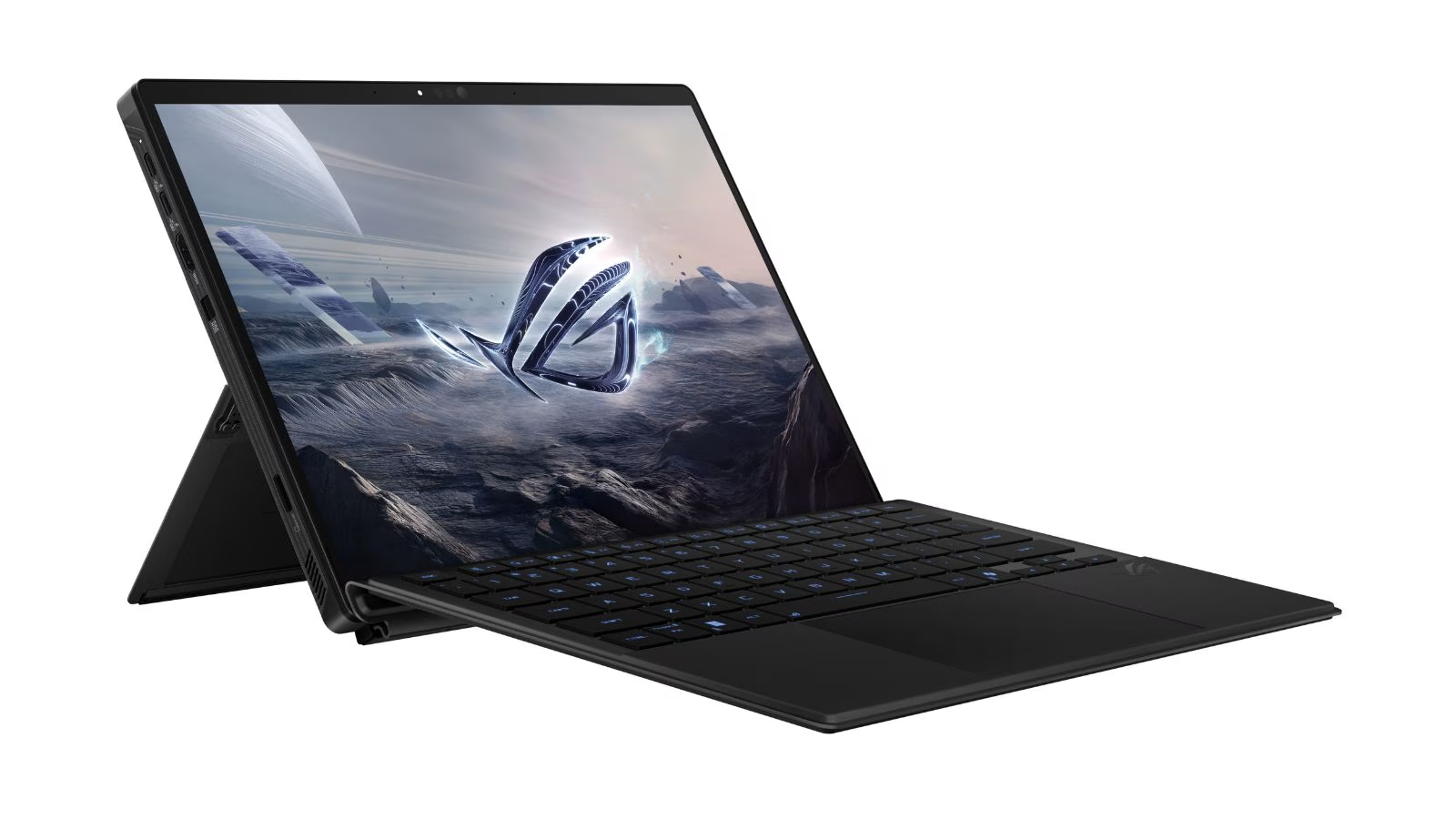

Two major computer brands, Acer and ASUS, have temporarily stopped selling desktop and laptop PCs in Germany following a court ruling in favour of Nokia. A German court has issued an injunction that prevents the companies from offering, marketing, importing or even possessing certain affected devices within the country.
The order does not mean that Acer and ASUS computers will immediately vanish from store shelves. Retailers in Germany are not directly impacted by the ruling and can continue selling existing stock. For now, customers are still able to purchase available models. However, the companies are unable to import new units into Germany, which could lead to supply shortages if the legal dispute drags on.
Industry observers say the situation may create pressure on both sides to reach a licensing agreement quickly. If no resolution is reached, German consumers could face fewer choices in the laptop and desktop market in the coming months.
Patent dispute regarding HEVC technology
The heart of the patent dispute is the High-Efficiency Video Coding (HEVC) technology, also known as H.265. Nokia alleged that Acer and ASUS violated three of its patents regarding this popular video compression standard. A third company, Hisense, was also named in the case but chose to secure a licence from Nokia earlier this year.
HEVC plays a vital role in modern computing. The technology is backed by most integrated and discrete graphics processors, as well as system-on-chip platforms. It is used in operating systems, online streaming services, video conferencing software, and media applications. Without the support of HEVC technology, most daily digital activities, such as online video streaming and participating in online meetings, would be impacted.
Although new codecs like AV1 are already being developed, HEVC technology is still deeply rooted in both hardware and software infrastructures. For computer manufacturers, not including HEVC technology support is not really an option, as it would greatly impact the performance of their products.
FRAND rules and legal interpretation
HEVC technology is considered a standard-essential patent (SEP), which requires it to be licensed under fair, reasonable, and non-discriminatory (FRAND) terms. Patent owners such as Nokia are obliged to provide licences, but often, there are disputes on what constitutes fair terms.
Although Acer and ASUS have expressed their respect for intellectual property laws, the German court ruled that their current stance violates Nokia’s rights. Germany is well-known for its tough stance on patent law enforcement, particularly in disputes over SEPs.
Until an agreement is reached or the court revisits its decision, the direct sales of Acer and ASUS PCs will remain paused in Germany, a rare but significant disruption in one of Europe’s largest technology markets.

Comments are closed.