
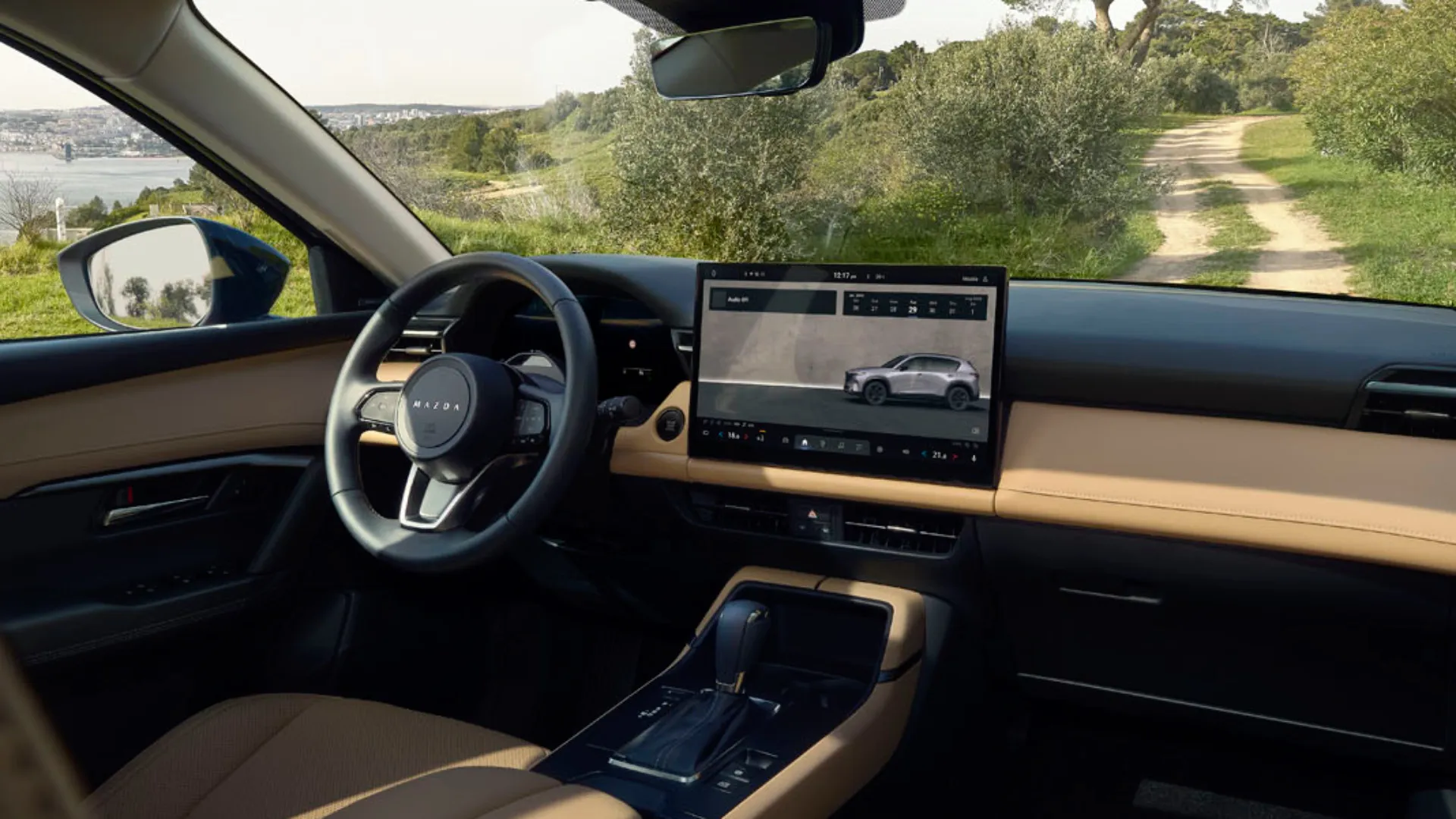

For years, Mazda stood firm against the industry’s rush toward touchscreens. The brand’s argument was simple and confident: touch-based infotainment is distracting and unsafe. Scroll wheels, physical buttons, and tactile controls were presented as the smarter, more driver-focused alternative.
That philosophy is now officially changing.
With the unveiling of the 2026 CX-5, Mazda is abandoning its long-defended scroll-wheel interface in favor of a large, fully touch-based system. The move represents more than a design refresh. It’s an admission that the company’s previous stance may no longer fit how drivers actually use technology in modern vehicles.
The Scroll Wheel That Wouldn’t Go Away
Mazda’s recent lineup, including the CX-50, CX-70, and CX-90, still relies on a console-mounted rotary controller paired with a tablet-style screen perched atop the dashboard. The system requires drivers to scroll, click, and backtrack through menus, a setup that traces its roots back to BMW’s original iDrive from the early 2000s.
In theory, the design keeps hands low and eyes forward. In practice, it often does the opposite. Navigating even basic functions can feel slow and mentally taxing, especially while driving. Many drivers end up defaulting to Apple CarPlay or Android Auto simply to avoid Mazda’s native interface.
CarPlay Doesn’t Fix the Problem
While wireless CarPlay is a welcome inclusion, it was never designed for scroll-wheel control. Mazda adapted it out of necessity, not optimization. The result is a system that works, but awkwardly. Menu navigation feels clunky, and simple actions take longer than they should. Ironically, this undermines Mazda’s original safety argument against touchscreens.
Some upper trims technically offer touchscreen capability, but only under narrow conditions. Touch input often works only while parked or only within CarPlay. Once the vehicle is in motion, the system defaults back to the scroll wheel, reinforcing the sense that the hardware and software were never meant to coexist this way.
The 2026 CX-5 Breaks Tradition
Mazda’s upcoming CX-5 marks a clean break. The new system features a 15.6-inch touchscreen with no rotary controller and no physical buttons. Climate controls are integrated into a fixed lower section of the display, mirroring the approach used by most major automakers today.
Mazda insists this layout is safe and intuitive, arguing that keeping key functions in consistent on-screen locations reduces distraction. From a user-expectation standpoint, that logic tracks. Drivers already know this interface language because they use it everywhere else.
What Mazda Gains and Loses
The shift raises valid concerns. Physical climate knobs and volume dials offered tactile feedback that touchscreens simply can’t replicate. Losing them may frustrate longtime Mazda loyalists who valued that analog feel.
Still, the larger question is whether usability improves overall. If drivers spend less time fighting the interface and more time focusing on the road, Mazda’s touchscreen pivot may actually deliver on the safety promise it once used to justify resisting change.
The scroll-wheel era at Mazda is ending. What replaces it may not be perfect, but it finally aligns with how drivers expect modern cars to work.

Comments are closed.