
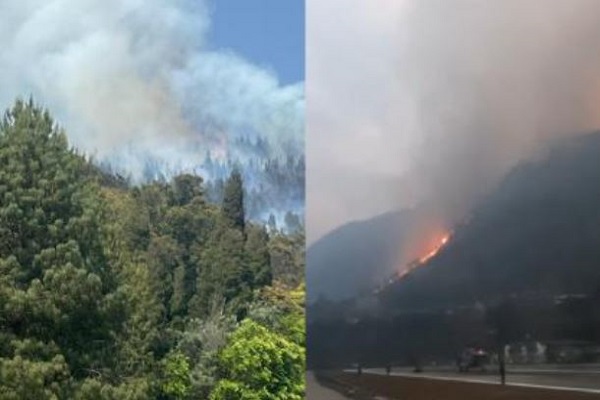

Itanagar/Kohima, 18 February. The Indian Air Force is battling forest fires on two different fronts in the Northeast as part of aerial firefighting operations and deploying heavy-lift helicopters in dangerous areas and very poor flying conditions.
In Walong, Arunachal Pradesh, IAF helicopters have successfully extinguished a major fire by dropping 139,800 liters of water on the affected area. Also, operations are underway in Dzukou Valley in Nagaland, where Mi-17 V5 helicopters are drawing water from Padumpokhiri lake near Dimapur to tackle the fire near Japfu Peak.
.@IAF_MCC helicopters battling wildfires at two fronts, conducting relentless aerial firefighting missions in challenging terrain.
Air Force says that a total of 139,800 liters of water has been dropped, successfully extinguishing the blaze at Walong, #ArunachalPradesh. #IAF… pic.twitter.com/132byeWRPu
— All India Radio News (@airnewsalerts) February 18, 2026
Indian Air Force Also, operations are underway in Jukou Valley in Nagaland, in which Mi-17 V5 helicopters are bringing water from Padumpokhiri Lake (Dimapur) to extinguish the fire near Japfu Peak amid steep slopes, poor visibility and bad wind. Officials are facing steep slopes, poor visibility and rarefied air, making aerial missions difficult.
Indian Air Force helicopters are battling wildfires at two fronts, conducting relentless aerial firefighting missions in challenging terrain. At Walong, Arunachal Pradesh, a total of 139,800 liters of water has been dropped, successfully extinguishing the blaze. Simultaneously,… pic.twitter.com/rYQZYdVau7
— Indian Air Force (@IAF_MCC) February 18, 2026
Meanwhile, Air Vice Marshal Ajay Kunnath said the Indian Air Force must change the way it uses technology for air operations, and stressed on how such operations work in a ‘zero-error’ environment.
The IAF has deployed its Mil Mi-17V5 helicopters, fitted with Bambi buckets, to drop water repeatedly on the affected areas. Officials said the operation is ongoing and air support is playing an important role in preventing the fire from spreading further. Officials are keeping a close eye on the situation.
According to a defense spokesperson in Guwahati, dry weather and shifting cultivation, the traditional practice of hill tribes, are among the main causes of forest fires in the Northeast. Over the past five days, around-the-clock work was carried out using manpower, specialized firefighting equipment, heavy machinery and helicopters to assist in aerial surveillance and water drop, he said. These operations are being carried out in very difficult terrain and weather conditions so that the fire is completely extinguished.
Given the persistent drought conditions in the area, officials are maintaining close surveillance and coordinating ground teams and aerial units to prevent any new fires and protect surrounding forest areas.

Comments are closed.