
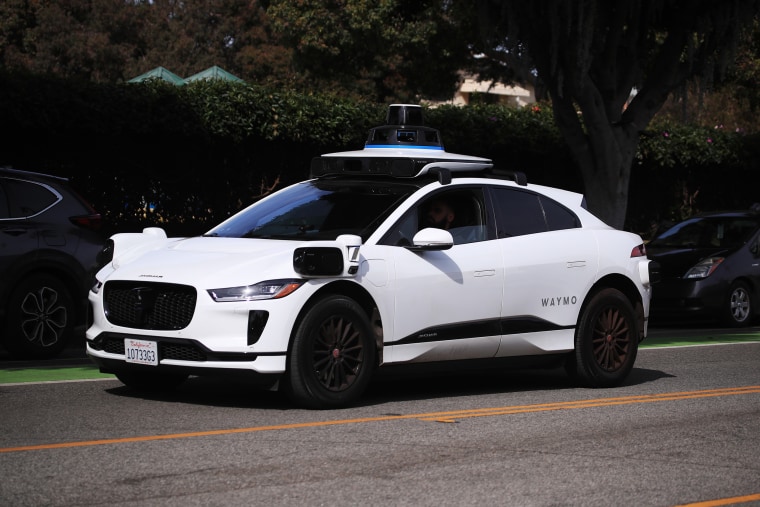

Autonomous vehicle developer Waymo is seeking to clear up confusion surrounding the role of remote human assistants in its robotaxi operations after a recent U.S. Senate hearing sparked widespread debate online. The company says public discussion following the hearing created a misleading impression that its vehicles are being remotely driven by overseas workers.
In a written response to Sen. Ed Markey, Waymo’s head of global operations, Ryan McNamara, provided a detailed explanation of how the company’s remote assistance network functions. He emphasized that the human agents involved are not capable of driving or directly controlling the company’s self-driving vehicles. Instead, their role is limited to offering brief advisory input when the automated system requests additional context in unusual situations.
Waymo said it currently employs around 70 remote assistance agents, divided roughly equally between the United States and the Philippines. These workers step in only when prompted by the vehicle’s automated driving software, typically in complex or unclear scenarios. According to the company, their involvement is designed as a safety backup and not as a substitute for the car’s autonomous systems.
Senate Hearing Triggers Online Reaction
The clarification follows testimony from Waymo’s chief safety officer, Mauricio Peña, during a Senate hearing examining autonomous vehicle safety. Lawmakers questioned whether any of Waymo’s remote support staff were located outside the United States. Confirmation that some agents operate from the Philippines quickly circulated across social media platforms and news outlets.
Much of the online reaction suggested that Waymo’s robotaxis were being steered or controlled remotely from overseas. In response, McNamara’s letter stressed that this interpretation does not reflect how the system works. He explained that the automated driving software contacts remote assistants only to gain extra situational insight, even in cases where the system is already capable of proceeding safely on its own. These exchanges are brief and focused on providing additional information rather than issuing driving commands.
Training Standards and Operational Safeguards
Waymo also described the qualifications and oversight of its overseas workforce. The company said its Philippines-based assistants are licensed drivers, fluent in English, and subject to drug screening requirements. They undergo specialized training tailored to their advisory responsibilities and are regularly evaluated on performance. Although they never operate the vehicles directly, they are trained in the traffic laws and driving environments relevant to Waymo’s service areas.
The company addressed technical concerns as well, noting that communication delays between vehicles and remote centers are minimal. Waymo estimates that latency is measured in fractions of a second and does not interfere with the advisory nature of the interaction.
Remote assistants are tasked with limited responsibilities, such as verifying whether a vehicle is occupied, checking cleanliness, or suggesting ways to navigate around obstacles. They operate separately from Waymo’s Event Response Team, a U.S.-based unit that responds to accidents or safety incidents and receives specialized emergency training.
Limited Emergency Movement Function
While Waymo maintains that its remote assistants cannot drive vehicles, the company acknowledged the existence of a narrowly defined emergency feature. In rare cases where a vehicle is stopped on a highway shoulder, a trained Event Response Team member can trigger a slow forward movement to help the car exit an active traffic lane. Waymo said this function is tightly restricted and has so far been used only in training scenarios.
McNamara declined to disclose detailed statistics on how often vehicles request remote assistance relative to miles traveled. He said the company tracks those interactions internally but considers the specific figures less relevant to the broader explanation of how the system operates.
Differences From Teleoperated Driving Models
Waymo has drawn a distinction between its advisory approach and systems that rely on teleoperation, where remote drivers can actively control vehicles. Electric vehicle manufacturer Tesla has experimented with remote driving as a backup in its robotaxi development. In contrast, companies such as May Mobility use assistance models that more closely resemble Waymo’s advisory framework.
The discussion comes as autonomous vehicle companies accelerate efforts to expand driverless services, prompting renewed debate about safety standards, regulatory oversight, and the long-term impact on transportation employment.
Incidents Intensify Oversight
Waymo’s operations have attracted additional scrutiny following several high-profile incidents. A power outage in San Francisco temporarily left multiple robotaxis stalled in intersections, disrupting traffic. In a separate event in Santa Monica, a Waymo vehicle struck a child at low speed. The company has also acknowledged a case in which a robotaxi entered an intersection against a red light after receiving an incorrect remote prompt.
Safety experts say such events highlight the importance of strong governance frameworks as autonomous technology becomes more visible in everyday transportation. Phil Koopman of Carnegie Mellon University has argued that the key issue is not the presence of remote human support itself, but whether the safety systems and oversight mechanisms surrounding that support are robust and transparent.

Comments are closed.