
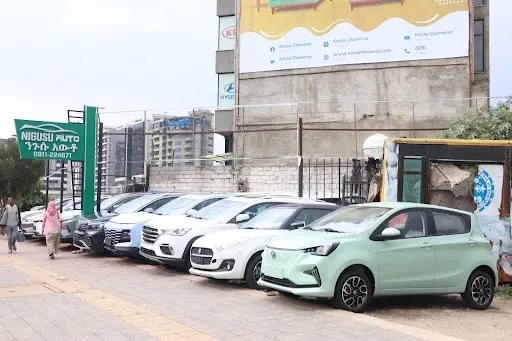

Ethiopia has quietly become one of the most aggressive electric vehicle adopters in the developing world. After banning the import of fossil-fuel-powered cars in 2024, the country is seeing a sharp rise in electric vehicle ownership, driven by economic necessity rather than climate idealism.
In just two years, EVs have grown from a fringe presence to nearly 6% of all vehicles on Ethiopian roads. That’s already above the global average, a striking figure for a country with one of the lowest car ownership rates in Africa.
Why the Government Pulled the Plug on Gas Cars
This wasn’t a symbolic green move. It was a fiscal one.
Fuel subsidies had become a massive burden on Ethiopia’s budget, costing billions over the past decade. After defaulting on its sovereign debt in 2023 and securing a $3.4 billion IMF bailout in 2024, the government needed a way out of its dependence on imported oil.
Electric vehicles offer that escape. Ethiopia produces its own electricity, largely from hydropower, and can control pricing locally. Gasoline prices, by contrast, are tied to volatile global markets.
As part of the policy shift, tariffs on EVs were slashed to as low as zero for locally assembled vehicles, instantly making new electric cars competitive with old, secondhand gasoline models.
Chinese EVs Fill the Gap
With no domestic car manufacturing base to protect, Ethiopia leaned into imports. Chinese automakers quickly stepped in.
Brands like BYD and Chang’an now dominate showrooms in Addis Ababa. A new electric hatchback or compact SUV often costs the same as a used gasoline sedan did before the ban. For buyers, the value proposition is simple: lower running costs, fewer repairs, and better reliability.
Banks have also warmed to the shift. Financing for new EVs is easier to secure than loans for aging gas cars with uncertain resale value.
Powering the Transition With Hydropower
The backbone of Ethiopia’s EV push is electricity. The Grand Ethiopian Renaissance Dam, completed in 2025, added over 5,000 megawatts of capacity. Combined with wind and solar, the country now has surplus power, some of which it exports to neighbors.
Electricity costs around $0.10 per kilowatt-hour, roughly half the regional average. For many consumers, subsidies make it even cheaper. Charging an EV is significantly more affordable than filling a tank with imported fuel.
Local Assembly, Not Full Manufacturing
Ethiopia isn’t trying to become the next automotive powerhouse. Instead, it’s focusing on assembly.
There are now 17 EV assembly plants operating in the country, with a government target of 60 by 2030. These facilities assemble buses, minibuses, cars, and two-wheelers from imported kits, creating jobs and reducing foreign exchange outflows.
Electric buses and minibuses are already reshaping public transport in Addis Ababa, backed by government procurement.
The Limits and the Road Ahead
Challenges remain. Charging infrastructure is still thin, especially outside the capital. Fast chargers are rare, and only about 55% of the population has access to electricity nationwide.
Even so, the momentum is real. Ethiopia aims to reach 500,000 electric vehicles by 2032, a dramatic leap from just a few years ago.
What this really means is simple: when economics, energy security, and policy line up, electric mobility doesn’t need hype. It just moves.

Comments are closed.