
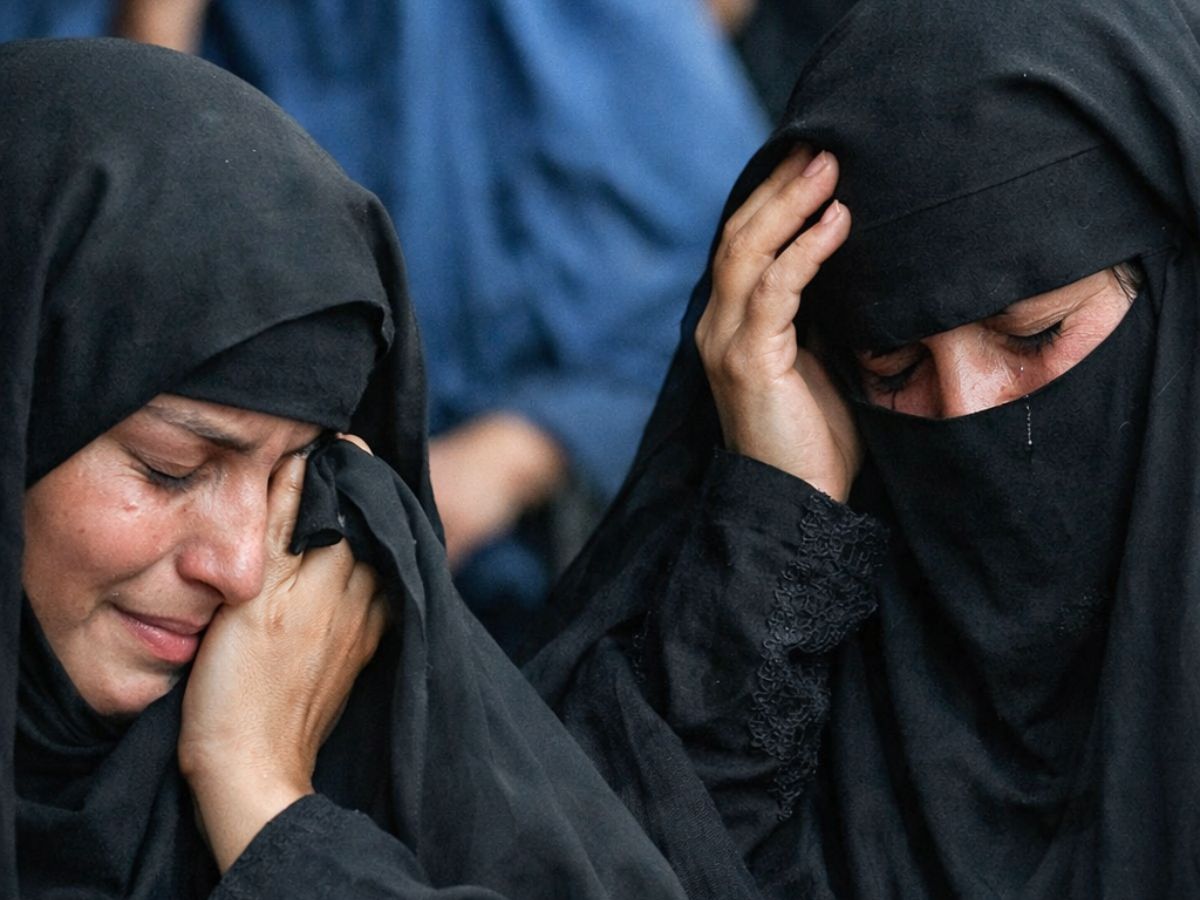
‘Harsh Beatings, No Broken Bones’: Taliban’s New Law Allows Men To Physically Punish Their Wives Amid Ongoing Women’s Rights Crackdown- What We Know

The Taliban has introduced a new 90-page penal code that formally permits husbands to physically punish their wives, provided the violence does not result in “broken bones or open wounds.”
The document, signed by the group’s supreme leader Hibatullah Akhundzada, has been distributed to courts across Afghanistan.
Human rights groups say the code represents one of the most severe rollbacks of women’s protections since the Taliban returned to power.
The law comes amid continued restrictions on women’s education, employment and freedom of movement, deepening concerns about systemic gender discrimination.
What the New Law Allows
Under the new code, husbands are permitted to carry out what is described as disciplinary or discretionary punishment against their wives and children, as long as the violence does not cause visible fractures or serious wounds.
In cases where “obscene force” leads to broken bones or open injuries, the maximum punishment for the husband is reportedly limited to 15 days in prison.
Legal accountability largely depends on the woman proving the abuse in court. Women must present their injuries before a judge while remaining fully covered and are required to appear with a male guardian, often the same husband accused of the assault. Rights advocates say these requirements make justice extremely difficult to obtain.
Restrictions on Women’s Movement
The code also imposes penalties on married women who leave home without their husband’s permission. A woman can reportedly face up to three months in prison if she visits relatives without consent. Critics argue that such provisions further entrench male control over women’s personal and social lives.
A Social Hierarchy in Punishment
Article 9 of the new code introduces a tiered system of punishment based on social status. Afghan society is divided into four categories: religious scholars (ulama), the elite (ashraf), the middle class, and the lower class. Punishment for the same offence varies depending on which category the accused belongs to.
Religious scholars may receive only advice for wrongdoing. Members of the elite may be summoned to court and advised. Those classified as middle class face imprisonment, while individuals in the so-called lower class can face both imprisonment and corporal punishment. Serious corporal punishments are to be carried out by Islamic clerics rather than correctional authorities.
Observers say the system formalises inequality within the justice framework.
Abolition of the EVAW Law
The new penal code abolishes the 2009 Elimination of Violence Against Women (EVAW) law, introduced under the previous US-backed government. The EVAW law had criminalised various forms of violence against women, including forced marriage and domestic abuse. Its removal signals a major shift in Afghanistan’s legal protections for women.
According to a report by The Independent, many Afghans are reluctant to speak openly about the new code due to fear of repercussions. Rights groups say the Taliban has issued a ruling making discussion of the code itself an offence.
International Reaction
Rawadari, an Afghan human rights organisation operating in exile, has urged the United Nations and other international bodies to immediately halt the implementation of the criminal procedure code and use all legal instruments to prevent it from being enforced.
Reem Alsalem, the UN Special Rapporteur on violence against women and girls, described the implications of the new code as “simply terrifying” in a post on X, questioning whether the international community would take meaningful action.
The Taliban has not publicly responded to the criticism. Meanwhile, international human rights organisations continue to warn that the new penal framework marks a major step backward for women’s rights and equal treatment under the law in Afghanistan.
ALSO READ: As US’ Full-Scale Attack Fear Grows, Iran Fortifies Key Nuclear Sites, Turn Them Into Bunkers
Sofia Babu Chacko is a journalist with over five years of experience covering Indian politics, crime, human rights, gender issues, and stories about marginalized communities. She believes that every voice matters, and journalism has a vital role to play in amplifying those voices. Sofia is committed to creating impact and shedding light on stories that truly matter. Beyond her work in the newsroom, she is also a music enthusiast who enjoys singing.
The post ‘Harsh Beatings, No Broken Bones’: Taliban’s New Law Allows Men To Physically Punish Their Wives Amid Ongoing Women’s Rights Crackdown- What We Know appeared first on NewsX.

Comments are closed.