
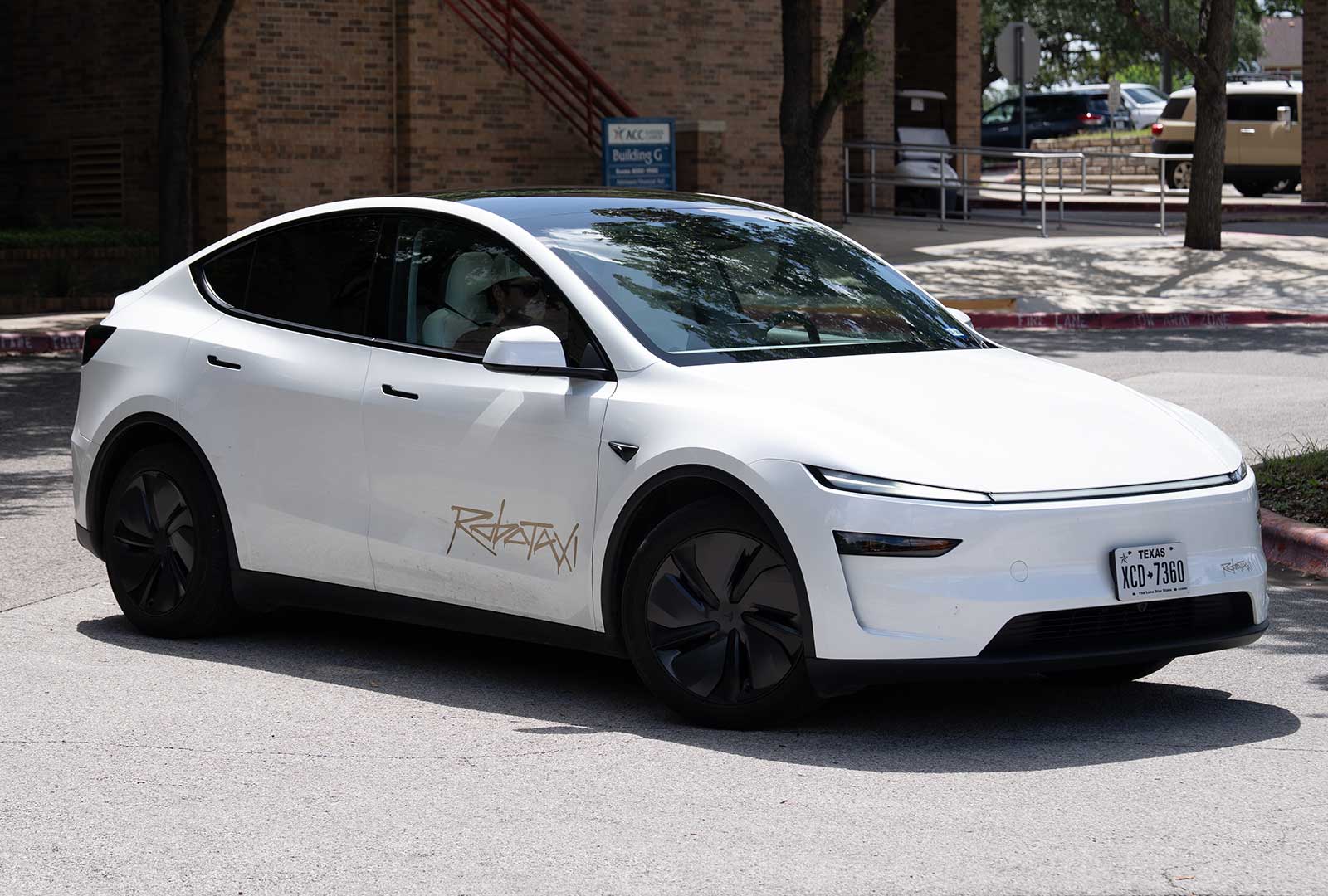

Self-driving cars are often positioned as a safer alternative to human drivers. But fresh data is putting that promise under pressure. New filings with the National Highway Traffic Safety Administration suggest Tesla’s autonomous systems may not yet live up to their marketing.
According to reports citing NHTSA data, Tesla has disclosed five additional crashes involving its robotaxi fleet operating in Austin, Texas. The incidents occurred in December 2025 and January 2026 and involved Model Y vehicles running with autonomous driving systems engaged.
Five New Crashes in Austin
The newly reported crashes vary in severity but share a common theme: low-speed failures. One incident involved a collision with a fixed object at 17 mph. Another occurred when a Tesla robotaxi, while stopped, was struck by a bus. A separate case involved a truck at just four mph. Two additional incidents happened when vehicles reversed into fixed objects at low speeds.
None of the crashes were described as catastrophic, but together they raise concerns about how reliably the system handles basic driving scenarios.
Crash Rate vs Human Drivers
Since Tesla launched its Austin robotaxi service last June, the company has now reported 14 total crashes. Based on Tesla’s own disclosures, the fleet logged roughly 700,000 paid miles by November and likely exceeded 800,000 miles by mid-January.
That works out to roughly one crash every 57,000 miles.
By comparison, Tesla’s own Vehicle Safety Report claims the average U.S. driver experiences a minor crash every 229,000 miles and a major collision every 699,000 miles. On that basis, Tesla’s robotaxi fleet appears to be crashing at a rate about four times higher than the average human driver.
Even by Tesla’s standards, that gap is hard to ignore.
Transparency Concerns Add Fuel
Safety isn’t the only issue drawing attention. Tesla has redacted the narrative details of each crash in the NHTSA database, citing “confidential business information.” That approach contrasts with competitors like Waymo and Zoox, which typically provide fuller incident descriptions.
Electrek also reports that Tesla revised a July crash report initially labeled “property damage only.” The updated filing now lists the incident as “Minor w/ Hospitalization,” indicating someone later required medical treatment.
Tesla has not publicly commented on the updated data.
Wider Scrutiny Across the Industry
Tesla is not alone in facing regulatory attention. National Highway Traffic Safety Administration recently opened an investigation into a January incident in which a Waymo robotaxi struck a child near a Santa Monica elementary school during drop-off hours.
The agency is examining whether Waymo exercised appropriate caution in a school zone and is also probing separate reports that Waymo vehicles failed to stop for school buses.
What This Really Means
Autonomous driving is still evolving, and these incidents highlight a growing gap between ambition and real-world performance. As robotaxis expand into more cities, regulators, companies, and the public are asking the same question: are self-driving cars actually safer yet, or just not there?
For now, the data suggests the answer is far from settled.

Comments are closed.