
Vietnamese workers shift from temporary jobs to long-term stay, buying homes in Japan, South Korea

In 2026, it will be five years since Nguyen Van Sac’s family purchased a house in Ikuno Ward, Osaka.
“If I think back to 17 years ago, when I started as a technical intern, I never imagined I would be able to buy a house in Japan,” recalled the 38-year-old from Hanoi.
Sac first went to Japan in 2009 under the technical intern trainee program. At the time, the total cost was about US$3,000, plus a US$6,000 deposit intended to prevent workers from absconding. For his farming family, which had many children, it was a substantial sum. His initial goal was simply “to work for a few years, save money, and return home.”
After completing his three-year contract, he returned to Vietnam and worked as a department manager for a Japanese company. A year later, his former employer invited him back to Japan on a business visa, which was later converted into an engineer visa, placing him in the skilled labor category.
His wife and child joined him in 2018 under a family reunification visa. By then, he had been promoted to factory manager and his income had improved. However, renting often caused tension, especially after the birth of their second child.
“Our young child would run around and make noise, disturbing others, and the downstairs neighbor once called the police,” he said, adding that the desire to own a home “grew stronger than ever.”
Nguyen Van Sac’s family holds a birthday party for their youngest son at their home in Japan. Photo courtesy of Sac |
The opportunity came in 2021. After leaving work early one day to pick up his child, he noticed a house listed for sale at 18 million yen ($117,500). The three-story property, with an attic, stood on nearly 50 square meters of land. The ground floor served as a parking space, rare in central Osaka, and the house was close to kindergartens as well as primary and secondary schools.
“When we first saw the house, we really loved it but didn’t dare ask to buy it,” Sac said. Nearly three months later, seeing the listing still available, he decided to inquire.
The owner, who ran a construction and scaffolding business, had been hit hard financially by the Covid-19 pandemic and needed to sell the house urgently amid the risk of bankruptcy. However, the economic downturn made buyers hesitant.
Determined to secure the property, Sac asked the broker to negotiate a lower price in exchange for paying in cash without a bank loan. The owner agreed to reduce the price to 16 million yen. The couple pooled 11 million yen in savings and borrowed another 5 million yen from relatives, achieving homeownership after more than a decade in Japan.
They repaid the family loan in over a year.
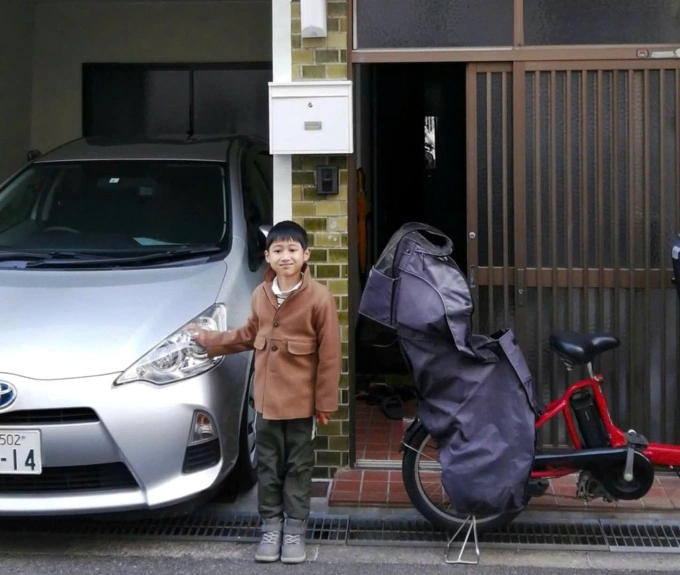 |
Nguyen Van Sac’s eldest son stands in front of his parents’ house in Japan. Photo coutersy of Sac |
Sac believes buying a house is not merely about property ownership but about achieving “settled residence and stable career,” motivating him to pursue permanent residency.
Vietnamese workers in South Korea shared similar stories.
After more than a decade working there, Ngo Van Hien and his wife, from Dong Thap Province in the Mekong Delta, purchased a 56-square-meter apartment in Gimpo City, Gyeonggi Province, about a 10-minute drive from his workplace.
Hien arrived in South Korea in 2012 under the E9 visa program for low-skilled workers, employed at a mechanical factory. Initially granted a three-year contract, he received multiple renewals thanks to his strong performance.
In 2022, he obtained an E7 visa for skilled workers. Around that time, he returned to Vietnam to get married. His wife, Thanh Lan, who holds a university degree, later joined him on a student visa.
“My wife was the one who pushed us to buy a home instead of continuing to rent,” Hien said.
Under South Korea’s lump-sum deposit rental system, tenants can place a deposit equivalent to the value of an apartment without paying monthly rent, with the deposit refunded upon moving out. However, Lan viewed the arrangement as inefficient over the long term due to inflation, while monthly rent was nearly equivalent to mortgage payments.
In 2023, after about three months researching legal procedures, finances, and residential areas, the couple purchased an apartment in Gimpo for around VND2.8 billion. Hien borrowed nearly VND2 billion from a bank at an annual interest rate of about 4%. With a long loan tenure, repayment pressure has remained manageable.
“Having our own home makes life stable. Our parents feel reassured and can easily visit their grandchildren,” Hien said.
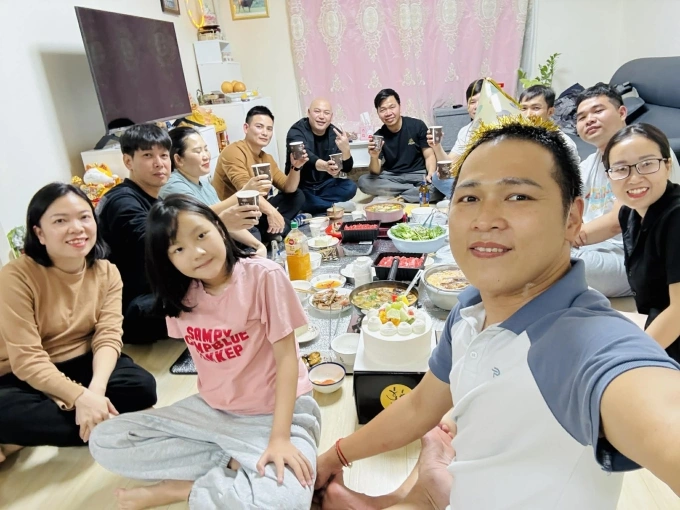 |
Ngo Van Hien takes a selfie photo with his friends at his home in Japan. Photo courtesy of Hien |
Nguyen Nhu Tuan, Deputy Head of the Asia-Africa Market Division at the Department of Overseas Labor Management under the Ministry of Home Affairs, said cases like Sac’s and Hien’s are no longer rare and are likely to become more common, particularly among skilled workers. The shift reflects both policy changes in host countries and workers’ desire for long-term stability.
In Japan, workers with strong qualifications, language proficiency, and good records may obtain engineer visas, marry, and settle long term. In South Korea, those seeking permanent residency are typically E7 skilled workers.
“The motivation to stay is not just income but also familiarity with a stable living environment, social welfare, and education systems,” Tuan said.
Phan Viet Anh, author of “Toi di Nhat” (I went to Japan), a book about the lives and experiences of Vietnamese interns in Japan, noted that demand for home purchases among Vietnamese has risen significantly over the past five to seven years, though not across all groups. Buyers are typically engineer visa holders, highly skilled workers, or those on track for permanent residency. Housing prices outside city centers, combined with long-term, low-interest loans, have made ownership more attainable.
However, Anh cautioned that the biggest risk lies in visa status. Owning property does not guarantee residency rights. If a worker loses legal status, they may not be permitted to re-enter the country to live in their own home.
“Many people get excited because houses seem affordable and loans are accessible, but they forget that the visa is the real ‘ticket.’ If your visa isn’t secure, you shouldn’t invest,” he said.
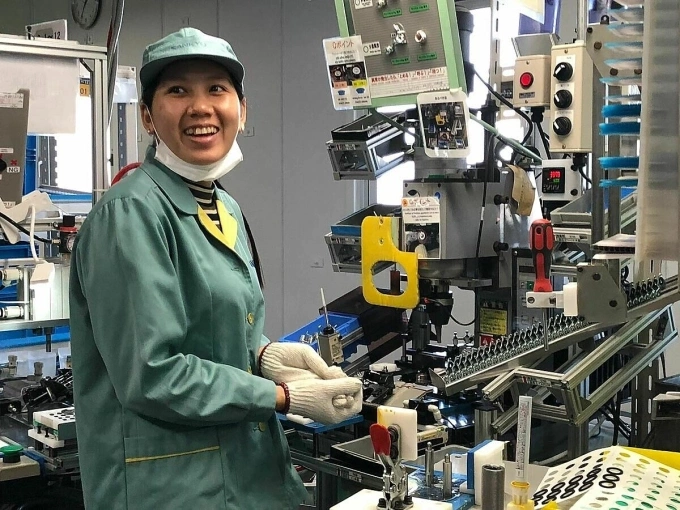 |
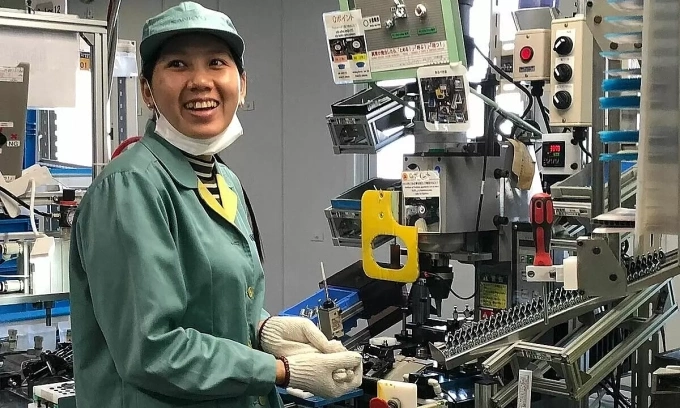
A Vietnamese worker at a factory in Japan. Photo by Thai De |
Nguyen The Dai, Deputy General Director of Estrala Labor Export and Trading Services JSC, said Japan has expanded visa categories, including the Specified Skilled Worker program, to address severe labor shortages. This allows workers to remain after completing five years under the technical intern program. Once accustomed to stable jobs and income, many no longer wish to return home as initially planned.
While this trend creates opportunities for workers to build stable lives abroad, it also means Vietnam gradually loses trained human resources.
“The trend of staying is undeniable, but in the long term, comprehensive assessments are needed to avoid domestic labor shortages,” Dai said.

Comments are closed.