
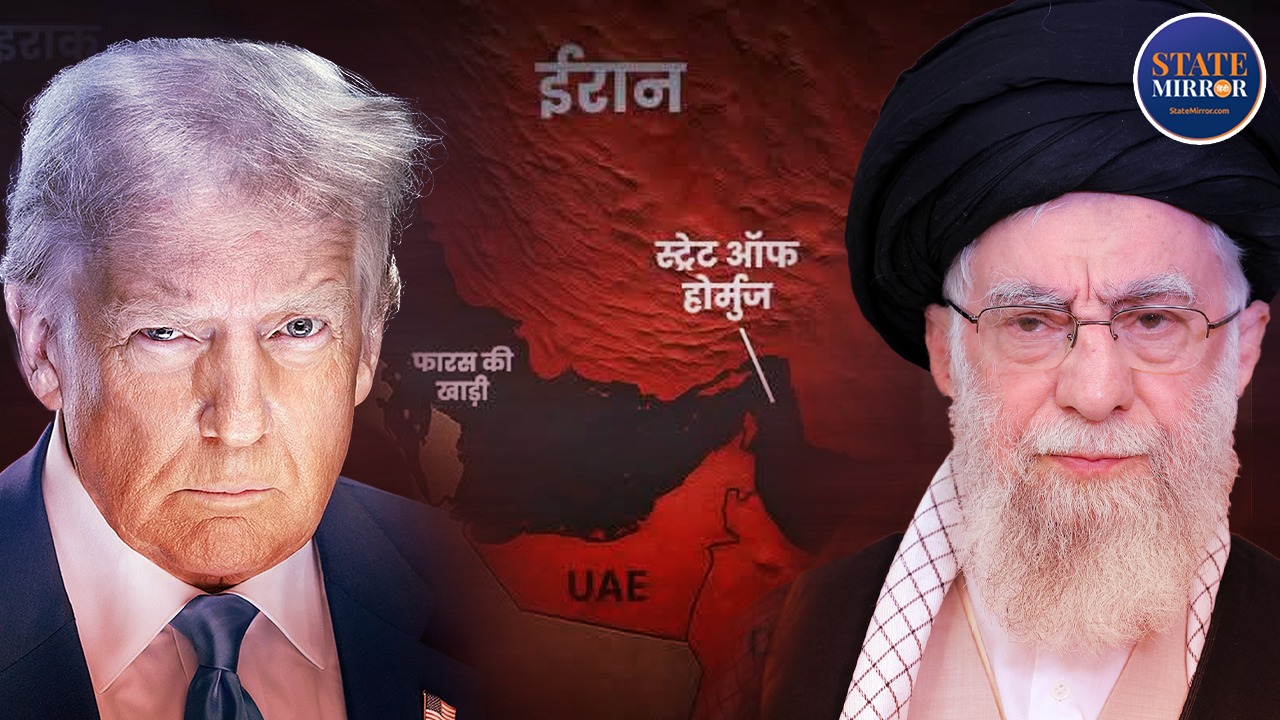
Strait Of Hormuz: Lifeline of world trade and oil supply – What will happen if America closes due to Iran tension?

If the pulse of the world’s economy beats anywhere, it is there strait of hormuz (Strait of Hormuz). It is not just a narrow passage of sea, but the lifeline of the global energy supply. Every day, millions of barrels of crude oil and large quantities of LNG reach Asia, Europe and America through this strait. About one-fifth of the world’s maritime oil trade depends on this route. In such a situation, if there is even a slight movement here, its shock is felt directly in the oil prices, stock markets and even the pockets of common people.
Meanwhile, the increasing tension between America and Iran has again brought this strategic route into the limelight. If the situation worsens between the nuclear programme, economic sanctions, tanker seizure and military presence and movement in Hormuz is affected, then its impact will not be limited to the Gulf region only. Oil may cross 100 to 150 dollars per barrel, inflation may rise and instability may spread in global markets. The question is, if Hormuz does indeed close, is the world prepared for another energy crisis?
What is the root of stress?
The roots of tension between Iran and America go back decades. After the Islamic Revolution of 1979, relations between the two countries deteriorated. When the US Embassy hostage crisis occurred in Tehran and diplomatic relations were broken. Since then the nuclear program became the biggest controversy. America alleges that Iran wants to gain the ability to make nuclear weapons. Whereas Iran calls it a peaceful energy program. Nuclear agreement (JCPOA) was signed in 2015, but in 2018, tensions increased again due to America’s exit from the agreement and imposition of stringent economic sanctions.
Additionally, competition for influence in West Asia, America’s closeness to Israel and the Gulf countries, the role of Iran-backed groups in regions like Iraq-Syria-Yemen, and tanker/drone incidents in the Gulf have also been fueling the conflict. Overall, this dispute is a mixture of nuclear issues, regional dominance, security concerns and economic sanctions, which has kept the two countries constantly at loggerheads.
What is the reason for the current tension?
The rhetoric regarding American sanctions and Iran’s nuclear activities is intense. Increased naval presence in the Gulf and allegations of drone/missile attacks. Tension further complicated by the role of regional allies (Israel, Saudi Arabia, etc.).
What is the Strait of Hormuz and why is it important?
The Strait of Hormuz is a narrow sea route connecting the Persian Gulf to the Gulf of Oman and the Arabian Sea. Its width at its narrowest point is about 33 kilometers. Whereas the shipping lane is even less wide. This strait is counted among the most sensitive energy routes in the world. This sea route is located between Iran and Oman. Crude oil and LNG originating from the Persian Gulf reaches global markets through this route.
What share in global trade?
More than 20% of the world’s seaborne oil trade passes through this route. Major energy exporting countries like Saudi Arabia, Iraq, Kuwait, UAE and Qatar depend on this route for their oil or gas exports. A large portion of the global LNG supply, especially exports from Qatar, passes through this route. That is, if there is any disruption here, its impact will not be limited to West Asia only. A rise in energy prices may be seen in Asia, Europe and America.
US-Iran tension and Hormuz
There has been long-standing tension between the United States and Iran over the nuclear program, sanctions, and regional influence. Between the years 2019–2023, several incidents of tanker seizure, drone attacks and naval confrontations were reported. America increased its naval presence in the Gulf region to ensure the safety of ships. Iran has repeatedly indicated that if pressure on it increases, it may affect traffic in Hormuz.
What will happen if Iran closes Hormuz?
There will be a huge jump in oil prices. A large part of the global supply will stop. Brent crude prices can rapidly go up to $100 to $150 per barrel or above.
Impact on India and Asian countries
India imports a large part of its oil needs. If the supply is disrupted, petrol and diesel will become expensive, inflation rate may rise. Current account deficit will increase. Global stock markets may fall. The energy crisis will increase nervousness among investors, which may lead to instability in the markets.
What is the limited capacity of alternative routes?
Some countries have pipelines or other export routes (such as Saudi’s East-West Pipeline), but they cannot compensate for the entire shortfall.
Threat of military conflict?
If movement is stopped, America and its allies may take military action, which will increase the possibility of regional war.
Is it really that easy to turn off?
It is not easy to completely close the route, because it is an international waterway. American and allied navies conduct continuous patrolling. Iran will also suffer economic losses if the shutdown is continued for a long period, as its own oil exports will also be affected. Therefore, a total closure is less likely, but sporadic disruptions, seizure of ships or tense situations are more likely.

Comments are closed.