
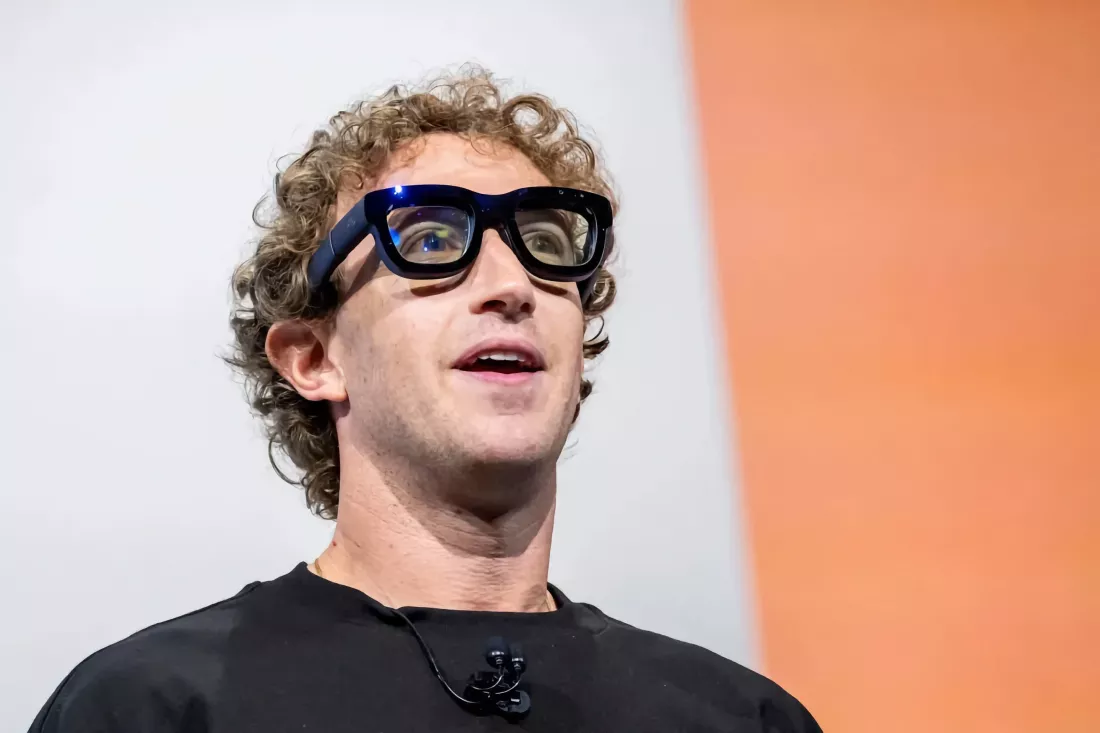

In a moment that perfectly encapsulated the friction between Silicon Valley’s “move fast” ethos and the rigid decorum of the American legal system, a Los Angeles Superior Court judge issued a stern ultimatum during Mark Zuckerberg’s high-stakes testimony. Judge Carolyn B. Kuhl warned that any individual found wearing or using smart glasses to record the proceedings would face immediate contempt of court charges. The warning wasn’t just a general reminder of courtroom etiquette; it was a direct reaction to the “supreme oddity” of Zuckerberg’s own entourage appearing in the courthouse while conspicuously wearing Meta’s Ray-Ban smart glasses.
The Irony of the Aides
As Mark Zuckerberg arrived to testify in a landmark trial regarding social media’s impact on children’s mental health, he was flanked by a team of aides. Among them was longtime assistant Andrea Besmehn, who along with at least one other member of the team was spotted wearing the Ray-Ban Meta glasses that Zuckerberg has touted as the centerpiece of his vision for the future of computing.
While the glasses are designed to look like standard stylish frames, they are equipped with cameras, microphones, and AI-driven capabilities that allow for discreet recording. For a trial focused on privacy, data collection, and the psychological impact of digital platforms, the presence of these devices was seen by many as either a bold piece of product placement or a massive “extraordinary misstep.” Judge Kuhl was not amused, specifically ordering that any recordings made with the devices be deleted immediately. “This is very serious,” she noted, emphasizing that recording in California Superior Courtrooms is strictly prohibited.
Contempt of Court and the Facial Recognition Ban
Judge Kuhl’s warning went beyond the standard “no cameras” policy. She expressed particular concern regarding the AI capabilities inherent in the hardware. Beyond simple video capture, the judge highlighted the potential use of facial recognition technology to identify jurors, a move that would constitute a severe breach of judicial integrity and security.
The threat of a contempt charge is a powerful deterrent, carrying the potential for fines or jail time. By targeting “wearable recording devices,” the court is effectively drawing a new line in the sand for the “surveillance age.” The incident highlights a growing legal conundrum: as technology becomes more invisible moving from bulky smartphones to “normal” glasses how can a court enforce its ban on unauthorized recordings? Judge Kuhl’s proactive stance suggests that the judiciary is becoming increasingly tech-savvy, recognizing that the “LED light” on a pair of smart glasses is not a sufficient safeguard for courtroom privacy.
Zuckerberg on the Stand: “I’m Bad at This”
While the glasses caused a stir in the gallery, Zuckerberg’s testimony inside the courtroom was equally contentious. The Meta CEO was grilled by plaintiffs’ lawyers over internal documents suggesting that over four million Instagram users in the U.S. were under the age of 13, the platform’s legal minimum age. Zuckerberg admitted that some users “lie about their age,” but maintained that Meta is proactive in identifying and removing underage accounts.
In a rare moment of self-deprecation, Zuckerberg addressed his own reputation for being “stiff” or “robotic” during public questioning, stating, “I think I’m actually well-known to be sort of bad at this.” Despite the admission, his defense remained firm. When questioned about the refusal to ban cosmetic surgery “beauty filters” despite warnings from mental health experts, Zuckerberg cited “free expression,” arguing that the company genuinely wants to err on the side of giving people the ability to express themselves.
The “Big Tobacco” Moment for Social Media
The trial, which some observers are calling the industry’s “Big Tobacco” moment, centers on whether Meta and Alphabet (YouTube) intentionally designed their platforms to be addictive. Internal emails presented during the testimony showed that Zuckerberg had reached out to Apple’s Tim Cook as early as 2018 to discuss the “well-being of teens and kids,” a move Meta’s lawyers used to argue their CEO has been proactive about safety.
However, the juxtaposition of this “safety-first” narrative with a team wearing recording-capable glasses into a sensitive courtroom environment created a dissonant visual. It served as a reminder of the tension Meta faces: trying to prove it is a responsible steward of user data and mental health while simultaneously pushing hardware designed to record every moment of our lives. As the trial continues, the “smart glasses incident” will likely remain a symbol of the widening gap between Silicon Valley’s vision of a “seamless” digital world and the legal system’s commitment to traditional privacy and order.

Comments are closed.